Training in Godliness

Training in godliness may be a bit different than what you suppose.


Life is a journey, and each day is a leg in that journey. Proverbs says that a man makes his plans, but God directs his steps. Basically, God is ultimately in control, but we have something to say in the process. Where we end up depends on whether and how we align ourselves with God and HIs purposes.

The weekly reading for the small group I am in (and the subject of the sermon this coming Sunday) is 1 Timothy 4:7-10. That passage inspires my writing today as part of the leg of my journey that I call today. My focus will be the following two verses:

Have nothing to do with godless myths and old wives’ tales; rather, train yourself to be godly. For physical training is of some value, but godliness has value for all things, holding promise for both the present life and the life to come.

1 timothy 4:7-8 (niv)

I was fortunate today that I didn’t just set out to check off this reading for Wednesday night. I came at this reading with a more intentional and devoted mindset, which I suppose is appropriate for the topic. I can’t say that I always have the mindfulness to do that, but today I did.

I might otherwise have assumed I knew what “godless myths” are and what “godly” training is. I might have glossed over those phrases without really understanding what Paul is saying, but I realized as read them that I didn’t really know what he meant by “godless myths” and training to be “godly.”

Acknowledging this, I took one step back to read these verses in context. I read verse 6, which says:

If you point these things out to the brothers and sisters, you will be a good minister of Christ Jesus, nourished on the truths of the faith and of the good teaching that you have followed.

1 Timothy 4:6 (emphasis added)

Of course, then I had to step further back to see what Paul meant when he said, “If you point these things….” What things? The previously verses contain those “things”:

The Spirit clearly says that in later times some will abandon the faith and follow deceiving spirits and things taught by demons. Such teachings come through hypocritical liars, whose consciences have been seared as with a hot iron. They forbid people to marry and order them to abstain from certain foods, which God created to be received with thanksgiving by those who believe and who know the truth. For everything God created is good, and nothing is to be rejected if it is received with thanksgiving, because it is consecrated by the word of God and prayer.

1 Timothy 4:1-5

I am still not sure what “deceiving spirits” these people followed or what “teachings” Paul references here, but the fact that Paul calls these teachers “hypocritical liars” who taught ascetic religious practices (forbidding marriage and ordering abstinence from certain foods) is a clue. Affirming that God created everything good and receiving those good things with thanksgiving and prayer is another clue.


it seems that another clue lies in the use of the word, hypocritical,” which I learned recently was not meant in exactly the same way modern people think of it. We think of hypocrisy as saying one thing and doing another. The Greek word, ὑπόκρισις (hupokrisis), that we translate as hypocrisy literally means “to act under a feigned part.”


In other words, a hypocrite is an actor. A hypocrite according to the Greek meaning is someone playing a part, a person pretending to be someone or to know something than who or what they are.

As I considered these things, I realized that the Greek words translated into English as “godless myths” and training to “godly” might also give me a better understanding of what Paul is saying. When I dove into the Greek, the meaning became clearer, and it isn’t necessarily what I might have thought.

I might have answered, if someone pressed me, that godliness is how a person behaves. I might have said that godliness means doing right, living according to God’s rules, and conforming to biblical morality, but that isn’t what Paul is saying here. To be sure, godliness does bear the fruits of the Holy Spirit, but we should not confuse the fruit for the root.

Continue reading “Training in Godliness”

The Uncertain, Vital Value of Personal Experience with God

Atheists are not alone in being skeptical of personal experience. And with good reason, but….


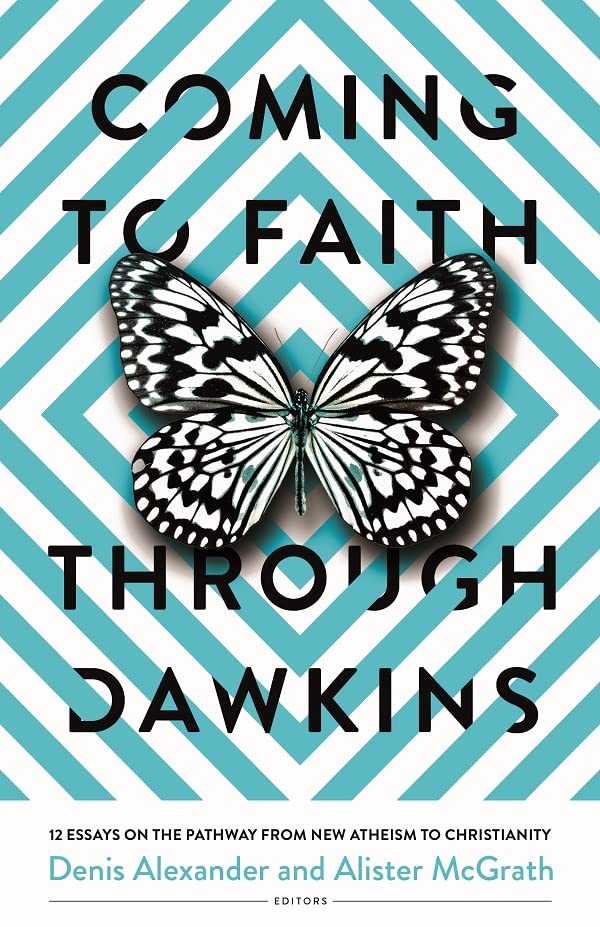
In a conversation on the Unbelievable? Podcast, Coming to faith through Dawkins – Part 2: Is there a new New Atheism?, Alex O’Connor (a/k/a the Cosmic Skeptic) commented about the book, Coming to Faith through Dawkins. He agreed that the most interesting aspect of the book is the prominence of story and experience, but he finds it unconvincing for the same reasons.

In case you don’t know, the book is a compilation of the stories of twelve people who were influenced by Richard Dawkins in their journeys from atheism to belief in the God of the Bible. Dawkins, of course, is one of the original (and most vocal) of the “new atheists. Thus, the title and subject matter of the book is ironic, intriguing, and not a little controversial.

O’Connor’s critique of the people whose stories are recounted in the book is that they seem to focus on their personal experiences. He says he is not convinced by the personal stories because they focus too much on personal experience and too little on syllogisms, rational arguments, and logical processes in their coming to faith.

This statement, as we shall see, is not a little ironic. O’Connor, though, expresses the modern western sensibility about personal experiences that are discounted and dismissed in favor of more objective evidence.

To be fair, many of the stories in the book recount the intellectual paths people trod on their way to faith, though the stories do not rigorously lay out the arguments, logic, and proofs. We shouldn’t be surprised by that, as the book focuses on peoples’ stories, and people’s stories are personal experiences.

Each of these journeyers from atheism to faith found problems, errors, bad philosophy, and nonsensical statements in Dawkins’s positions that led them to question his underlying assumptions (which were their underlying assumptions also). This, itself, was a rational process. The intellectual problems they saw in Dawkins’s positions made them skeptical of his skepticism.

O’Connor’s critique of the experiential nature of the stories might be discounted on that basis, but I want to focus on something else. This critique came up in the second of two segments. I want to go back to the first segment and contrast his critique with another statement O’Connor made to get to my point today. (See Coming to Faith through Richard Dawkins Part 1)


When asked what might convince him of the existence of God in the first segment, O’Connor said (without hesitation) that personal experience would be the most likely thing. Therefore, the critique O’Connor made in the second segment (complaining of the overly experiential nature of the stories) is ironic in light of O’Connor’s own admission that personal experience might be the one thing that could convince him that God exists (if he had such an experience).

This incongruity in O’Connor’s criticism about personal experience, and the value of personal experience in what we believe, is the thing I want to explore today. Atheists are not alone in being skeptical of personal experience. And with good reason. But personal experience is, nevertheless, vital to our human understanding of anything.

Continue reading “The Uncertain, Vital Value of Personal Experience with God”

Do Our Past Actions Impact Our Present Choices?

‭”[T]he Pharisees and the experts in religious law rejected God’s purpose for themselves, because they had not been baptized by John.”

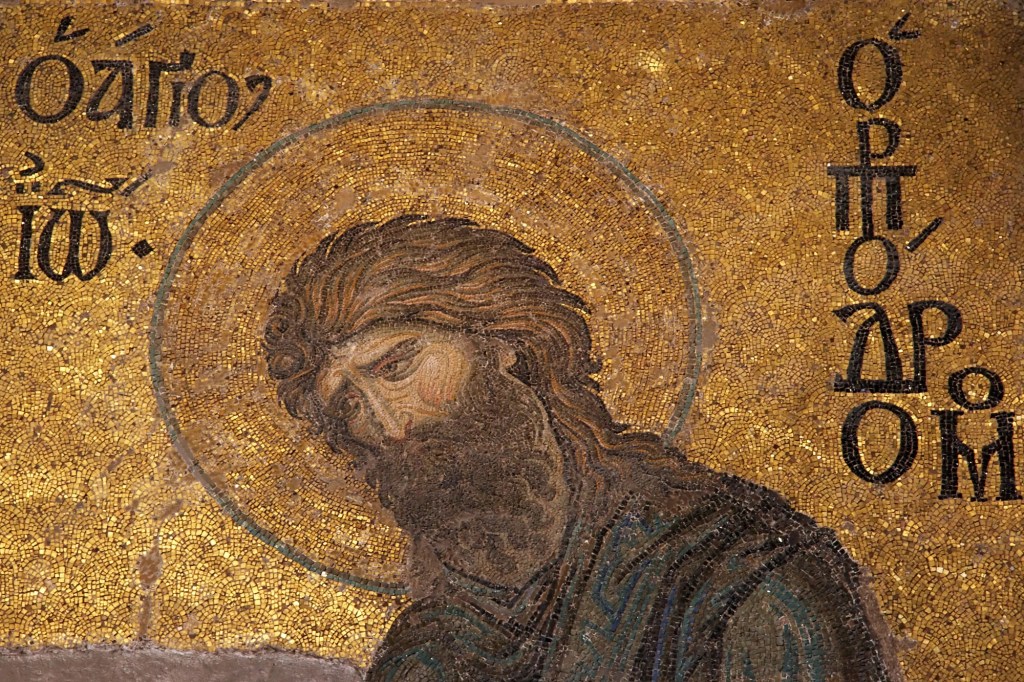
My thoughts today might seem a little obscure, but let me set the stage first.  Imagine the scene when two followers of John the Baptist were sent to ask Jesus a question. News of what Jesus was doing had traveled far and wide. People even reported that Jesus brought a dead man to life!

This is the backstory. Jesus happened upon a funeral procession. (Luke 7:11-17) The dead man being carried to his final destination was the only child his mother had, and she was a widow. Jesus was filled with compassion, ands he did the unbelievable. Jesus brought that dead man back from death!

This man and his mother were locals. They lived in a nearby town. They were talking, and it wasn’t just them. People saw it, and they were talking about it also. A crowd had witnessed the whole spectacle.

News about Jesus spread throughout Judea and the surrounding country, so that people were coming to Jesus from all around. John the Baptist heard about these things also, and he sent two of his followers to ask, “Are you the one who is to come, or should we expect someone else?”

(Luke 7:20) (As an aside, Luke does not tell us why John did not come himself, but we know from Mathew that John was in prison. (Matthew 14:1-12)

The “one” John the Baptist wondered about is the Messiah who had long been expected. John and his ancestors kin had been reading about the Messiah in the prophets for centuries. The time seemed right. Many had come recently, claiming to be him, but they were killed, and their following faded. Still, expectation was in the air.

John was imprisoned because he was open and blunt with criticism of Herod the Tetrarch, the local governor, who married his brother’s wife. Herod imprisoned John to silence him.

John was equally straightforward and to the point with the question he sent his followers to ask, “Are you the one?”

John the Baptist’s followers arrived on the scene as Jesus was curing people with diseases, sicknesses and evil spirits, healing people and even giving sight to the blind. When they asked him whether he is the one, or whether there is someone yet to come, Jesus said

“Go back and report to John what you have seen and heard: The blind receive sight, the lame walk, those who have leprosy are cleansed, the deaf hear, the dead are raised, and the good news is proclaimed to the poor. Blessed is anyone who does not stumble on account of me.”

Luke 7:22-23

These words were familiar to John. They come from the book of Isaiah, one of those the prophets that foretold the Messiah to come (see Isaiah 35:5 and 61:1). The Messiah was predicted to be the cornerstone of a new order, but the prophets also warned that he would be rejected, and he would be a stumbling block for many. (See here)

The Pharisees and religious leaders also would have known exactly what Jesus alluded to in his response to John’s followers, though they didn’t even ask the question, and they probably were not privy to the answer. For them, Jesus was a stumbling block. The way Luke describes their response is what prompts me to write today.

Continue reading “Do Our Past Actions Impact Our Present Choices?”

An Invitation to Test and See Whether God Exists

The title of this piece is a bit of poetic license. I am combining the Psalmist’s challenge to “taste and see that the Lord is good….” (Psalm 34:8) with Paul’s admonition to “test everything”. (1 Thess. 5:21) The general thrust of these two verses is an invitation to seek God and truth and to test what we think we know.

Tasting suggests that we can experience that God is good, and testing suggests that we can measure, in some respect, that experience with God. While the existence of God is not susceptible to testing and measurement like we do with science in a laboratory or in physics (for many reasons), these statements are claims that we can in some sense measure, prove, and have confidence in our conclusions.

Both writers are talking about experience in these passages, something that is frowned upon as evidence in our modern, western culture. I will come back to that. First, though, I want to make some observations.

It should go without saying that tasting and testing requires some commitment to the process. Tasting is highly experiential. If we are going try to “taste” something, we have to engage in that process.

We cannot taste through another person’s experience. It requires our own engagement in the tasting, and that requires some willingness on our part to engage.

On the subject of being scientific about spiritual experience, we can and should listen to what others say who claim to have tasted that God is good. We can and should weigh the “results” and conclusions of various people who make these claims.

In that process, we could categorize, compare, and contrast the tasting and the testing and reach some conclusions purely on basis of the data collected. I have done that anecdotally for years, and I suspect I could find some more objective data pools of these largely subjective “experiences”. The larger the data pool, the more objective we can be in our analysis of them, though they are subjective for the individuals involved.

Tasting and testing, as we are challenged to understand it in the Bible, however, is more personal than that. We can study other peoples’ experiences for a lifetime and never really know what the experience is like in the “biblical” sense of knowing.

These thoughts today are inspired by the following quotation by CS Lewis from his seminal book, Mere Christianity:

“A man can accept what Christ has done without knowing how it works; indeed, he certainly won’t know how it works until he’s accepted it.”

The emphasis on accepting something without knowing how it works seems to run counter to the way we do science, but I don’t think it really is. We do a lot of science on a hunch without knowing whether we are right or wrong. We might call those hunches educated guesses. We don’t know whether a hunch or educated guess is right until we put it to the test, and we understand it better in the process.

Continue reading “An Invitation to Test and See Whether God Exists”

Is God an Ancient Elitist?

God and His message are hidden to so many people, but it isn’t a mystery. It is “hidden” in clear sight!


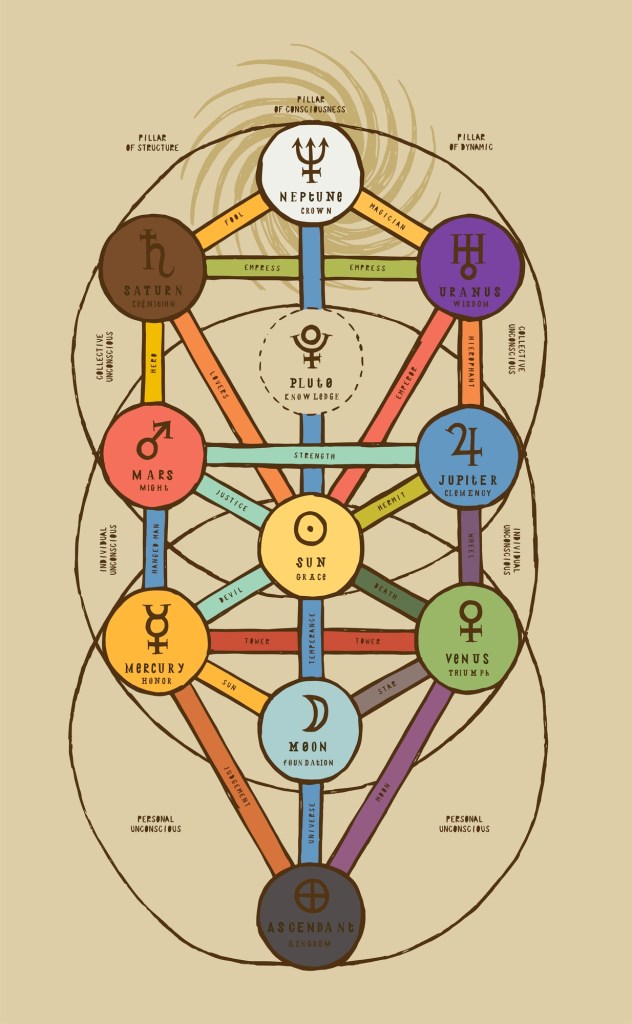
Some people seem to think God is an elitist. Some people believe that God can only be understood by people who crack God’s code and discover access to His secrets. Another, label for this kind of thinking about God is the occult, though we sometimes put a more acceptable sheen on this kind of thinking.

This kind of thinking even creeps into churches and personal views on God. Christians sometimes give into temptations to divine the future or hidden truth in numerology, astrology, tarot cards, palm reading, tea leaves, etc.

Other people find in the “hiddenness” of God reason to doubt His existence. They argue that God shouldn’t play hide and seek with the world, that God should be obvious to all, and the fact that He isn’t obvious to all people means that God doesn’t exist.

I don’t find truth in either proposition. At the very least, neither proposition describes the God of the Bible. I have addressed the hiddenness of God several times in my writing, I don’t recall addressing the occult, much. Today this view on spiritual reality that I am describing here as the elitist view of God comes by way of inspiration from Dr. Michael Guillen.

My inspiration for this post comes specifically from a podcast episode titled, Numerology, Gematria & Kabbalah, in which Dr, Guillen spent most of his time talking about the cult of Pythagoras, numerology, gematria and Kabbalah in a thoughtful, objective way. Did you know that Pythagoras worshipped numbers? Especially the number 10?

You probably have heard of claims that the Bible is full of hidden wisdom and truth that can be uncovered with the right application of a numerical code. You will learn some interesting things if you go to the link and listen to whole podcast episode.

Michael Guillen has a personal history with numbers. At UCLA, he earned a B.S. in physics and mathematics. He went on to Cornell University, where he earned an M.S. in experimental physics and obtained a Ph.D. in physics, mathematics and astronomy. Guillen’s own “affection” for numbers gives him unique perspective on mathematics and the love of numbers.

If anyone with religious inclinations might be tempted to worship numbers, Dr. Guillen would be a likely candidate. He even wrote a book titled Five Equations that Changed the World: The Power and Poetry of Mathematics.

One might doubt that a legitimate scientist would be so ignorant as to be religious at all, but history is full of scientists and great thinkers with particular religious leanings. Pythagoras, who headed up a cult that worshiped numbers, is an example. Not all religious leanings are the same, though.

As a young seeker and avid learner in college, I encountered religious thought for the first time in a World Religion class. Though my professor described all religions as roads to the top of the same mountain, I saw a difference in one religion and one religious text.

If you listen to Dr. Guillen tell his own story, which he does at various times in his podcast episodes, he saw the same thing. One religion and one religious leader stands out, and one aspect of that difference can be understood with the observation that Guillen makes: God is not an elitist.

We are tempted as human beings to think that truth is something that only the smartest and most clever people are able to figure out. Perhaps, this is why we are fascinated with books like The Da Vinci Code. The less religious among us might say that only those people with privilege, means, and a good education are able to know and understand truth; the rest of us are doomed to ignorance.


My thoughts today are on the former group of people. Guillen challenges the claims of people who believe that the Hebrew Scriptures contain a hidden, numerical code that can be deciphered with the right “key”. Guillen asserts that the truth of the God revealed in the Bible and Jesus, who claimed to be God in the flesh, are not hidden behind a code in the text that needs to be deciphered, and I agree with him.

Continue reading “Is God an Ancient Elitist?”