Stereotyping and the Church

DIverse People Holding Text Church


One thing that is a constant theme for me, something that is always just beneath the surface of my thinking, one that is continually rising to the top, is the truth that people are not stereotypes.

I am probably as guilty as anyone of stereotyping. Sometimes stereotyping is useful, but we must never forget that people are not stereotypes. Stereotyping people into groups, and stereotyping groups themselves, can be an impediment to truth and an impediment to real dialogue, effective communication and understanding. Continue reading “Stereotyping and the Church”

What Have We Done to Protect Our Children?

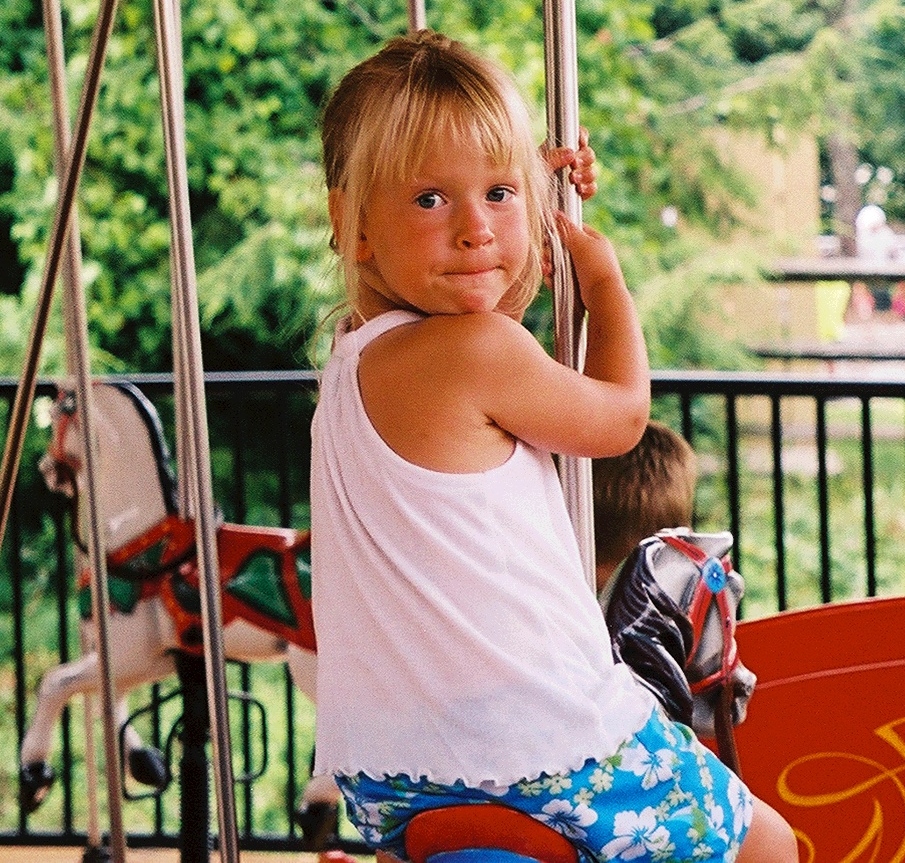
Julia at Hershey - Copy“The Overprotected Kid”, published in the Atlantic, has been circulating on Facebook. The goofy kid with broken, taped glasses and a silly grin drew my attention, but the byline under the title sucked me in:

“A preoccupation with safety has stripped childhood of independence, risk taking, and discovery—without making it safer.”

I thought, “What?!!” We have protected our children from every conceivable danger, imagined or real. We yelled at them when they crossed the street, for their own good. We kept a wary eye on their every movement. We cushioned every bump and angle, plugged up the electric sockets and planned every part of their lives from dawn to dusk with supervised activities and busyness to keep them from wandering into trouble. How could we have possibly failed to keep them safe?!

In spite of our best efforts, the article reminds us that child abductions still happen, children still get hurt on our “safe” playgrounds and accidents still happen. In fact, stranger abductions are as rare as they ever have been. Most abductions are by family. Family abductions seem to be an extension of the control we think we must have over our children. Mom (or dad) takes off with the children to keep them “safe” from other family members or simply to keep control of their situations, including their children.

From my childhood to the present time, parents have become much more controlling over the movements of their children, but The Overprotected Kid calls that approach into question. The article suggests  that cushioning playgrounds inhibits healthy exploration of risk. Continual adult supervision prevents kids from being kids and owning their natural development as human beings. On the other hand, it does not make our children’s lives safer.

“… we have come to think of accidents as preventable and not a natural part of life.”

All of our efforts may not have made our children’s lives safer, but those controls have taken away the valuable self-exploration, freedom, creativity and independence that we had when we were children with consequences that are only now being realized and understood.

“There is a big difference between avoiding major hazards and making every decision with the primary goal of optimizing child safety (or enrichment, or happiness). We can no more create the perfect environment for our children than we can create perfect children. To believe otherwise is a delusion….”

As I was stewing on the controls that may have stunted my own children’s growth in comparison to the freedom I enjoyed and what that means for them, I read another article, “Difference Between Encouragement and Entitlement”, by blogger and author, Courtney Walsh. She suggests another game changer:

“Disappointment breeds greatness.”

Really?!! I don’t want my children to be disappointed… EVER! How many times have I wanted to give that coach a piece of my mind! How could they not see my kid’s greatness! How does this woman think that disappointment leads to greatness?!

Courtney Walsh cautions against rushing to our children’s defense at every sign of potential disappointment. She suggests that parents should “let” their children fail sometimes, that it is actually good for them. She believes that learning through failures leads to success.

Then the Sherlock Holmes in me detected a common thread: good parenting does not mean preventing our children from being hurt. Kids need to explore boundaries themselves, not the ones we put there for them, but the ones they discover and set for themselves. That does not mean that allow them to walk into actual harm, but they need some freedom to learn for themselves. They need to understand that missteps and mistakes hurt. We can not cushion every fall or rescue our kids from every disappointment and expect them to become healthy, well-rounded productive, creative members of society.

If we cushion our children from every disappointment by telling them always they are great, when sometimes they are not, and rescuing them from there not-so-greatness, we actually prevent them from growing. The “real world” is not full of people telling us we are great when we are not. If we continually tell our children there are great, when they are not so great, we are not, then, doing a very job of preparing our children to leave the safety of the nest.

Courtney Walsh suggests that people need to fight through disappointment and the consequences of our own not-so-greatness to become the best kind of people we are able to be, and we need to give (or allow) our children those opportunities.

Fighting through disappointment is actually the way to greatness. Great people are not born great. Greatness is not handed out like ribbons. The character of greatness is forged in the crucible of disappointment, failure, hard work, resilience, patience, perseverance and learning to believe in principals, values and, in the end, our own selves. That does not happen in a world that is controlled to be free of consequences.

I have included the links to both articles below. There is a theme. We parents cannot protect our kids from every harm or disappointment, and our efforts in doing so may actually produce another kind of harm and even more disappointment when our children find that the world does not think they are quite great as their parents told them they were – at least not without earning it!

I think there is a lesson of faith in there too. Jesus told us not worry. I worry more about my children than anything in my life. Does not God take care of the flowers in the field and the birds? Will He not all the more take care of us – and our children?! I am convinced more than ever that we (parents) have really blown it with the current generations. By “we” I mean Baby Boomers. We have “saved” our children from everything we feared and have stunted and stilted them in the process.

The Overprotected Kid

The Difference between Encouragement and Entitlement

Pausing the Reality Show

?????????????????????????????????????????????????????????????????????????????????????I stumbled upon on Seth Godin’s blog today. Reality is not a show. He blames what he calls the “punditocracy” for turning life into a game and issues into drama “with winners and losers, villains and heroes and most of all, black and white issues” for their own profit.

From politics to natural disasters and even things like poverty and technology, everything is presented or spun into an “us and against them” reality show, suggests Godin.

Polarization is big business. Rush Limbaugh, Hannity and others on both sides of the ideological divide are pundit business machines. Certainly the liberal gamesters have been a little slower to capitalize on the opportunities that black and white buffoonery provides, but they are coming around. It seems we are becoming more polarized as a society, if politics is any indicator. Has the aisle between the two political parties ever been wider?

At the same time, we do not seem to need much political urging or pontifical force to line up like solders on one side or the other on the issues of the day. The Treyvon Martin case is a prime example. The ink was not dry on the presses when people began to convict or exonerate George Zimmerman in a flood of pontification. Social media allows us to declare our stances almost instantaneously on any issue, national or local. Innocent until proven guilty lost this game, as it usually seems to do in these dramas. Letting the wheels of justice do their things does not seem to fit comfortably into our thought processes.

Android phones must be better than iPhones, or iPhones must be better than Android phones. We do not seem to tolerate uncertainty or inbetweens. Why is that?

Ironically, we hold up tolerance as the ideal to which polite and learned people aspire (or at least that is the standard that we demand of those who disagree with us).

I wonder if we have lost the ability to concentrate on anything long enough to reserve judgment.

I remember watching MTV when it was still Music Television and feeling perplexed by the rapidly changing images in every music video. I could not latch on to anything. It moved too fast. Those music videos of the ’90’s seemed to be a reflection of the way society was going at the time, and continues to go. I am not sure that is the way we want it. Or is that just the way “the media” wants to package it to us? Politicians give us “sound bites” and phrases. Social media allows us to communicate in snippets with Twitter as the extreme example. Email has replaced letters, and texting is preferred to email. Each evolution in technology is tending toward shorter, more truncated, communication.

I think these things are related to the polarization of our society. We are somewhat like lemmings in this reality show life (not that lemmings are anything like what we have been told). We do not want to dwell for long in between; we want to rush to our destination, decision, judgment, adulthood. Maybe that is a reaction to the speed at which information and life comes at us. Maybe it is because we have lost the ability to focus and to hold things in tension.

We act as if each of us is the captain of our own certainty, and we dare not lose grasp of it. In our lives today, every silence is filled with sound, every pause is a transition, every moment is filled with activity. We must latch onto judgment lest we be carried away and lost in the dizzy array of thoughts, images and information whizzing past us like the strobe light scenes of an MTV video.

In this tendency to gravitate quickly to the poles, we lose compassion, understanding and relation. We are drawn into the game and lose the nuance of real-life difficult decisions. In Seth Godin’s words, we “turn pathos into ratings” and make just about everyone “the other”. I am afraid in this process we are losing the sticky interconnectedness that binds us all together in this journey called life. Seth suggests that Facebook “likes” should be replaced with hugs – a little human relation to bridge our different perceptions and viewpoints.

In reality, we are all winners and losers, good guys and bad guys. People are complex. We are not easily reducible to a black/white images. We do ourselves, our neighbors and our world an injustice when we rush to conclusions and judgments. We need space in our existence. We need stillness in our lives. We need to let things percolate in the inbetweens.

A View from a Different Angle: Journalism, Law, Children & the Internet

Changes are occurring in the practice law like they are in the field of journalism and elsewhere as a result of the ubiquitous Internet that have application to the practice of law, other endeavors and to our children and future generations.

Thought


I just read an interview with an award winning photojournalist and journalism school professor who was laid off by the Chicago Sun-Times in the newspaper’s scramble to respond to the threat of Internet competition. The interview can be read at the Daily Dot. The situation and many of the statements made in the interview struck a chord with me that I will attempt to play out in a different direction below.

I am an attorney. Changes are occurring in the practice law like they are in the field of journalism and elsewhere as a result of the ubiquitous Internet. The layoff of all of the photographers at the Sun-Times exposes a deeper root growing out of the burgeoning success of the Internet that I want to explore. It has application to the practice of law, and it has application to our children and future generations. Continue reading “A View from a Different Angle: Journalism, Law, Children & the Internet”