Christmas Thoughts: The First Prophecy

The first prophecy in the Bible was spoken to Satan about the coming of the offspring of Eve who would bruise his head.

 (c) Can Stock Photo / aleksask
(c) Can Stock Photo / aleksask

We have explored one of the great passages of the Old Testament, written centuries before the Christ child was born in lowly estate in the beginning of the 1st Century, which predicted in great detail this man, Jesus. (Isaiah 53) Isaiah 53 is one of many predictions, prophecies, of the coming of a Messianic one who would be the Savior of the Jews, and of the world.

We will explore a sampling of other foretelling passages of the Old Testament in future installments, including today’s segment. Many of them are stunning in their accurate, specific and sometimes obscure detail. Not so today.

But the passage we will review today is central to the story. We go all the way back to Genesis for this one – Genesis 3:15 to be exact. This is considered the first prophecy in the Bible: Continue reading “Christmas Thoughts: The First Prophecy”

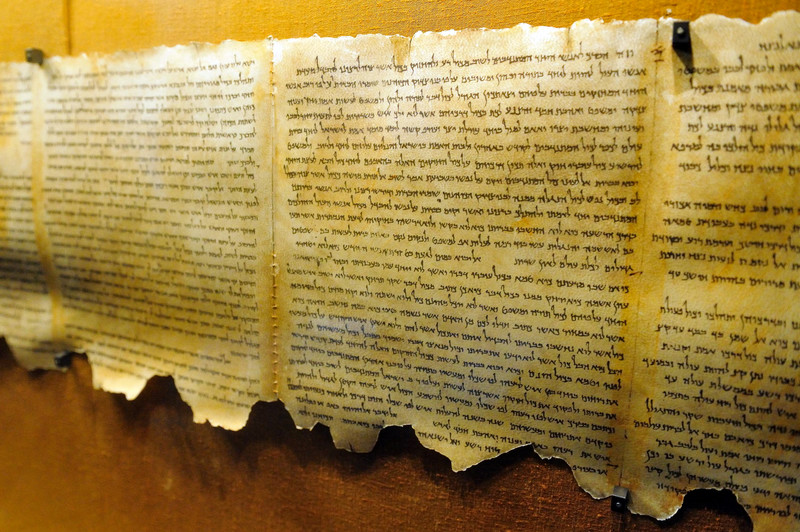
Christmas Thoughts: What Do the Dead Sea Scrolls Have to Do With Christmas?

When that young Jewish man found a Tanakh, located the Book of Isaiah in it and compared the passage in the Tanahk to the same passage in the “Christian” Old Testament, he was shocked to find that it was virtually identical.

 (c) Can Stock Photo / lucidwaters
(c) Can Stock Photo / lucidwaters

In the first installment of Christmas Thoughts, I left us hanging with a long passage from the Bible. I didn’t give the reference. I wanted the reader to think about it.

If it isn’t familiar to the reader, I wanted the reader to wonder where it might be found.

I have to admit that my inspiration came from a true story. A young Jewish man was presented the same passage and asked to identify where it was found in the Scripture. Like many of us, myself included as a young man, he wasn’t overly familiar with the Scriptures. His knee jerk reaction was that it is from the New Testament somewhere (which he hadn’t read either … but he was Jewish after all).

When he was told where the passage is located in the Bible, he was skeptical – Isaiah 53 … in the Old Testament. His next thought was, “That’s your Bible! I bet it’s not in the Tanuhk!” Continue reading “Christmas Thoughts: What Do the Dead Sea Scrolls Have to Do With Christmas?”

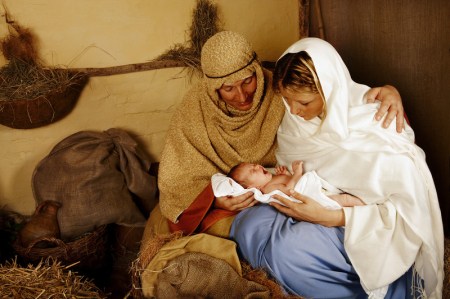
Christmas thoughts: Humble Beginnings, Worldwide Ends


Christmastime is a time to consider the birth of Christ. It’s “the reason for the season”, as the saying goes. Even with the busyness, commercialism and looming red eclipse of Santa, we usually pause to connect the dots to the birth of Jesus.

Whether you wish people a Merry Christmas or Happy Holidays, Christmas involves some acknowledgment of the birth of a man who was called Jesus who lived and died in the 1st Century in the region we identify as Palestine and Israel today. Here, in the confluence of Roman, Greek, Jewish and pagan influences, an obscure carpenter who lived maybe 33 years began a movement in human history that has spanned the globe and stood the test of time.

That movement has become the largest religion in the world today found on every continent and in every corner of the world. It is largely responsible for all the fundamental values of Western Civilization, though many people in “the west” have lost of sight of its influence. As appreciation seems to be waning for those foundations in the west, its influence is spreading in the east and global south.

It flourishes in the cold, communist climate of China and in the hotly hostile religious climate of Iran. It has made its way into the far reaches of the earth, down remote jungle streams and over barren desert sands to touch all people groups of the earth.

The circumstances of the birth of this influential, but humble, man are shrouded in mystery and quiet awe. Though many doubt the claims attached to him, no one can doubt his time enduring and global influence. His birth is the pivotal moment in human history and the pivotal point of God’s plan for his creation if we believe what has been told.

Continue reading “Christmas thoughts: Humble Beginnings, Worldwide Ends”

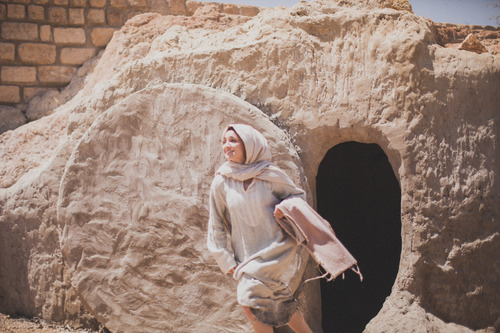
Women and the Resurrection Story

The centrality of women in the resurrection story is unmistakable, and at least two very significant points flow from that point.

lightstock_79956_xsmall_user_7997290


Women have suffered under the dominion and control of men since the beginning of recorded history (and before, no doubt). The culture in the US today, though, is much different than at any other time in history. Women have gained status they have never before had. As an example, about 65% of all college students in the US are women. The political, cultural and societal winds have shifted.

Most of the world, however, is not even close to that benchmark yet. In Muslim countries, in particular, women continue to be treated in ways that more “western” sensibilities consider backward and even barbarian. But, the historical subjugation of women is not just a Muslim thing; it has been widespread and pervasive going far back in time.

This may seem like an odd backdrop to the resurrection story, but women and the resurrection story are forever intertwined in one of the most progressive and remarkably dignified ways in ancient literature.

Continue reading “Women and the Resurrection Story”

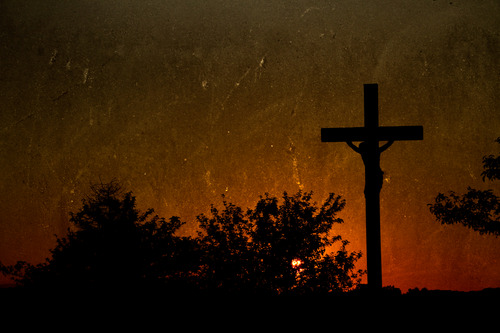
The Historical Christ

Perhaps, the most significant of the New Testament statements of the resurrection comes from Paul’s recollection of the events that occurred after the death of Jesus on the cross (1 Cor. 15:1-8).

lightstock_55703_xsmall_user_7997290


Once a year people remember the death of Jesus Christ on Good Friday. Few historical facts are as well-documented as the death of a man referred to as Jesus of Nazareth, the Messiah (Hebrew) or Christ (Greek) around 33 A.D. The claim that he was resurrected from the dead is a different matter. The modern mind, influenced by many centuries of science and discovery and the relatively recent (200 hundred years) of ascension of materialist thought, is highly skeptical.

Looking back at the Gospel accounts with a modern, skeptical filter, the implausibility of the story colors our view. Some modern thinkers conclude that the story was manufactured by the followers of Jesus.

For what end, one might ask. What did it gain those early followers? If they knew it was a lie, why would they die for that lie?  Continue reading “The Historical Christ”