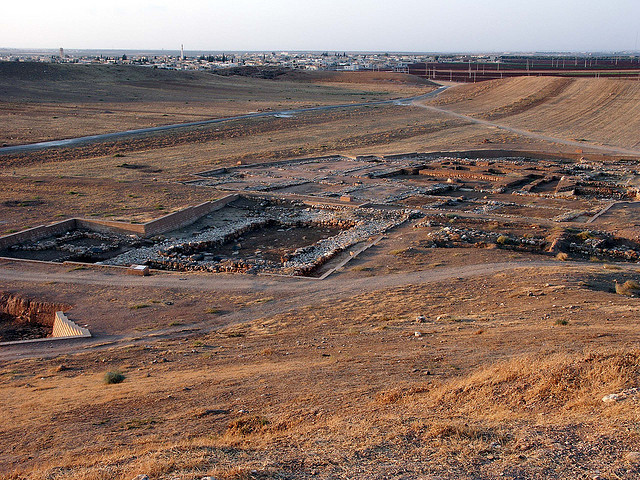
Bible skeptics often talk as if there is a dearth of evidence that any of the events in the Bible took place. Skeptics consider the Bible, and especially the Old Testament, as fictional, a fanciful product of the imagination trumped up many, many years after the actual events took place, and full of places and characters that never actually existed. The Ebla Tablets found in Northern Syria tell a different story.
I am continually interested in the latest evidence for God and the authenticity of the Bible. Not that I am doubting and looking for evidence to bolster my faith. for me, it’s more like opening presents on Christmas.
I searched, and I found the path that I am on long ago. Not that I was a great discoverer; far from it. God saw me coming. Not that I have arrived, but there is no other path for me. I was meant to be on this one. When Jesus said, “I am the way, and the truth, and the life, and no one comes to the Father but through me”, I believed, and I have not been disappointed in that belief.
I still believe. Not that this belief is unsubstantiated faith. Far from it! God made Himself known to me years ago. He met me where I was then, and He continues to be true, trustworthy, faithful and present today. The older I get and more I learn, the more true it rings.
At the same time, I have never been more open to entertaining truth than at any other time in my life, except (perhaps) for those years of searching before I became a believer. If God is true, then He stands up to truth wherever we can find it!
If Jesus Christ was not raised from the dead, Christians are to be pitied above all people. These are not my words, or even the words of a famous pastor or teacher. These are the words of Paul right out of his first letter to the Corinthians:
“[I]f Christ has not been raised, then our preaching is vain, your faith also is vain. Moreover we are even found to be false witnesses of God, because we testified [concerning] God that He raised Christ, whom He did not raise….and if Christ has not been raised, your faith is worthless; you are still in your sins. Then those also who have fallen asleep in Christ have perished. If we have hoped in Christ in this life only, we are of all men most to be pitied.” (1 Cor. 15:14-15, 17-19)
Christianity, far from being closed to reason, invites investigation. The importance of reason is built into the greatest commandment: love God with all your heart, soul and mind.
The earliest adherents to Christianity did not hide the fact that the resurrection of Christ is the central tenet of Christianity. They put it out there, front and center, and they were not shy to state the importance of the resurrection.
If the resurrection really happened, it is the single most important event in human history. If it is false, it is the single most influential hoax of all time. Christianity is built on the foundation of the resurrection, and without it, the entire structure of Christianity crumbles.
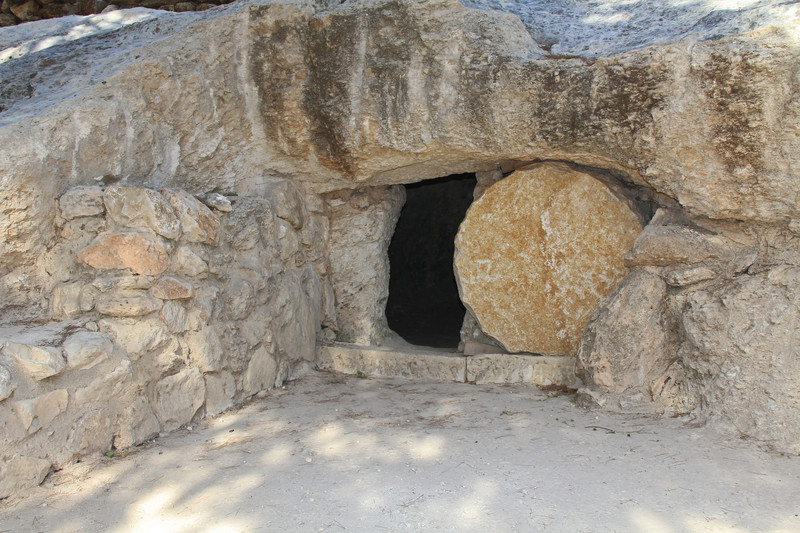
Dr Gary Habermas knew this when he was struggling with his faith, doubting the veracity of the Bible and Christianity. He knew that the resurrection was the central and crucial component of Christianity. If the resurrection did not happen, not only is the tomb not empty, Christianity is a complete and utter sham.
That was over 30 years ago when Dr. Habermas began exploring the claim that Jesus rose from the dead to confirm or deny his own doubts. That personal exploration led to a career of scholarship on the subject of the resurrection.
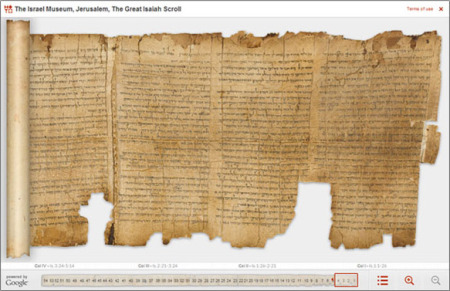
The Dead Sea Scrolls on display at the caves of Qumran that located on the edge of the Dead Sea in Israel.
Many people say they “do not believe” the Bible. But, what does that mean? The Bible is an ancient document that has been around in virtually the same form for centuries. For instance, the Dead Sea Scrolls reveal that the Old Testament has changed very little since well before the tie of Jesus. Less than 1% of the substance of the Bible has changed since the time of Jesus.
Some people argue over which writings should be included or not included in the canon that we call the Bible. The writings that are included in the current iterations of the Bible have been established for at least 1600 years. They were largely settled by consensus for at least a couple hundred years before that,
The Bible is an historical record of people and places. Many of those people and places and some events have been cross referenced by other sources, including Babylonian, Assyrian, Hittite, Roman, and other sources. Archaeological finds have also verified many of the people and places in the Bible. People may argue whether every person and place referenced in the text is actual, accurate and factual, but few people seriously argue that it has no historical value.
The Bible is also a collection of stories, poems, songs, and sayings (wisdom literature). As literature, it is full of imagery, compelling stories and words of wisdom. It has great literary value.
The Bible is a collection of writings covering a span of about 1600 years by many authors focusing on particular people group in a particular geographical area of the Middle East during a particular time period in history. Some of the writings purport to be relatively contemporaneous accounts, and others seem more like historical accounts when they were written.
The writings that comprise the Bible have been collected and preserved as sacred text. Scribes were carefully trained to copy the manuscripts. Those scribes devoted their lives to the careful transcription of the text from generation to generation.
What is most likely meant when people say they “do not believe the Bible” is that they do not believe the Bible is the “Word of God”. People do not believe it is divinely inspired. People do not believe that the Bible is the revelation of God to people.
When people say the do not believe the Bible, they most likely mean they do not believe the Bible can be taken at face value. At face value, the writings of the Bible purport to a collection of God’s communications with a certain group of people, in a particular region of the world, over a particular time span in history.
Various people have various theories about the Bible. I have even recently heard people say that the Bible was put together by Roman dictators to “control the people” by giving them something to believe in. There is little to no scholarly support for that position by the way, but this theory and other theories abound.
Most scholars agree that the Bible has cultural, sociological, literary, and other value. Though people disagree over the degree to which the Bible has historical value, it does have some historical value as any ancient text does.
Significantly, the evidence suggests that the Old Testament writings pre-date the first Century. The Dead Sea Scrolls, which pre-date the First Century, include manuscripts from every book in the Old Testament except for Esther. Among the manuscripts found in the Qumran caves that we call the Dead Sea Scrolls, was a complete scroll of the Book of Isaiah dating to at least 200 BC that is virtually the same as the “book of Isaiah” we have preserved in modern Bibles.
It is fact that the Bible is by far the most well-preserved and well-attested ancient text in the history of humankind. We have more ancient manuscripts of the Bible, by a large volume, than any other ancient text. The volume of New Testament manuscripts is stunning compared to any other ancient text.





 Navigating by Faith