
Glen Scrivener argues that atheists misunderstand Pascal’s Wager in Episode number 595 of his Speak Life Podcast (Atheists Misunderstand Pascal’s Wager (and so do Christians) I think he is right, and it seems that Christians don’t really understand it, either. Me included … until now. Before we dive in, though, let’s review Pascal’s Wager.
Blaise Pascal starts with the premise that human beings can neither prove that God exits nor prove that God does not exist. This is a concession, perhaps, to the atheist or agnostic, but the atheist and agnostic stand in no better position in relation to proving that God does not exist.
If that is the reality, then whether to believe in God or not is crap shoot. If we can’t prove it one way or the other, are we any better off than a roll of the dice? Pascal says that the truly rational person would choose belief in God based on what is known as Pascal’s Wager.
Believing in God potentially gains a person everything (eternal life, joy, meaning, etc.). If God exists, the believer hits the jackpot. Believing in God also has very little downside. Pascal supposes that a person might forego some pleasures that were not pursued or time and energy spent living in harmony with faith (more on that below), but a person is little worse off for believing in God if God does not exist.
On the other hand, a person who doesn’t believe in God loses everything if God does exist (eternal separation from God). A person who does not believe in God may gain some temporary pleasure, but any pleasure gained is fleeting. Therefore, Pascal said, the rational thing is to believe in God, because the potential gain is infinite and the potential loss is minimal. Given that we cannot prove God one way or the other, the truly rational person would “wager” on God, says Pascal.
Christopher Hitchens calls Pascal’s Wager “religious hucksterism of the cheapest, vulgarist, nastiest kind,” and Alex O’Connor calls it “half-hearted ass-kissing just in case.” Richard Dawkins asks, “What is so special about belief?” And, “Why would God not look for something of more substance from us, like being good?” Matt Dillahunty says, “Pascal’s wager is an apologetic argument that attempts to demonstrate that belief in God is warranted based on decision theory and probability.” But is it?
The often deriding comments beg for some understanding. Dawkins’s legitimate questions call for a response, and Matt Dillahunty’s assumption requires correction.
All of these comments and questions assume that Pascal’s Wager is an apologetic argument for God, and they find it woefully wanting in that respect. Even Christians assume it is an apologetic argument, but everyone who makes that assumption has missed the actual point of Pascal’s Wager.
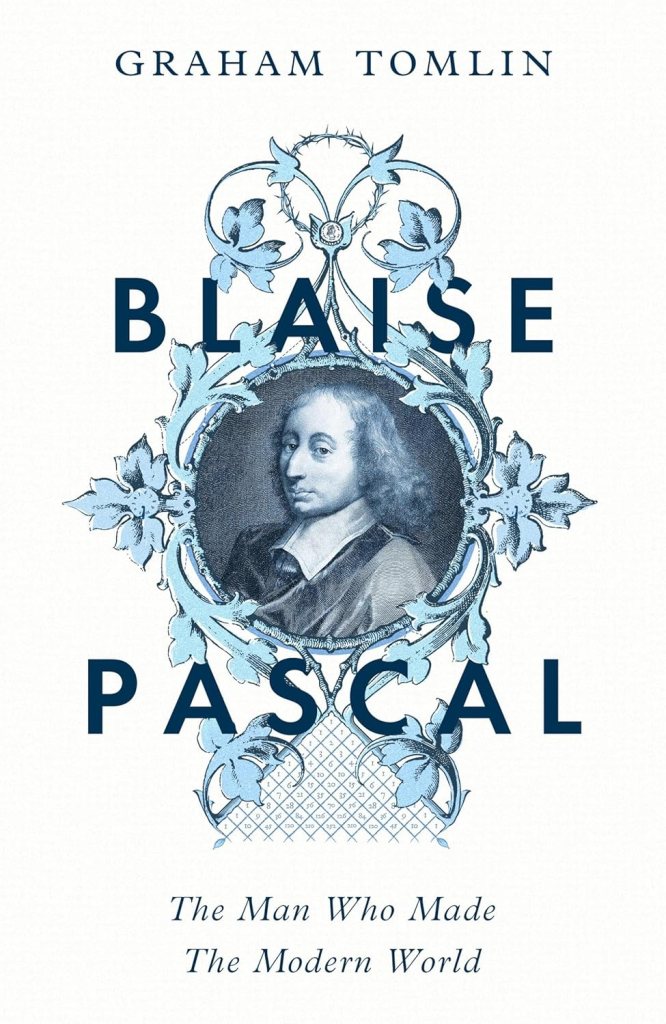
Glen Scrivener’s summary of Pascal’s Wager taken from Graham Tomlin’s book, Pascal, The Man Who Made the Modern World, exposes the error people make in these assumptions. Pascal wasn’t attempting to assert a rational argument, defense, or proof of God. He was making a very different point altogether.
Pascal was a genius by any measure. He was a scientist, mathematician, geometer, physicist, philosopher, polemicist, and theologian. He invented probability theory; he proved the existence of the vacuum, laid the foundations of integral calculus, performed what is called the first proper scientific experiment, established the principle that made possible the hydraulic press, demonstrated that air has weight, and many other things.
Thus, Scrivener says, “If we think that Blaise Pascal was silly, that might not reflect on Blaise Pascal; it might be a sign that we have misunderstood him.” The podcast featuring Graham Tomlin linked above and embedded below does a great job explaining the misunderstanding. It is worth the 25 minutes to watch and/or listen, but I am going to summarize and add my own thoughts as I continue.
Perhaps, we have missed Pascal’s point because we assume Pascal is a rationalist making a rational argument for God. It isn’t a bad assumption, as Pascal came to prominence in the beginning of the Enlightenment, and he was a man of mathematical and scientific accomplishment. It seems only “rational” to assume that he was a product of the Enlightenment.
Of course, assumptions are dangerous. Though Pascal lived during the development and rise of Enlightenment rationalism, he rejected it.
Pascal did not buy into Rene Descartes’s proposition that humans are supremely rational creatures capable of reasoning from abstract truth to ultimate truth. Pascal obviously believed that humans are capable of rationality (after all he was an accomplished scientist and mathematician), but he believed that humans are influenced in developing their core values more fundamentally by their “passions” than their intellect.
Pascal’s Wager is a thought experiment using probability theory to expose the failure of men to think rationally about God. He asserts that the truly rational choice, given our inability to prove or disprove God, is to bet on God. Thus, the fact that rationalists reject the wager proves that they are not fundamentally rational creatures.
That was his point. Pascal believed that we are creatures driven first and foremost by our desires – that our hearts are stronger than our heads and our loves are stronger than our logic. We are not “brains on sticks” as Scrivener characterizes Cartesian thought; we are embodied, intuitive, feeling creatures who also have capacity for abstract thinking.
Pascal’s Wager was intended not to be an argument for the proof of God; it was intended to expose the fact that we make our fundamental assumptions at a non-rational level. If we were purely rational creatures, we would take the safe bet of believing in God, but most people are not willing to cast their lot with God because we are not primarily rational creatures at our core. Logic and reason don’t motivate us as much as our “quote “passions”; we use our reasoning capabilities to justify the things our hearts desire.
Our misunderstanding of Pascal’s point more or less proves the point: that we are not who we think we are. We are not the primarily rational beings we claim to be. We shoot from the hip. We make decisions at a gut, emotional level and defend them with our ability to reason. Not the other way around.

Interestingly, this is what modern social psychologists, like Jonathan Haidt, are saying. In his groundbreaking work, The Righteous Mind: Why Good People Are Divided by Politics and Religion, Haidt says that people make moral and political decisions at an unconscious, intuitive, and emotional level. He says we only use our intellect and rational capacities to defend the moral, political, and worldview choices we desire to embrace in our hearts.
Another way of saying this is that we form our basic beliefs about how the world operates and the moral imperatives that apply to us with our hearts, but we defend the positions we embrace in our hearts with our minds. Because we are creatures capable of reason, we assume we have arrived at our basic beliefs rationally, but that isn’t how it actually works with us. His book is full of demonstrations of this point.
On this score I am reminded of Charles Darwin’s doubt about his own spiritual intuitions. He famously didn’t trust his intuition that the world is ordered and that God exists. That “doubt” progressed from agnosticism to atheism over the course of his life.
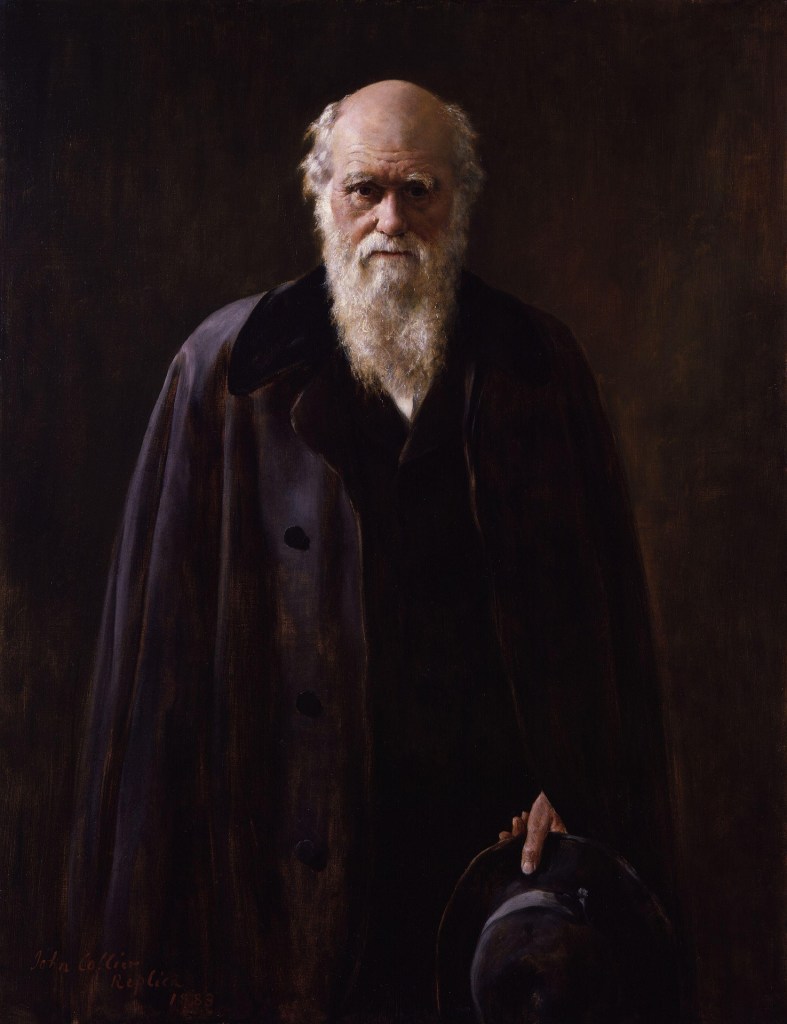
People speculate that the death of his three children (Mary at 23 years, Anne at 10, and Charles at 18 months) were factors in Darwin’s views on faith, but Darwin credited his reasoning power for his feelings. Darwin was squarely in the rationalist/Enlightenment camp.
Of interest here is the implicit trust Darwin reposed in his capacity to reason. By use of his intellect, he developed the theory of evolution, including the evolution of human beings from apes. The combination of these things (the doubting of his intuitions and the evidence and reasoning in support of evolution) led him to pose this rhetorical question, “Would anyone trust the intuitions of a monkey’s mind?”
For Darwin, the answer was rationally clear that we should not trust our own intuitions any more than we should trust the intuitions of the minds of monkeys from which we evolved. Implicit in that same line of thinking, however, is another question that Darwin did not think to ask: “If we evolved from monkeys, should we trust the rationality of a monkey’s mind?”
Blaise Pascal and modern social psychologists like Jonathan Haidt answer the question Charles Darwin left unanswered, and they take it a step further. They say we are not first and foremost rational creatures; we form our most basic beliefs at a subconscious, sub-rational, intuitive level, and we bring our rationality to bear on fleshing out and defending those positions we have already assumed.
Pascal’s “wager” was his attempt to prove this point. It is not a proof for the proposition that God exists; it is a proof for the proposition that humans are not primarily rational creatures. We make our moral decisions at an intuitive level, and we reason to defend them and convince ourselves that our beliefs are rational. If we really were rational creatures, says Pascal, we would take the bet.
Perhaps as a side note, Pascal’s argument may be stronger today than it was in his own day because of data that shows the benefits of faith in God. Recent studies show, that religious faith has great benefit – even if God does not exist.

Religious people have greater psychological and emotional health. They are more resilient in the face of hardship, suffering, illness, and loss. Religiosity and spirituality protect against depression and anxiety. Weekly religious‐service attendance is associated with lower risk of mortality, less heavy drinking and smoking, and better psychosocial well‐being (positive affect, life satisfaction, social integration, purpose in life).
Data reveals that regular religious service attendance results in better physical health. Regular religious service attendance is associated with lower mortality rates, and this is true in medically-ill elderly persons as well as healthy, younger persons. Prayer, meditation, and worship are shown to reduce cortisol levels and lower blood pressure, enhancing physical well-being. Religious people are less likely to have addictions and are more likely to overcome them if they do.
Religious faith has social and communal benefits that protect against feelings of isolation and loneliness. Religious people are statistically more likely to volunteer, donate to charity, and engage in community service, both within and beyond their faith group. Regular religious involvement is linked with lower divorce rates, more stable marriages, and greater parental involvement.
Despite the demonstrable benefits of religious faith, people are still not willing to bet on the rationally better proposition because nonrational influences drive our basic decision-making. Modern evidence shows that the loss of pleasures we might forgo and the time and energy we might spend on exercising faith is more than compensated by the clearly demonstrable benefits that can be obtained in this life by adopting belief in God. That evidence makes the case even stronger for “betting on God,” and it strengthens Pascal’s argument that we choose our beliefs at a more visceral level than reason.

If we were really being rational, says Pascal, we would always bet on God based on decision theory and probability. “Betting” on God might be a “cheap” and “vulgar” religiosity or “half-hearted ass-kissing, just-in-case” proposition, but it would be perfectly rational. There is little to lose and infinite benefit to gain.
I find it interested that Dawkins, O’Connor, and Hitchens do not merely argue that Pascal’s Wager is a bad argument for God. They seem to view flipping a coin on belief in God as morally objectionable.
It’s ironic that they view believing in God for purely rational reasons – because of the probabilities – cheap, even vulgar, and inauthentic. These are people who double down on the human ability to reason in rejecting God, yet they find moral repugnance in the idea of wagering on the rationally superior position.
I think they are right, and I think Pascal would agree – that exercising faith purely as a wager on the rationally better option – is morally deficient. He wasn’t trying to “argue people to God” with his argument, however.
When people objected to Pascal that they cannot muster belief in something they don’t actually believe in, Pascal accepted the objection. He conceded the point because he had already accomplished his goal: to show that people believe in God or do not believe in God for nonrational reasons.
When Pascal said, “The heart has its reasons of which reason knows nothing,” he was saying that the our hearts control us more than our heads. We use our heads to justify what our hearts lead us to believe, and not the other way around.
Scrivener cites Tim Keller for the additional proposition that the theist and the atheist take their lives into their own hands either way. Both the theist and the atheist exercise faith in their ultimate conclusions If we have no proof that God exists and no proof that God does not exist, all of us operate in the realm of faith.
We all trust a proposition we cannot prove. Though we try to support out choices as best as we can by our intellect, the ultimate proof is beyond us, so we operate by faith in the view we have adopted.
This leads me back finally to Richard Dawkins’s question, “What is so special about belief?” Isn’t reason a better bet? And, why doesn’t God emphasize good behavior in place of faith?
I suppose even Pascal might have said that reason is more reliable than faith if only we were preeminently rational beings. But, we aren’t. And, even if we were, our finitude limits our ability to reason with ultimate confidence that we know and correctly understand what there is to know.
Faith is the fate of the human condition. We have to take our ultimate conclusions on faith because we have no other choice. Belief is “special” because it is inevitable for finite beings such as we are.
Why is God so interested in faith? I suppose God could have done it differently. He could have made Himself abundantly evident, but He didn’t. Perhaps, this is because God is not ultimately interested in mere rational acquiescence. As James says, “Even the demons believe …, and shudder!” (James 2:19)
The demons don’t have any problem believing in God, but they hate Him. God does want our forced rationality; He wants our hearts; and He wants us to believe and trust Him. He isn’t looking for mere acquiescence or acknowledgment. He is looking for relationship.
God doesn’t ultimately want us to make a cheap and vulgar roll of the dice, as Hitchens says. He doesn’t want “half-hearted ass-kissing,” as Alex O’Connor says. He doesn’t want us to come to him because reason shows us He is the only objective choice we have.

God desires our affections, not our scientific and mathematic certainty. God has created a world and placed us in it in which we must seek and reach out (feel or grope) for Him in order to find Him. (Acts 17:27) He does this, I believe, so that our hearts are genuine when we do find Him, though “in him we live and move and have our being.” (Acts 17:28)
God is here all along, but He wants to be found by people who want to “find” Him. He wants to be found by people who are not simply seeking the best rational outcome for themselves.
Thus, Pascal would suggest to people who do not believe to experiment with prayer, call out to God, go to church, exercise some form of devotion, and move in the direction of God. If God exists, perhaps He will become evident to the person who is seeking for Him. This is God’s design in Acts 17:27.
I will end by saying that I believe this is the tenor of the Bible. The Prophets of old align with Blaise Pascal and with modern social psychology in the proposition that we are driven fundamentally by our hearts, and not our minds:
“But blessed is the one who trusts in the Lord, whose confidence is in him. They will be like a tree planted by the water that sends out its roots by the stream. It does not fear when heat comes; its leaves are always green. It has no worries in a year of drought and never fails to bear fruit.” The heart is deceitful above all things and beyond cure. Who can understand it?”
Jeremiah17:7-9 (niv)
The benefits of believing in God are objectively demonstrable, but we live by our hearts that can lead us to conclusions that seem more palatable to us than a God who might demand something from us. God is found by the person who is willing to set aside the things we might personally prefer for the chance that God is real. To the one who trusts in God go both the benefits in this life and in the one to come.



Excellent article on Pascal. One question: Can you give a defintion of “heart” as you used it in this article?
LikeLike
I hesitated to use that term. I meant it only in a colloquial sense, as we often do, contrasting the mind from the heart.
LikeLike
As an accountant, I’ve always loved Pascal, since he invented the calculator. Then come to find out he was a Christian as well was a bonus!
LikeLiked by 1 person
He was way ahead of his time in many ways! And he died young, like in his late 30’s.
LikeLiked by 1 person
Well he sure accomplished quite a bit in those years!
LikeLiked by 1 person
As an attorney, I have always appreciated accountants. 😉
LikeLiked by 1 person
This article speaks on the brain’s superior role in decisions of belief. Pascal’s Wager is only one dynamic point of input required to process and close the decision of gospel faith. Professor Troxel’s work teaches the heart does the final “thinking” after all data is inputted from the brain, soul, spirit, ego, etc. The heart is the instrument designed for logic and reason, not so much for emotions. The heart, without biblical faith, can only affirm natural phenomena. Brain work (reason, logic, intelligence) conclude it is foolish to not believe in an essential being, a creator, a God. The Bible says that it is impossible to please God without faith in Him and that faith is a gift from Him. One can prove to the atheist beyond any reasonable doubt the evidence that God exists. Their heart can never convert by using their intelligence alone.
https://www.goodreads.com/book/show/45833057-with-all-your-heart
LikeLiked by 1 person