
“[I]f anyone says to you, ‘Look, here is the Christ!’ or ‘There He is!’ do not believe it. For false messiahs and false prophets will appear and perform great signs and wonders to deceive, if possible, even the elect.”
Matthew 24:23-24
This is a significant warning from Jesus about future times – our times. It’s easy to call out false messiahs and false prophets, and many have done that, but we should be cautious and careful in our understanding of what a false messiah or false prophet and, more importantly, how to spot one.
The Greek word translated a “false” in this passage is ψευδή (pseudés) meaning “false, untrue”, and “(by extension) erroneous, deceitful, wicked.” The word comes from the root verb ψεύδομα (pseudomai) meaning “to utter a lie or attempt to deceive by falsehood.”
The Greek word Χριστός (Christos), of course, means Christ – the Christ – as in Jesus Christ, but, it could mean more than that. Christos derives from the verb chrio (χρίω), which literally means “to smear or rub with oil.” It also means “to anoint” (especially for a divine purpose” and “(by implication) to consecrate to an office or religious service.”
Jesus used chrio when he said, “The Spirit of the Lord is upon me, because he has anointed me to proclaim good news to the poor.” (Luke 4:18) In more modern terminology, we might say that Jesus was appointed to proclaim good news to the poor. The “anointing” (the pouring of oil on a person) was symbolic of a person’s appointment to a position. In religious circles, we might use the word, “calling,” today.
The idea of anointing a person appointed by God for a particular office was practiced in the Old Testament as well. Samuel “took a flask of olive oil and poured it on Saul’s head”, and he said, “Has not the LORD anointed you ruler over his inheritance?” (1 Samuel 10:1)
Christos has a counterpart in the Hebrew word, מָשַׁח (mashach), meaning “to rub with oil, i.e. to anoint,” and “(by implication) to consecrate.” Hebrew kings, priests, and prophets were anointed in this manner as a way of recognizing their position (appointment). Thus, מָשִׁיחַ (Messiah), literally “Anointed One,” emerged from this practice.
The Greek word, Christos, is the equivalent of the Hebrew word, Messiah, of course. We tend to think only of Jesus Christ, “the” Messiah, when we use those terms, but anointing men for their offices was common practice in the Old Testament and New Testament times by Hebrews and by Greeks. Anyone who was anointed (appointed) for an office was an “anointed one.”
A false Messiah is one who falsely claims or acts as if he is anointed (appointed) for a particular role. The Hebrew word for Prophet (προφήτης (prophétés)) means speaking forth by the inspiration of God, so a false prophet would be one who falsely speaks as if by the inspiration of God.
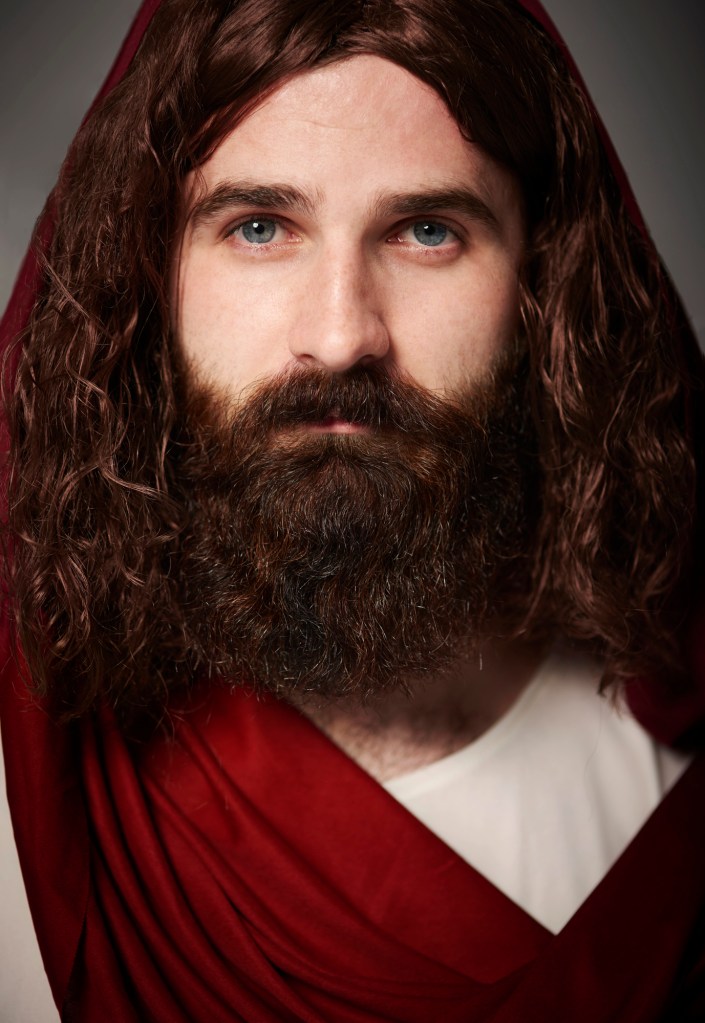
Jesus uses the terms, false messiahs and false prophets (plural), to signify that many people would come claiming (or claimed) to be messiahs or prophets. He says, they will deceive many people and even the elect, if possible. Elsewhere, Jesus says they “will come to you in sheep’s clothing” and warns us to “Watch out!” (Matt. 7:15)
Is it possible for God’s children to be deceived? I would like to think not, but then why does Jesus warn us to “Watch out!”? Why does Jesus say false messiahs and false prophets might even deceive “the very elect”?
I don’t know if God’s children – the sheep who hear His voice – can ultimately be deceived by false messiahs and false prophets, but that doesn’t mean we could not be deceived at some point or for a time. It’s safe to say, I think, that Jesus would not have warned us at all if it wasn’t at all possible to be deceived to some extent.
At a minimum, Matthew 24:24 highlights the extreme danger and the potential for even believers to be swayed or confused by the powerful deceptions of false messiahs and false prophets. Peter warns us soberly that “there will be false teachers among you” (1 Peter 2:1), so we need to beware. But, how?
So far, we can say from the descriptor of false messiahs and false prophets that they are deceivers; they are not truly anointed for the purposes they or others claim; and they do not truly speak under inspiration from God. They deceive and lie, and that is what makes them dangerous. But, again, how will we know?
When God became man and came to His own people, they didn’t even recognize Him or receive Him. (John 1: 9-11) If God came in the flesh to people with whom God had a covenant for many hundreds of years, and they didn’t recognize Him, we should have the humility to admit that we might not recognize God always when He is active in our world, and for the same reason we might be fooled by false messiahs and false prophets.

What, then, are the clues that a messiah (one who seems to be anointed for a purpose, calling, position) or a prophet (one who purports or who is purported to speak by the inspiration of God) is false? Fortunately, the Bible gives us more information to go on.
Jesus said
““Watch out for false prophets. They come to you in sheep’s clothing, but inwardly they are ferocious wolves. By their fruit you will recognize them. Do people pick grapes from thornbushes, or figs from thistles? Likewise, every good tree bears good fruit, but a bad tree bears bad fruit. A good tree cannot bear bad fruit, and a bad tree cannot bear good fruit.”
Matthew 7:15-18
From this passage we see that false prophets 1) “come in sheep’s clothing”; 2) are “inwardly … ferocious wolves”; and 3) and are recognized “by their fruit.”
Note that sheep’s clothing does not help us, because they look like other sheep. They are “inwardly ferocious wolves”, but that also does not help us because we judge only by outward appearance; only God can look at the heart. (1 Samuel 16:7)
That leaves us with one way to recognize false messiahs and false prophets: their fruit. “By their fruit you will recognize them.”
We can’t judge the heart. We can’t look at a person “inwardly” like God can. (And it’s dangerous to think we can.)
False prophets “come in sheep’s clothing” and look like us. They lie and deceive to the point of fooling “even the elect.” Appearances are not necessarily going to signal a false prophet or false messiah.
The hearts of all people are deceitful. (Jeremiah 17:9) God’s own people did not recognize Him when he came in the flesh. Yes, we do have the Holy Spirit, but our hearts are no less susceptible of being deceived. If we don’t believe that, perhaps we are already deceived.
BUT, Jesus said, we can know a tree by its fruit. Good trees produce good fruit, and bad trees do not. Scripture says we can’t judge the heart, because we can can only judge by appearances, but all is not lost for us because fruit is an outward appearance.

Fortunately, God has also revealed to us what good fruit to look for. Jesus contrasts grapes and figs to thorns and thistles. Obviously, grapes and figs are good and pleasant to eat. They are beneficial to people, providing comfort and sustenance. Thorns and thistles cause pain and irritation and have no beneficial value to people.
God has also revealed more explicitly and completely the kind fruit of that is good:
“But the fruit of the Spirit is love, joy, peace, forbearance, kindness, goodness, faithfulness, gentleness and self-control.”
Galatians 5:22-23
Fruit is the measure by which we can and are instructed to determine whether a messiah (anointed one) of a prophet (one inspired by God) may be true or false. Do they love people? Are they joyful? Do they bring peace? Do they show forbearance? Are they kind? Are they good? Are they faithful? Are they gentle? And, do they have self-control?
We all sin and fall short, but anyone who claims or is purported to be anointed for some godly purpose or inspired by God in their speaking should be exemplary of people in the fruits of the Holy Spirit. We tend to focus on the gifts a person has, but the fruit of their character is mot important!
Though we usually think in terms of “the” Messiah and “the” Prophets, these principals can be applied to anyone who claims or is purported to have a special calling or ability to speak under inspiration from God. In fact, I believe, they should be applied that way.
None of this is fool proof. We are too apt as finite creatures to be fooled, and religious people who value faith highly are, perhaps, more susceptible of being fooled than most. Let’s be honest.

Perhaps, that is why Jesus told his disciples to “be as shrewd as snakes and as innocent as doves” (Matthew 10:16) when he sent them out to share the good news among “the lost sheep of the house of Israel.” (Matt. 10:5) He also prefaced that admonition with this warning: “I am sending you out like sheep among wolves!” (Id.)
The wolves were among the lost sheep of Israel. If there were wolves among the lost sheep of Israel, then there are certainly wolves among us today. Indeed, the parable of the wheat and the weeds provides similar warning to us that weeds will grow up among the wheat, and God is not going to sort the weeds out from the wheat “until the harvest.” (Matthew 13:24-30)
Certainly, weeds have grown up among the wheat of God’s people as Jesus predicted. Thus, the instructions to be “shrewd as snakes” and to be not ignorant of the fact that weeds grow among the wheat is good instruction for us today.
I should note that Jesus also instructed us not to attempt to weed out the bad seeds, because our attempts to weed out the bad seeds will inevitably result in pulling up the wheat with the weeds.
“The servants asked him, ‘Do you want us to go and pull them up?’
Matthew 13:28-29
‘No,’ he answered, ‘because while you are pulling the weeds, you may uproot the wheat with them.'”
Thus, we need to leave the weeding out to God and to God alone. I cringe when I see well-meaning Christians calling out other Christians as heretics on matters that do not go to the most fundamental and core matters of Christian faith – like whether Jesus rose from the dead in bodily form.
At the same time, we cannot ignore the strong warning that Jesus gave us about false messiahs and false prophets. We should be careful not to be fooled by them. We must not be fooled by them! We must be shrewd about the wolves who live among the sheep.

The Greek word translated “shrewd” (in the NIV) is φρόνιμος (phronimos), from the root words, phren (thoughtful), sophos (practical skill or acumen), and sunetos (intelligence or mental acquirement), and phronimos is also translated as wise. This word seems to combine elements of careful/discreet thinking, common sense, and intellect.
This reminds me of Paul’s words in 1 Thessalonian 5:20-21, which are extremely apropos: “Do not despise prophecies, but test everything; hold fast what is good.” (Emphasis added)
We must not despise prophecy – speaking under inspiration from God; but we must test whatever we hear. We should not simply accept and embrace uncritically everything we hear – even if it has been spoken by a person professing to be speaking with the inspiration of God or a person who claims to be or is claimed to be anointed/appointed with a divine purpose.
Ultimately, we must always consider the fruit of the person professing or purported to be speaking with the inspiration of God or the person professing or purported to be anointed/appointed with a divine purpose. If the fruit is bad, do not embrace it! Steer clear of that tree!
We do not necessarily need to pronounce judgment, and we should not necessarily attempt to weed out anyone from the body of Christ who seems to be a bad seed. But, we should be especially wary of any leader who displays bad fruit, because we will know a false messiah or false prophet by his fruit.

 Navigating by Faith
One thought on “How Do We Know When a Person Is a False Messiah or False Prophet?”