I am listening to a discussion of a new book by Christopher Watkin, Biblical Critical Theory: How the Bible’s Unfolding Story Makes Sense of Modern Life and Culture, dealing with culture on the Truth over Tribe podcast. Watkin’s premise for the book is that we should use the Bible to frame our critique of culture, but the reality often is that we frame and interpret the Bible through our cultural lens.

As an aside, I love the title of the book. “Critical theory” is part of our modern cultural vocabulary and milieu. Though many Christians recoil from the invocation of that term, it is the language of our times Watkins uses it to capture the attention, and he uses it as a springboard to take us back to the Bible, which I think is brilliant.
The discussion on the podcast focuses on the definition and meaning of culture, starting with the reality that culture pervades most of our lives and our thinking. Watkin notes that we see God working in and through cultural environments in the Bible, yet the thrust and message of Scripture is multicultural (and countercultural).
What appears to be exclusive is revealed to be inclusive. God works in the cultural milieu, but the message is not bound by it nor bound to it.
A multicultural theme is baked right into the fabric of Scripture, including the influence of three different languages that make up the biblical writings. This theme is borne out by the glimpse God gave John of the end of the Story. If we lift our eyes to see the horizon for all Christians off in the distance, this is what we see:
I looked, and there before me was a great multitude that no one could count, from every nation, tribe, people and language, standing before the throne and before the Lamb. They were wearing white robes and were holding palm branches in their hands.
Revelations 7:9
Our destination, the mansion with many rooms that Jesus spoke about, is filled with multicultural people worshipping God from every nation tribe and tongue crying out in unison, “Holy, Holy, Holy is the lamb!” From this we see that God does not negate culture or ethnic differences. (He confused our languages and scattered us after all.)
But, we also have to recognize that the trajectory of Scripture and God’s plan revealed in Scripture brings us to unity in Christ. Jesus broke down the walls of division (Eph. 2:14), and the thing that unites us is Jesus.
Watkin cautions that Scripture is not entombed in culture, but it takes root in culture. It spreads out to all cultures: Jesus told the disciples to spread the message in Jerusalem, Judea, Samaria, and to the ends of the earth. Thus, the Gospel speaks to all cultures, calls people out of all cultures, and provides the promise of redemption to all cultures.
Indeed, Christianity began as a near, middle eastern movement which spread into the Roman Empire: north, south, east, and west. It spread into the culture of northern Africa and southern, central, and northern Europe, It spread to Asia minor and further east. This spread happened extremely quickly, within a generation of the death of Jesus, and it continues to spread today. The center of Christian growth today is predominantly in the southern Hemisphere.
The roots of Christianity go back to Abram, whose family heritage and land was rooted in the area known today as Iraq. Abram traveled west to Asia Minor, and then south into the Levant at God’s calling and this promise:
“I will make you into a great nation,
Genesis 12:2-3
and I will bless you;
I will make your name great,
and you will be a blessing.
3 I will bless those who bless you,
and whoever curses you I will curse;
and all peoples on earth
will be blessed through you.”
The emphasis added is mine. From the beginning, God called Abraham to be a blessing to all peoples on the earth! Paul picked up on this theme when he said:
Understand, then, that those who have faith are children of Abraham. Scripture foresaw that God would justify the Gentiles by faith, and announced the gospel in advance to Abraham: “All nations will be blessed through you.” So those who rely on faith are blessed along with Abraham, the man of faith.
Galatians 3:7-9
and
So in Christ Jesus you are all children of God through faith, for all of you who were baptized into Christ have clothed yourselves with Christ . There is neither Jew nor Gentile, neither slave nor free, nor is there male and female, for you are all one in Christ Jesus. If you belong to Christ, then you are Abraham’s seed, and heirs according to the promise.
galatians 3:26-29
Jesus is the seed (descendant) of Abraham through whom this promise is spread to all peoples of the earth. The center of Christianity began in the Middle East, but it quickly found cultural centers in northern Africa, Asia Minor, and southern and eastern Europe. For much of the history of the church, Europe became the center of western Christianity, but Christianity flourished in in all parts of the world.
Christianity and its roots grew up embedded in culture. Christianity was born at the crossroads of culture where east, west, north, and south met with overlays of Hebrew, Babylonian, Persian, Greek, Roman, and Egyptian influences (to identify the major ones). Thus, culture is part of the story
Watkin cautions, though, that people who are immersed in their own culture don’t realize how influenced they are by it. Like a fish in water compared to a bird in the air, we don’t recognize how different our cultural environment is compared to people in other cultural environments.
This is the challenge for us today, just as it was a challenge for all generations, in all times, and in all places before us. We need to be absorbed in Scripture and allow the Holy Spirit to critique and frame our culture through Scripture, and not the other way around.
Watkin says this about culture:
On one extreme, you would have the position that everybody’s culture is absolute with them. There is no way of getting outside your culture. You are completely trapped, and, therefore, you cannot say a word about someone else’s culture, because you’ve got no idea about it. Anything you say will be so shaped by your own culture that it would be meaningless. That’s one extreme.
From the truth over tribe podcast
The other extreme is to say that we can take off and put on culture like a coat. When I want to, I can set my own culture aside. I can assume a God’s eye view over culture. I can become the referee or the umpire in the match, rather than one of the players, and I can judge with perfect transparency where everybody else is getting it wrong.
“Those are two caricatures, but I think they capture two tendencies towards which people can trend and two tendencies that we want to try to avoid. I think the way not to fall into either of those extremes and to keep a healthy, rich, biblical approach is to be constantly challenging our own assumptions through coming face to face with cultural expressions that are not our own.
A lot of that is just buried in the Bible. Living in the 21st Century in the Uk, or the United States, or Australia, the Bible is not our book in the sense that it is not written out of the cultural bubble that we are a part of. When I read the Bible, I am brushing up against different ways of looking at the world, and therefore a light is being shown on my own blank spots. If I am being careful, I am always being challenged about what ways of thinking about the world are coming directly out of God’s Word, and what am I bundling into it that is not part of God’s Word but part of my own cultural assumptions.
Perhaps, the most interesting point made in the discussion (for me) is the importance of letting the Bible speak to culture and avoiding the tendency to let culture speak into the Bible. One way to do this is to become fluent with the arc and sweep of Scripture from beginning to end, says Watkin.
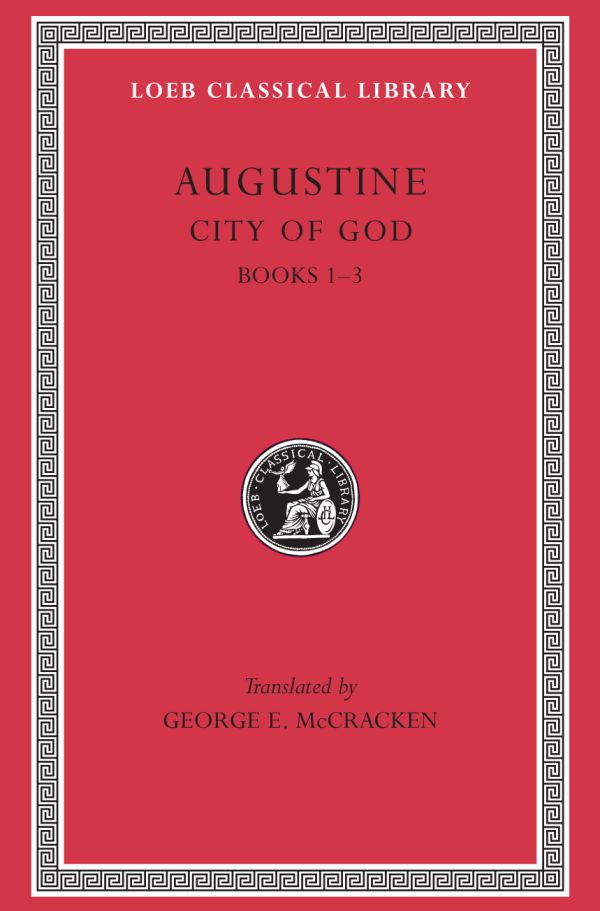
Watkin holds up Augustine and his book, The City of God, as an example of the way to use Scripture as a critique of culture. Augustine critiqued the Roman Empire through the framework of Scripture. We need to be able to do that today
We need to be able to let Scripture frame our culture and give us an objective critique. Far too often we fall into framing Scripture according to our culture, and we don’t even realize that we are doing it.
Christopher Watkin also cites 1st Corinthians 1 as a way in which Scripture should interact with culture. Paul tells the Corinthians that the wise people of this world are foolish and the strong people of this world are weak. The Greeks look for wisdom, and the Jews look for power, but the gospel looks like foolishness to the Greeks and weakness to the Jews. Paul goes on to say that the foolishness of God is wiser than the wisdom of men, and the weakness of the gospel is stronger than the power of men.
We might think that Paul is talking only about wisdom and power generically in this passage, but we should not fail to realize that Paul was addressing what these certain people in that particular time valued culturally.
We need to consider what people in our culture value today and consider how Scripture provides the antithesis to those values. This is because the Gospel is always countercultural. In every age. In every culture.
The Gospel provides a framework for judging culture objectively and charting God’s path for people in any time and in any culture in which it is applied. The Gospel is timeless, but culture is permeated with the here and now. The Gospel stands outside of culture in any time and in any age and in any group of people. Therefore, we should take to heart Paul’s word to the romans:
Do not conform to the pattern of this world, but be transformed by the renewing of your mind. Then you will be able to test and approve what God’s will is—his good, pleasing and perfect will.
Romans 12:2
Here is a brief summary of the book by Christopher Watkin, himself:
“A critical theory is theoretical approach to the whole of like that makes certain things viable, certain things visible and certain things valuable.”
from the Youtube introduction to the book
Watkin says, as I learned, that “critical theory” was first conceived as a way of framing society and of exposing underlying, cultural influences that we might not otherwise see. There are many critical theories. The cultural Marxist critical theories are just one form of critical theory (lens).
Watkin espouses a “biblical critical theory” that views the world and our culture through the lens of Scripture, revealing things that cannot be seen through other lenses. He takes our modern cultural language, as Scripture has down through the ages with cultural language, and he reframes it through Scripture.


Excellent article that speaks very powerfully to my current reflections on the culture of 21st century life in the UK as I experience it. It is vital that our witness to ‘the next generation’ exposes the ‘vanity’ and ‘chasing after the wind’ that is ‘sold’ to them as success and achievement in the empty and vacuous lie that is the modern world. In my view, ‘religion’ is failing the next generation in its mirroring and legitimisation of these cultural lies. Thank you Kevin…
LikeLiked by 1 person