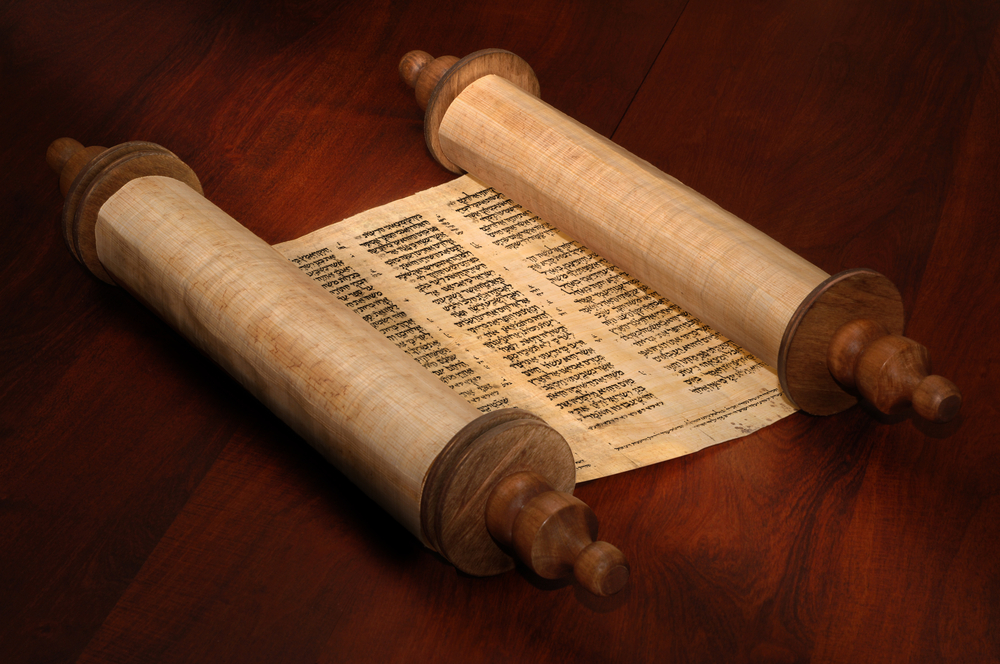
If you read through the Torah, you will find verses that seem morally repugnant to our modern sensibilities. For instance, the death penalty applies to conduct that seem to us like minor offenses. Israelites were allowed to keep slaves. The Mosaic Law is also clearly paternalistic in our modern view, subjecting women to second class citizenship.
This is just a start. Skeptics like to point out these things in criticism of the Bible. They claim that Scripture is full of immoral ideas.
Christians try to find explanations that soften the criticism, claiming that we need to understand the cultural context and what was actually meant. Skeptics claim Christians twist the plain meaning of the text to avoid obvious conclusions. So it goes.
Could it be that both skeptics and defenders of the biblical text are right? That is the position that is taken in the video by Inspiring Philosophy: The Imperfect Mosaic Law.
We have to admit that the Torah contains some instructions that are morally distasteful, if not repugnant, by modern standards. We could try to explain them away. We could claim that our modern morality is wrong. We could reject the Bible and concede to the skeptics that it was written by Ancient Near Eastern men, there is no God, and the Bible is unreliable as a moral code.
Most of these options assume that the Mosaic Law is/was meant to be a perfect and universal statement of God’s moral code. Perhaps, though the Torah was never meant to be a perfect, universal moral law. Perhaps it wasn’t meant to be applied to all people in all times.
It seems that believers and non-believers, alike, assume we must apply every word of the Bible to modern life, and it stands or falls on its instruction to us today. Believers hold on as skeptics try to pry away our faith from clenched fists that we hold to the Bible.
Maybe, however, it ain’t so. The video describes some subtle and some not-so-subtle clues that support the view that Ancient Near East morality contained in the Bible was never meant to be a timeless measure of the conduct for mankind. One such clue is the way Jesus viewed and applied the Law.
In Matthew 19, for instance, the Pharisees tried to trick Jesus with a question on divorce. They referenced the Law of Moses, which allowed men to divorce and send their wives away, and they asked Jesus who would be a man’s wife in heaven if he divorced and remarried many times. Jesus responded, to their chagrin, that Moses allowed men to divorce their wives only because of the hardness of their hearts, adding, “but from the beginning it was not so”. (Matt. 19:8)
Jesus seems to be saying, here, that God instructed the people in the Mosaic Law on divorce, not with a timeless moral truism, but with a temporary “law” intended to accommodate their existing, cultural, and social condition.
Jesus seems to be suggesting that this aspect of the Mosaic Law was a kind of “compromise” between God and Israel. God apparently softened and calibrated the provisions of the Law to accommodate the cultural norms, attitudes, and expectations of the people at the time.
Perhaps, the people were not open to what God intended from the beginning, so God revised the terms for them. Perhaps, the instruction on divorce was a “step in the right direction”, but only a step toward the actual ideal.
We don’t know exactly. We might be tempted to think that this was the only accommodation because this is the only time Jesus is recorded to have said anything like this. As it turns out, however, most of the Mosaic Law was provisional, and it was replaced by a New Covenant. Jesus shifted the grand paradigm completely!
I have often thought that the Bible demonstrates a kind of progression in the relationship between God and man. I don’t mean this in the sense of a formal doctrine. Whatever we might call it, Scripture is the narrative of a growing, unfolding revelation of God to people.
Scripture has an arc to it. From the creation of the world, to Adam and Eve, to Noah, Abraham, Moses, David, the first Temple, and the second Temple and forward to Jesus and beyond, Scripture has a progression. There is a “sweep” to Scripture that is, perhaps, just as (or more) important to recognize as any particular passages.
Thus, I believe the video is correct that the Mosaic Law is not meant as a legislative moral code to be applied to all people at all times. The Law was given to a particular people in a particular time, but it fits into the progression of revelation of God to man.
At different places and times, building on prior connections, the Bible is the narrative of God working with people to reveal Himself in ways that they can understand and in ways that they are able (or willing) to receive. He is always working with people to preserve that narrative for future generations who will stand on the shoulders of prior generations with the benefit of hindsight and cumulative revelation.
And this is key: God is doing these things while protecting the character of free agency that He gave to people He created in His image. His overarching purposes require that we be allowed to engage Him and participate in this progression on our own accord using the agency He gave us.
As I have often speculated, this is because God is love, and God desires a reciprocal, loving relationship with us. Love does not coerce. Love does not demand or impose itself uninvited. Love requires freedom both ways in the relationship.

Some of the passages that are most repulsive to us may be nothing more than the Ancient Near perspective of people through whom God was revealing Himself. These passages are colored by the limited understanding of the people at the time and the limits of God’s revelation to them bounded by that understanding.
The descriptions of God’s wrath, jealousy and harsh dealings, are the descriptions of people who lived in a harsh world filled with arbitrary and capricious gods. That’s how they saw the world.
God was distinguishing Himself to these people in the midst of the world as they knew it, and He could only take them so far in their understanding. They way they described what God was doing was true to their understanding, but it was also limited by it.
God engaged with these people in the context of covenant relationship. The relationship came first. The revelation that the God of the “heavens and the earth” desired a two-way relationship with them most have been mind-blowing.
One key to God’s character in this relationship is His faithfulness to the promises He makes. No matter how wicked, evil, and determined the people are to walk in their own ways, God never abandons them. Though he warns them and even metes out judgment on them, God is always ready and quick to receive them back if/when they turn back to Him. Always.
The way Jesus viewed the Mosaic Law is instructive and provides key information about the covenant relationship between God and man. We tend to read the Mosaic Law like a prescriptive code laying down universal rules for all time and all people, but that isn’t the way Jesus seemed to view it.
We even find clues of the “imperfect” nature of the Law in the Old Testament. In 1 Samuel 8, the people approached Samuel to demand a king like the rest of the nations. God warned them it was a bad idea. God wanted them to rely on Him, rather than an earthly king. God recognized that the people were rejecting Him by asking for a king, but God allowed it anyway.
The video observes that the covenant between God and the people of Israel mediated by Moses operates like a Suzerain Treaty[1]. The idea of a Suzerain treaty is not unique to the Bible or to Israel. In fact, it was a particularly Hittite concept in the Ancient Near East. We also find examples of Suzerain treaties in other areas of the world in other times.
Suzerain treaties had certain characteristic elements or sections. I won’t recite them here, but the basic premise is described this way:
“The suzerain [dominant nation] would document previous events in which they did a favor that benefitted the vassal [nation]. The purpose of this would show that the more powerful group was merciful and giving, therefore, the vassal should obey the stipulations that are presented in the treaty. It discusses the relationship between them as a personal relationship instead of a solely political one. Most importantly in this section, the vassal is agreeing to future obedience for the benefits that he received in the past without deserving them.”[2]
God is the suzerain in the relationship. Abraham’s descendants (“Israel”) are the vassals. The relationship is reciprocal. The suzerain seeks obedience within the context of a reciprocal, relational covenant.
Although God was the sovereign, not all of the stipulations of the covenant were from God. He allowed the people of Israel to modify the covenant. Thus, when they wanted a king, God allowed them a king even though He warned them against it.
We tend to view the Law as if it were immutably cut in stone and unchanging, but, God allowed the covenant between Himself and Israel to be modified based on input from Israel. In Numbers 27, some people asked for changes to the Law on inheritance. The daughters of a deceased patriarch came to Moses because their father died, leaving no male heir. They urged Moses to allow them to inherit from their father, rather than letting his brothers inherit from him as the Law required. Moses agreed, writing this change into the Torah.
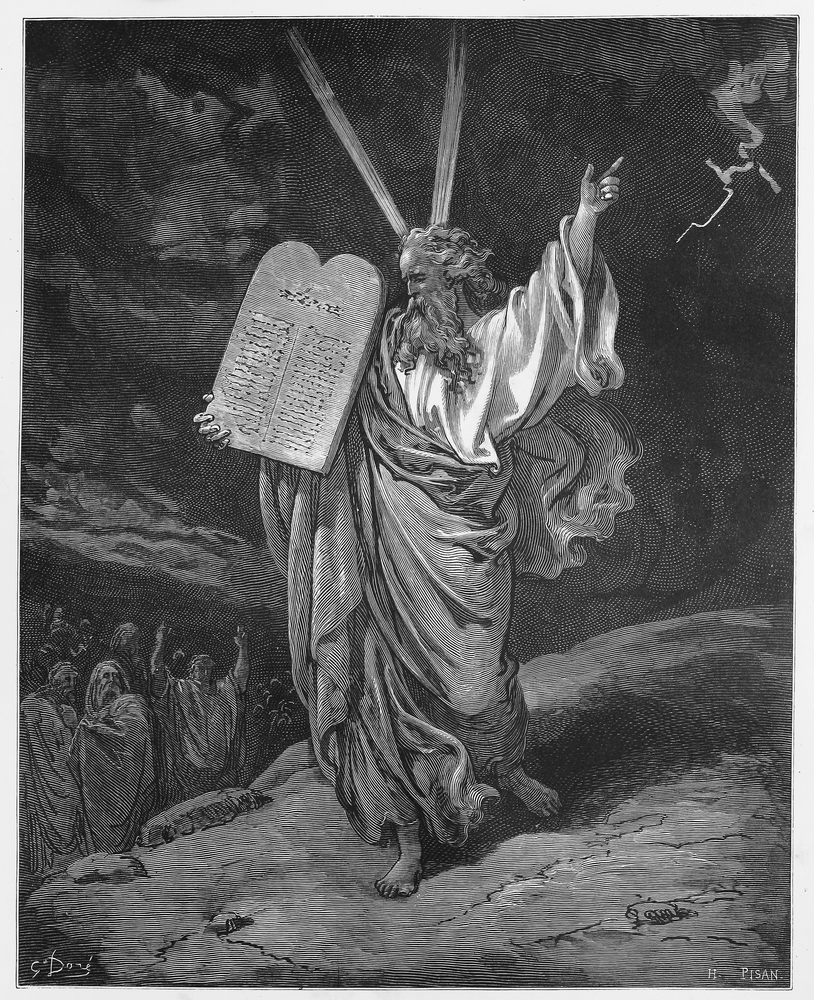
These “concessions” and changes implicitly acknowledge that the Law of Moses is not a perfect and final pronouncement of law applicable in all times. The Law as written did not provide justice for the daughters of a deceased patriarch. Thus, the Law was amended to produce justice. This suggests that the written Law was not a perfect canon of God’s justice or moral ideal.
Another example can be found in Deuteronomy 15:12-18, which updates the provisions found in Exodus 21 concerning the treatment of slaves. We recoil at the idea of slaves at all, but slavery of some type was common to all people at all times up until the last 300 hundred years or so. Even then, it did not die out easily.
[The slavery we see sanctioned in the Old Testament was more like economic servitude instituted for the paying off of debts, but there is evidence of other forms of slavery in Israel and the neighboring nations. Other forms of slavery existed, but they were not necessarily addressed in the Mosaic Law.]
In keeping with the idea of progression in the revelation of God to man, the change from Exodus to Deuteronomy is not wholly counter to the initial instruction. The changes do not subvert the Law as written. Rather, they advance the idea of what justice looks like in the context of the “institution” of slavery that was common and with which people were familiar throughout the Ancient Near East.
We might say these were changes to the letter of the Law that are in keeping with (or demanded by) the spirit of the Law.
The willingness on God’s part to offer concession and on Moses to adopt these concessions into the letter of the Law suggests that the Law, as given, was never meant to be immutable. The Law was revised when justice was not being achieved under the Law as written. However we define this give and take, we have to concede that the Torah was not a perfect moral code as given.
The Law was “culturally situated”. It was more in the nature of wisdom literature than a legislative code. It was a compromise between God and a responsive, but stubborn, people. It was modifiable as justice demanded and, sometimes, even as the people requested.

Paul describes the Law in his writing as a temporary guardian. (See Gal. 3: 24) It was intended for the Israelites in the time and culture in which they lived in order for them to live in relation to God within the culture and social structures of their Ancient Near East world. It was meant to teach Israel to trust in God, to be a holy people within their cultural context and to please God as far as their understanding of what it meant to please God.
What about Psalm 19:7, which says the law of the Lord is “perfect.” Doesn’t this verse contradict the idea that the Law of Moses is imperfect?
It actually does not. The Hebrew word translated into English as “perfect”, doesn’t have the same connotations as the English word “perfect”. It is תָּמִים (tamim) meaning, literally, “complete, sound”. It is translated various ways, such as entire, full, whole, integrity, without defect or blameless.
Tamim is the same word translated in Gen. 6:9 to say that Noah was “blameless” in his generation. The Bible doesn’t make Noah out to be perfect or without sin. (We even find a less than flattering story about Noah in Scripture.) Of course, we know that no one is perfect, and all have sinned, so it couldn’t mean that.
Michael Jones says, “The Torah was not meant to be universal moral legislation.” It was “perfect” in its day and time to accomplish the purposes of God. “It was cultural wisdom for that time and place.” It was what the people needed in the world in which they lived to establish a connection with God and to advance God’s purposes in time and space.
Perhaps, God could not have given the people an ideal, truly perfect and universal moral code at the time without frustrating His ultimate purposes. Just as we would not expect a 5-year old to live up to the moral code of an adult, it seems the people of the Ancient Near East were not mature enough, perhaps, to handle God’s ultimate moral code.
Perhaps, we aren’t either. We tend to think we are much more advanced than the ancients, but are we really?
Someone might say that God could have made us good or with an inclination to be good and not bother with things like judgment or hell, whatever hell is[i]. This view, though, minimizes, and essentially negates, the free agency of humans that seems baked into the biblical narrative. Our ability to choose whether to be obedient to God or go our own ways is embedded in the story from the beginning, and I believe it is, therefore, central to God’s purposes.
The ancient idea of a suzerain treaty respects the freedom of the vassal under the rule of the sovereign. This is the model of the relationship we see in Scripture between God and man.
The suzerain model further suggests the reality that people and societies need time to progress toward more virtuous ways of thinking. Expect too much from an “immature” (or depraved) mind upfront, and you are more likely to hinder the progression than to advance it.
The people of the Ancient Near East were so corrupt that an ideal moral code may have been too much of a stretch. Israel was selected to be a light to the nations around them, but Israel wasn’t much better than they. In fact, Israel was always falling into the same depraved thinking and behaviors as the surrounding nations, worshipping their idols and following their immoral practices.
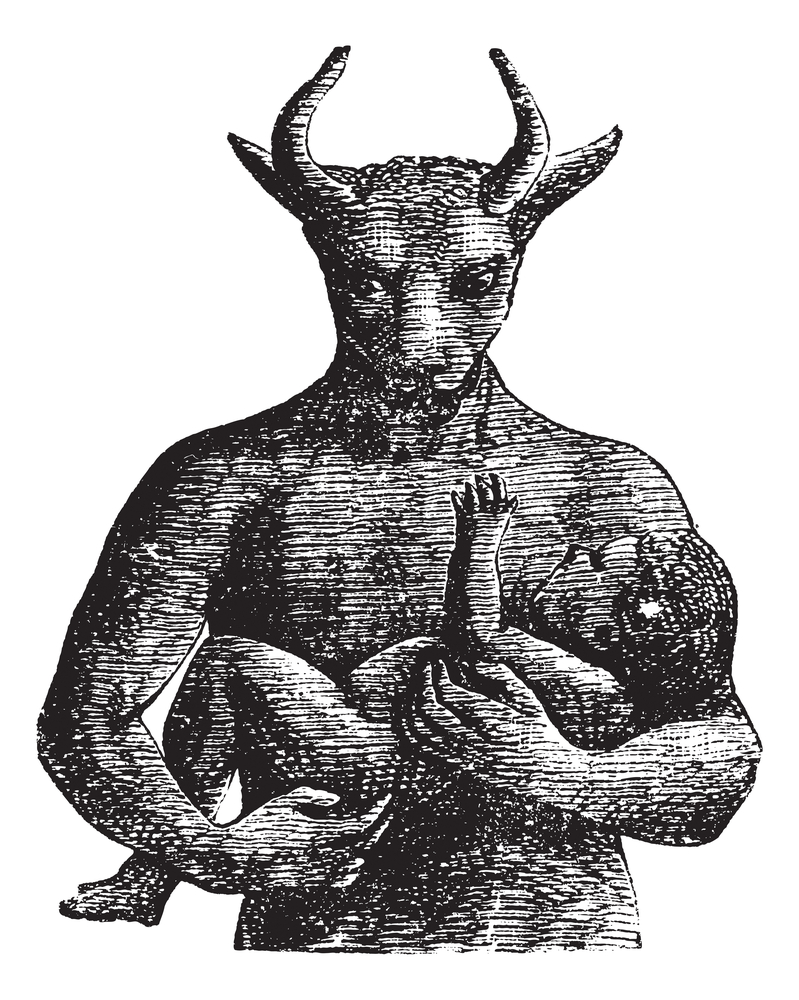
God offered the culturally situated system of the Mosaic Law as a step in bringing people to know Him. Like a parent working with a young child, God could not advance them beyond their capacity to understand. He had meet them at their level so they could embrace what was being taught. Too many strict rules and unreasonably high expectations might have led lead to frustration and counterproductive results.
Not just Israel, but all of humanity was not ready for a more prefect plan. The Torah was a guardian and a stepping stone in the revelation of God to humanity provided in a way designed to progress them along the path without removing the element of human freedom.
God met them where they were, in the context of the systems, expectations, and understandings of their day. Issues like slavery, patriarchy and democracy were not addressed because it would have made no sense to them in their culture, experience, and understanding at the time. They weren’t ready for those things. God taught them how to live “blameless” in the systems that existed at the time with a view toward “progressing” them in their understanding, and with a mind toward future generations, at the same time.
Paul understands that the Law was exactly what was necessary to advance God’s plans in His relationship with human beings to the point when, at the right time, He would empty Himself of his position and enter the world in the form of a man, Jesus Christ. (See Rom. 5:6 and Phil. 2:5-8)
The New Testament confirms these things. It doesn’t command Christians to keep the Torah. When Jesus said he came not to abolish the law, but to fulfill it (Matt. 5:17-20), he wasn’t saying that the law was perfect and could not be superseded. “The antithesis is not between ‘abolish’ and ‘observe’, but between ‘abolish’ and fulfill’.”
The Hebrew word translated “to fulfill” is typically used to mean “to bring to its intended meaning”. Thus, Jesus doesn’t say the Law is eternally binding on all people in all places and all times. He came to “fulfill” (demonstrate or bring to its intended meaning) the law.
Jesus also explained to them what the Law was intended to be. (See Matt. 5:21-48) It was intended to point them beyond the mere letter of the Law to more timeless moral truth that might be “written” on the heart.
In the Sermon on the Mount, Jesus reveals that righteousness is not just about keeping written laws. Righteousness is about having the right kind of “heart” and attitude. Righteousness requires more than following the Law. Simply following the written prescriptions of the Torah fails to achieve the righteousness God demands.
In this way, we see that the Law was not antithetical to morality, but it was not completely descriptive of morality either. It was adapted to the people of the Ancient Near East. It advanced them from where they were at the time, but it was not intended to advance them to ultimate morality. More was needed for that.
The recipe for salvation and right relationship with God was not in following the prescriptions of the Mosaic Law, as the Pharisees in the time of Jesus thought. His dialogues with them demonstrate that Law was not meant to be prescriptive, but to point to something else. In John 5:39, Jesus said,
“You search the Scriptures because you think that in them you have eternal life; and it is they that bear witness about me.” (John 5:39)

The Torah was meant to point to something greater. Jesus said that nothing would pass from the Torah “until all is accomplished”. (Matt. 5:18) This implies that, once it was accomplished (fulfilled), it would pass away.
That is exactly what Jesus did. John 19:28-30 tells us that Jesus finished all that was needed to be accomplished. He was saying that he fulfilled the Scripture when he said, “It is finished”, on the cross.
These things makes sense in light of what writer of Hebrews said: that Jesus set up a new and better covenant (Chapters 7 & 8). In setting up a new covenant, he made the first one obsolete.
Paul said the purpose of the Torah was not do away with sin, but to “increase” sin. (Romans 5:20) Paul did not mean the law, literally, increases or produces sin; he meant that the Law exposes the breadth and depth of the reality of sin in the human condition in its “natural” state.
“The point was to teach us that we needed to be saved from our sins through the grace of God.” (Quoting NT Wright) The Law demonstrates that people can not be saved or be free from sin through our own actions and efforts. In trying to live out the Law (whatever law it is to which we subscribe), we are doomed to fail and sin even more.
The first covenant was a compromise, but Israel could not even abide by that covenant. Even when that covenant was changed and softened because of “hardness of heart”, the people could not live up to its terms.
Thus, the Law demonstrates to us how sinful we are and how incapable we are of living up to God’s standards on our own. The Law served its purpose. We might even say it served its purpose perfectly as God intended.
The Law was not just a guardian for the time being; the Law pointed to the need for something greater to come. Paul says the law helped us to understand our sin. (Rom. 7:7) The writer of Hebrews said the Law was only a shadow of what God intended to reveal in time. (Hebrews 10:1) Paul says the Law was a guardian until the coming of Christ. (Gal. 3:24)

The Law was just a guardian until the time when we were ready to receive the new covenant which is accessed through faith by the grace of God. (See Rom. 5:20-21; Eph. 2:1-9; and Gal. 3:10-14) The idea of the progression from Mosaic Law, given to Abraham’s descendants to “grace” provided through Jesus Christ at the right time, confirms this idea of a progression in the relationship of God to man.
“You see, at just the right time, when we were still powerless, Christ died for the ungodly. Very rarely will anyone die for a righteous person, though for a good person someone might possibly dare to die. But God demonstrates his own love for us in this: While we were still sinners, Christ died for us.” (Romans 5:6-8)
God demonstrated this inability of people to achieve a right relationship to Him by following a law (any law) through the covenant relationship He established with Abraham’s descendants. They were an object lesson to the world.
And the goal from the beginning, going back to the promises God gave Abraham (to bless the nations of the earth through him and his descendants) was this: that God would provide righteousness to us (right relation to God) when we realize that we can’t achieve it on our own. This is what we call “grace”.
The Mosaic Law was never meant to be a prescriptive legal code by which human beings were meant to conduct themselves in all times and all places. When skeptics point to all the ways in which that Law fails morally, they are right, but it was never meant to be what they suppose it to be.
Endnotes:
[1] “Suzerainty is a relationship in which one state or other polity controls the foreign policy and relations of a tributary state, while allowing the tributary state to have internal autonomy.[1] The dominant state is called the ‘suzerain’.” (See Wikipedia) The structure of Jewish covenant law was similar to the Hittite form of suzerain. A Suzerain treaty typically would begin by identifying the Suzerain, followed by an historical prologue cataloguing the relationship between the two groups ‘with emphasis on the benevolent actions of the suzerain towards the vassal’”. After stipulations were offered to the vassal, copies of the treaty that would be read throughout the kingdom. It would recite the blessings that would come from following the treaty and the curses from breaching it.
[2] Ibid.
[3] [i] Even in the Evangelical world, Christians hold different views on hell. The traditional view is summarized as “eternal conscious torment”. This is the classical “hellfire and brimstone” idea. But, eternal conscious torment is not the only model derived from Scripture. Some Evangelicals hold to a view the hell means annihilation. Under this view, people have only conditional immortality. Those who are “saved” are given eternal life, but those who are damned are annihilated and cease to exist. This view is gaining acceptance, even in conservative circles. A third view might be called “universalist”. Under this view, all souls will eventually be saved, even Hitler, but some will have to go through more intensive and extensive refining to get there.


This is beautiful ❤️ I love Hashems law… It is perfect. The Lord is perfect. Jesus is perfect. Thank You Lord for Jesus… Our savior and King 👑🙇♀️ Thank you for the New Covenant Lord 🙏😊💞
LikeLiked by 1 person
Makes sense.
LikeLike