
The Christian understanding of God is that of “the” ultimate (maximal) Being, the architect and creator of everything (all that is seen and unseen as we say). God is the First and the Last. Reality does not exist outside or apart from God. Space/time (the universe we know) was created by God.
Christians also believe that God is transcendent (other) from the universe He created. When the writer of Hebrews says “the universe was formed at God’s command” and “what is seen is not made out of what is visible”, he is saying that God initiated the material universe from His immaterial, preexisting being by His command (will) out of nothing.
Nothing?
Yes, no material thing.
This is hard for us to grasp. It suggests that God is, in essence, immaterial – like unembodied mind or pure consciousness or something like that. It’s a mystery. We can’t go back prior to the beginning and “see” what reality or God was like, but we understand that the material universe had a beginning, which means that God is something other than material.
The beginning of the universe is confirmed by science. The universe began from the point of singularity that can be calculated with mathematical precision. Before that point, which we can trace to the millisecond, we can go no further. This is a boundary beyond which our exploration of the material universe cannot go.
God, therefore, exists “outside” (transcendent from) the space/time continuum that we know as the universe. He is somehow different and distinct from it. As best as we can determine, He is timeless and immaterial
This concept of God differentiates Christianity from all the Eastern religions and from all forms of pantheism and paganism. God is not part of His creation, though He can be (and is) intimate and present in all of it.
Though we may struggle to know “what God is like”, we can know something of God through the material reality He created in the same way we can know something of an artist from the art he creates. Knowing something about the artist from his works, though, isn’t the same as knowing the artist himself.
We are not left completely in the dark. Paul says that God made Himself evident in the world He created. (Rom. 1:20) The fact that something exists instead of nothing suggests a creator God. We can know something of God by the very fact that He the universe that is separate and “other” than Himself.
In a material world, we have to strain to find mutuality with “others”. It doesn’t come naturally. We are very conscious of our separateness – from each other and our creator – so much so that we have some difficulty connecting (emphasizing) with others, and we are tempted to believe we have no creator.
Not being of the same “substance” as God (timeless and immaterial – what Paul calls “heavenly” or “spiritual”), we know the material world much more intimately than the realm in which God exists (not that He doesn’t also exist in this material realm – though He transcends it). Yet, being made in God’s “image” suggests that we also have some ability to connect with His immateriality in some sense.
I say these things in preface to my thoughts today, which come from the Old Testament: the book of Genesis, and the book of Ecclesiastes. My thoughts begin with the beginning:
“And God said, ‘Let there be lights in the expanse of the heavens to separate the day from the night. And let them be for signs and for seasons, and for days and years….'”
Genesis 1:7
This isn’t the actual beginning, but very close to it. It is the first thing God does after creating “the heavens and the earth” (which is the Hebrew expression that means the universe). His first act of creation after forming the material universe was to call into existence “lights in the expanse of the heavens”, and He did it for a purpose.
(Not that these separate aspects of creation were necessarily a linear progression in the sense of completely separate “acts” of God. We might read these passages that way, but it isn’t the only way to read them.)
What was the purpose for which God established lights in the expanse of the heavens? To separate day from night and for signs, seasons, days and years – to establish measurements of time.
Interesting…. God wouldn’t need those things to measure time. What is time to God? He is timeless! Being all-knowing, God also (presumably) wouldn’t need material objects to be able measure time. So, why did God create ways to measure time?
It seems obvious that He created the tools for us to be able to measure time, and, therefore, God wants us to to be able to measure time.
We don’t really question our need to measure time. We just do it. We take time for granted, and our “need” to measure it.
But why?

It seems God set up the universe that way so that we would be cognizant of time, and we are, in fact, very cognizant of time. It seems to be there must be a purpose for it.
We are downright obsessed with time. We are obsessive, compulsive about it. We have clocks everywhere. We wear them on our wrists. Our ancestors studied the heavens and made sundials and calendars and began to record history to preserve the memory of time.
Yet, we are not very comfortable with time. We long for the past. We are anxious about the future. We wish we had more of it, but sometimes we wish time would go faster. We have a love/hate relationship with time.

Perhaps, the greatest issue we have with time is the consciousness of our own finitude. Our finitude is nowhere so painfully evident as in death – the death of loved ones and our own eventual demise.
I believe this is the reason God gave us the tools to be able to notice and track time: to make us aware of our materiality and our finitude. Our ongoing and continual awareness of time is a constant reminder that a past existed before we were born, and a future will exist long after we die. We are ever aware that we are here today and gone tomorrow.
At the same time, something else is going on. We get a clue of it in the creation story: the tree of life. It doesn’t appear in the initial creation account. It doesn’t show up until well into the third chapter of Genesis – after the universe and all life is created.
In the second segment of the creation account, God takes His crowning creation, man, and puts him into a garden with the command to “work it and keep it” and to eat of every tree in the garden but one: the tree of the knowledge of good and evil. This forbidden tree is introduced in this segment of the story, and it takes center stage in the next.
In Genesis 3, the story revolves around this tree. Man and woman eat the fruit of it, which was all they knew. They were driven out of the garden to a harsher environment of pain and struggle and death.
Finally, at the very end of this account, almost four chapters into the creation story, we see the tree of life. We didn’t even know it was there until we find man and woman being cut off from it. We see it only in the rear view mirror with an angel guarding it with a flaming sword.
Theoretically, man and woman could have eaten fruit from the tree of life. It wasn’t forbidden to them. At the same time, they seem unaware of it, and maybe they didn’t even know it was there until it was too late!
People have been obsessed over the idea of immortality and a desire for eternal life ever since. Primitive burial rites reveal that longing from the earliest days of the history of people.
Mummies and tombs and other evidence of burial rituals in which elaborate preparations are made for the dead and elaborate provision for a hopeful afterlife are some of the most common and impressive monuments to the human past.

The effort put into rituals to deal with death and attempt to generate new life has preoccupied the minds of human beings for all of recorded history and before. The great artists, writers, poets, painters, potters and singers have played out the same theme in art through the ages. Shakespeare’s sonnets and Keats’ Ode to a Grecian Urn are examples of this theme perpetuated by the greatest artists of human history.
Ponce de Leon made it his life’s ambition to find a fountain of youth. People give their lives today to the creation of artificial intelligence and other technological advances that would prolong and extend life as we know it for ourselves and our progeny, straining to stretch out the bounds of life and “cheat” death.
At the same time, we have this terrible, aching sense that this world is messed up. Something isn’t right. We long for something else – for a better world. We long for peace we don’t have . We get angry at injustice. We are painfully aware that “life isn’t fair”.
Death is, perhaps, the greatest of the things that we sense are wrong with the world. Children should not die before their parents. Loved ones shouldn’t die. We shouldn’t die. We struggle to accept death, inevitable as it is. We feel at the very core of our being that it isn’t “right”.
Why?
Did you ever wonder why we are so bothered by death (and injustice and all that is “wrong” with the world)?
I think this was God’s intention from the beginning, and a clue to the answer is contained in a significant statement found in the most existentially angst-filled book of the Bible, Ecclesiastes:
I have seen the burden that God has laid upon the sons of men to occupy them. He has made everything beautiful in its time. He has also set eternity in the hearts of men, yet they cannot fathom the work that God has done from beginning to end.
Ecclesiastes 3:10-11
God placed a burden on us, part of which is the preoccupation we have with time and our own mortality. He consigned us to a world of pain. God hid His work from us so we can not know it fully “from beginning to end”. At the same time, He gave us the ability to understand beauty, and He set eternity in our our hearts.
I believe God did this so that we would long for what we do not have. We long for eternal life, though we are cut off from it. We long to know, though we can not fully know. We ache to be rid of the burdens of our existence, though we see the beauty of it and the beauty of what we sense life could be.
I believe this is all God’s design. It’s not just incidental to it; it’s central to God’s plan and purpose for us. I think this is maybe what Paul was getting at when he spoke to the men of Athens at Mars Hill:
The God who made the world and everything in it, being Lord of heaven and earth, does not live in temples made by man, nor is he served by human hands, as though he needed anything, since he himself gives to all mankind life and breath and everything. And he made from one man every nation of mankind to live on all the face of the earth, having determined allotted periods and the boundaries of their dwelling place, that they should seek God, and perhaps feel their way toward him and find him. Yet he is actually not far from each one of us….
Acts 17:24-27
Because God is transcendent, He is not far from any one of us. Though He seems inaccessible at times, He desires that we would seek Him. He desires that we would desire and long to know Him.
In the longing and the seeking, He makes Himself known to us – not that our thirst for Him would be sated, but that we might long and seek for Him all the more. I believe He desires for us to know the depth of our need and desire for Him, because He desires to fill us up all the way to the core of our being.
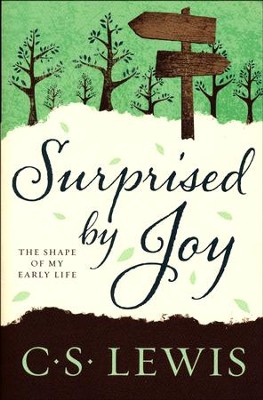
CS Lewis famously talks about “an unsatisfied desire which itself is more desirable than any other satisfaction”, and he calls that unsatisfied desire “joy”. (See Surprised by Joy, p. 18) He distinguished this “joy” from happiness and pleasure, and determined that this thing he called joy, being a desire, is not derived from itself; it comes from an Object and owes its character to that Object.
“Lewis had discovered that Joy itself was not what he was seeking, but that which was behind the Joy was actually what he sought.” The Object Lewis spoke of was God, of course, though he didn’t know it as he sought to replicate the brushes with “joy” he experienced earlier in his life.
When Lewis identified that this “joy” was a byproduct of glimpses of the beauty that God worked into His creation, which are brushes with God Himself in some way, he came to see the joy he once sought for its own sake as “simply signposts along the main road, pointing us ever onward towards the greatest Joy that we will ever experience – life with Jesus Christ.”
I believe this is very much the way God intended the universe to operate according to His purposes, providing the right combination of influences and clues to help us desire God, seek Him and connect with God while preserving the integrity of the free will He gave us. Without truly free will, we could never actually love God.
The time tracking elements God built right into the foundation of the creation are a critical component of His purposes. They work in tension with the sense of eternity God put into our hearts in prompting us to look for and seek something beyond the material world and, hopefully, to making connection with God, Himself.

 Navigating by Faith
I am a creative and an over thinker in the best and worst sense yet I’ve never
LikeLiked by 2 people
(Sorry, typing from phone and clearly am not intelligent enough to do so today!) I’ve never thought of this angle of time. This was very thought provoking. I’m looking forward to unpacking it!
LikeLiked by 2 people