
“Now the story of Christ is simply a true myth: a myth working on us in the same way as the others, but with this tremendous difference that it really happened: and one must be content to accept it in the same way, remembering that it is God’s myth where the others are men’s myths: i.e. the Pagan stories are God expressing Himself through the minds of poets, using such images as He found there, while Christianity is God expressing Himself through what we call ‘real things’. Therefore it is true, not in the sense of being a ‘description’ of God (that no finite mind could take in) but in the sense of being the way in which God chooses to (or can) appear to our faculties. The ‘doctrines’ we get out of the true myth are of course less true: they are the translations into our concepts and ideas of that which God has already expressed in a language more adequate, namely the actual incarnation, crucifixion, and resurrection. Does this amount to a belief in Christianity? At any rate I am now certain (a) That this Christian story is to be approached, in a sense, as I approach other myths. (b) That it is the most important and full of meaning. I am also nearly certain that it really happened….”
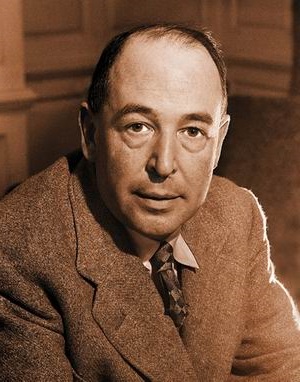
This quotation is from CS Lewis in a letter to Arthur Greeves: from The Kilns (on his conversion to Christianity), 18 October 1931. It captures the thought process of CS Lewis at the point in time when he was becoming convinced of the truth of Christianity.
If you have read much of what I write, you would easily notice that I quote and reference CS Lewis often. He resonated with me in my faith journey that began in college, and he continues to resonate with me.
He is cited by more diverse groups of people than any Christian thinker, perhaps, in the 20th Century. He had a unique way of approaching things from unique points of view, often pulling fresh ideas from the dusty tomes of ancient literature. His concept of myth and True Myth is one such point (though the source is actually JRR Tolkien).
Some might consider his frequent allusions to ancient, pagan myth heretical. Some might even confuse his love of pagan myth with New Age belief, but he flatly rejected the occult. He was orthodox in unorthodox ways, but his creative approaches to orthodoxy were refreshing and thought-provoking.
We don’t have to look any further than the ultra-orthodox, Apostle Paul, to find some common ground with CS Lewis. When Paul was in Athens, some Epicureans and Stoics he met in the marketplace brought him to the Areopagus to address an erudite Greek crowd. In that address, Paul referenced an altar inscribed “To An Unknown God” and quoted pagan writers when he said:
“in him we move and live and have our being”.
Acts 17:26 (quoting a line from Cretiga, by Epimenides of Knossos)
“For we are indeed his offspring ”
Acts 17:28 (quoting a line from Phenomena 5 by Aratus of Soloi)
Paul quoted the Cretan philosopher, Epimenides, also in Titus 1:12. Paul knew enough about pagan philosophy and poetry that he could quote from pagan works multiple times in his writings and addresses.
Paul quoted the pagan philosopher to express a spiritual truth about our lives in Christ, and Paul quoted the pantheistic poet, Aratus, to convey a theistic principle about God. (See Acts 17:22-28 – Quoting the Philosophers?) Paul connected with the people “where they were,” using language and references from the culture they understood to convey something about God.
Paul was well-read in the literature of his culture, and he used pagan philosophy and poetry to introduce people to the Gospel. This is exactly what CS Lewis does in in his own writing. Through his deep knowledge of pagan myth, he recognized strands of truth, and he recognized the difference between “man’s myth” and “God’s myth (the the “True Myth”).
In using the term, myth, Lewis is talking about story and narrative. Many stories and narratives convey a modicum of truth. CS Lewis observes that most myth from around the world contains some elements of truth, and Lewis insisted we shouldn’t be surprised by this – because truth is universal.
The difference between myth and True Myth, according to Lewis (and Tolkien), is that all other myth is a shadow of the True Myth. All myth is an attempt to shine light on truth. True Myth is the ultimate Light shining on the ultimate Truth.
All myth conveys truth through storytelling. True Myth isn’t just another story, though; it is “the” Story. It isn’t “just” myth, but reality, because “it really happened,” as CS Lewis said.
The True Myth is the Gospel. God, the Creator of the universe and everything in it, created man in His own image as His crowning creation. Then, God became a man, injecting Himself into His own creation, in order to communicate His very heart to us and to rescue us from going our own way by revealing the ultimate purpose for which God created us – to have loving relationship with God, our Creator.
That God created us in His image, with some capacity for self-determination (or the illusion of self-determination) necessitated Him coming to us in a way that we would not be utterly overwhelmed by awe and fear in God’s presence. Such a naked encounter with God without a “buffer’ between us and Him would not be conducive to a loving relationship.
Thus, He came as a human child – one of us. He came to his own people, but his own didn’t even recognize Him. (John 1:10)
Christ Jesus
Who, being in very nature [in the form of] God,
did not consider equality with God something to be used to his own advantage;
rather, he made himself nothing
by taking the very nature [form] of a servant,
being made in human likeness.
And being found in appearance as a man,
he humbled himself
by becoming obedient to death—
even death on a cross!
This creed repeated by Paul in Philippians 2:5-11 eloquently relates what God did in becoming man. He approach us stripped of everything that might unmistakably identify Him as God, our Creator. He did this so that He could invite us to love Him without coercion.
That people stood up against God in the flesh, rejecting Him and exerting their wills over His purpose, is the ultimate evil, the likes of which would animate the greatest of mythic plot lines. That God would be put to death by His own creation that He loved and came to serve is the ultimate tragedy.
That God would triumph in spite of His apparent weakness, voluntarily stripped of all His power and glory, having made Himself subservient to His own creation, is the ultimate denouement! It is the ultimate redemption story.
In doing that, God gave us the ultimate hope, showing us that He overcomes our greatest weakness (sin), which we are woefully unable to master (left to our own devices), and He overcome our greatest fear (death). It is the ultimate hero myth – and it happened in recorded history.
Lewis’s idea of “God expressing Himself through the minds of poets, using such images as He found there” makes as much sense of myth as it does of Scripture itself. That we find some truth and wisdom in pagan and other sources around the world, makes sense, but Hebrew and Christian Scripture is the pinnacle of this divine, cosmic story – and truth.
God is the God of us all. Truth is truth, and wisdom is wisdom, wherever it may be found. God had to work in the hearts and minds of people as He found them. It took a long time for this story to unfold without God stripping away the veil and overwhelming us with His “naked” presence.
If God came to us in our human, finite form in all of His glory, we would instantly be reduced to prostration in fear. He is that much greater than we know, but He doesn’t do that. He is largely “hidden” from us.
Again, this is necessary for an all-powerful God who desires a loving, reciprocal relationship from His creation. He had to approach His creation in this way. Any other way would defeat the purpose of achieving the mutuality of love between an incomprehensibly great God and finite, creaturely beings such as we are.
God had to reveal Himself to us in ways our finite and limited understanding could grasp. He made headway over time to the point when, at the right time in history, He could insert Himself into the story
“At just the right time… Christ died [for us].”
Romans 5:6
In this same way, God found in Abraham a man whose mind contained the thoughts and images that were most receptive to what God needed to communicate to reveal Himself. God found in the descendants of Abraham a people who were able to carry that revelation forward, preserving it (accurately enough), cultivating and expanding on that revelation in ways that allowed God to set the stage for His own appearance in the story.
From the same speech Paul gave at the Areopagus, Paul, explains it this way:
“The God who made the world and all things in it, since he is Lord of heaven and earth, does not dwell in temples made with hands; nor is He served by human hands, as though He needed anything, since He himself gives to all people life and breath and all things, and He made from one man every nation of mankind to live on all the face of the earth, having determined their appointed times and boundaries of their habitation, that they would seek God, if perhaps they might grope for Him and find Him, though He is not far from each of us.”
Acts 17:24-27
The whole story was orchestrated by God in real time, and the story continues to this day. God having reconciled the world to Himself in Christ, no longer counting people’s sins against them, also gave us the message of reconciliation to carry forward. (2 Corinthians 5:19) This is the ultimate message, the ultimate take-away from the True Myth.
Just as sin entered the world through the exercise of one prohibited choice, reconciliation comes through the exercise of one God-ordained choice. This choice is to accept what God has done for us, cease from our own efforts, yield our self-control to God’s control, love God for his self-sacrificing love for us, and reconnect with the God who made us.
CS Lewis found in all myths in various cultures at various times in various areas of the world seeds and aspects of the True Myth. His knowledge of ancient myth connected him to what he found to be the ultimate, True Myth. They paved the way, in effect, for him to see it and embrace it. In finding what he called the True Myth, CS Lewis found home.

 Navigating by Faith
Wrong attribution. The line “of in him we live and move” is from Epimenedes of Crete, it’s in the same passage as the Cretan.
They fashioned a tomb for you, holy and high one,
Cretans, always liars, evil beasts, idle bellies.
But you are not dead: you live and abide forever,
For in you we live and move and have our being.
What was Aratus was “we are also his offspring”.
LikeLike
I stand corrected. The first quotation is from the poem Cretiga, by Epimenides of Knossos. The second quotation from a Pagan that Paul recites ( “For we too are his offspring”) is from Phaenomena, by Aratus of Soloi. It seems I got them mixed up.
LikeLike
Very powerful article brother. I was close to tears a couple of times reading how eloquently you described Christ coming to us. I came here looking for some quotes from Lewis about the true myth and got so much more. Blessings to you brother.
LikeLiked by 1 person
Thank you!
LikeLike