
Consider[i] the story of astrophysicist, Hugh Ross. He was a child prodigy raised in a secular, non-religious home in a secular community. He read all the books on science in his local library and knew he wanted to be an astrophysicist at an absurdly early age.
At 9 years old, he brought home a book on creation myths from the library. It summarized 100 different creations stories from different cultures around the world, and wrote all of them off based on the science he already knew.
At the age of 17, he read through the first few chapters of Genesis for the first time. He was surprised to recognize elements of the scientific method and some congruity with the scientific record. Listening to him describe his observations and conclusions while reading the creation story in Genesis for the first time are truly remarkable.
He was taught early: do not try to interpret until you determine the frame of reference, the initial conditions; note what occurs when, where and in what order; and determine the final conditions. Only then attempt an interpretation. After attempting an interpretation, then test it by observation and experimentation. This is the scientific method.
This is how Hugh Ross approached the Bible as read it for the first time. He had no preconceived ideas about what he would encounter. He didn’t even know a Christian at the time.
Hugh Ross observed that the Bible followed this sequence in Genesis as it described the series of physical events identified as the creation. He later learned (at age 27 when he read the 28 volume writings of theologian Thomas Torrent on science and the Christian faith) that the scientific method was inspired by the Bible (among other things). The Bible birthed the scientific revolution, which came out of the reformation, and the Bible actually encourages everything be put to the test.
In this blog post, though, I am focusing on the journey through Genesis and comparison of Genesis to the scientific record by Hugh Ross when he was 17. This was his initial analysis:
- Genesis 1 sets the frame of reference – the Spirit of God was hovering over the surface of the earth
- From there the initial conditions are established –1) the Spirit of God is hovering over the waters 2) it is empty of life; 3) the water covers the surface of the planet; and 4) it is dark
- The when, where and what of the order of events follows –
- Gen. 1:1 – In the beginning God created the heavens and the earth (the phrase “heavens the the earth” in Hebrew means the entire physical universe, encompassing all matter, space and time). The word for “created” (bara) means to create something new – this is compatible with the big Bang theory. All the other holy books of other religions talk about God creating within space and time. The Bible uniquely suggests that God stands outside of space, time and matter.
- Gen. 1:2 –The focus shifts from universe to planet earth, and God says, “Let there be light”. The text does not say God created light; the text says more literally, “Let the light be.” It is dark on the surface of the waters because the light of the universe does not penetrate through the waters (the light does not penetrate through the clouds.) Let there be light speaks to a transformation of the atmosphere so that it is no longer opaque but translucent. Now photosynthesis could begin.
- Day 2 – God let the waters above be separated from the waters below. Waters below, refers to liquid water, waters above refers to water vapor in the atmosphere. The separation sets up a stable water cycle.
- Day 3 – God let the waters be “gathered” (collected into reservoirs) and dry land appears. Now there are oceans and continents (land masses). Then he let the land masses produce plants.
- Day 4 – God “let there be lights in the expanse of the sky” and he let there by a great light to govern the day. Again, the text did not say that God created the great light. It says, literally,”let the great light be”. The sun, moon and stars become visible to the observer on the surface of the earth. The atmosphere goes from translucent to transparent. Gen. 1:15 says that the lights were allowed to shine through so that they may serve to mark seasons and years. Gen. 1:16 says God had previously created the sun, moon and stars.
- Day 5 – God begins to create life forms that need the sun, moon and stars to regulate their biological clocks. Even clams need the sun, moon and stars. It starts with swarms of sea creatures – like the Cambrian explosion of life, a sudden burst of complex forms of life. Then God created birds and sea mammals. Mere physical life is present in the first four creation days, now soulish life begins, soulish in the sense that these creatures have mind, will and emotions, allowing them to relate to one another and relate to the future human beings.
- Day 6 – God creates three specialized kinds of land mammals, and then the human species, male and female. With the land mammals, there is a physical component and a new component, the spirit. Humans are the only mammal with body, soul and spirit. That gives us the capacity to communicate with God himself. The spirit allows us to ask questions like: Who am I? Why am I here?
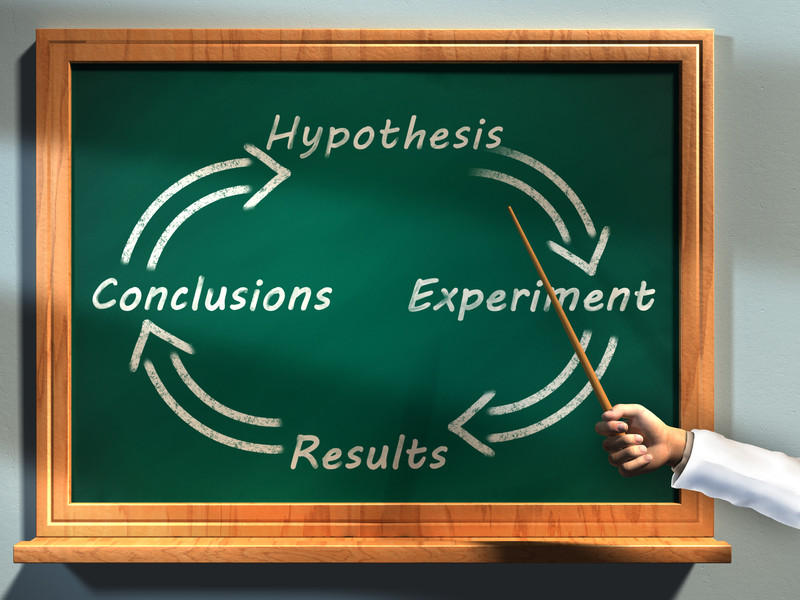
Ross says this analysis took him about four hours to think through. It was the first account of creation he read in any of the holy books that fit what the scientific record of nature reveals.
Ross says the only creation that comes the closest is the Babylonian myth. It mentions 14 creation events, and it gets 2 out of 14 right. When he went through the biblical account, he found 13 events; all 13 were correctly described; and all 13 were in the correct chronological sequence.
Ross’s scientific mind gravitated toward a determination of the probability of the author getting it in the correct order. Ross calculated that, even if he had the correct information to begin with, he would have one chance in 13 factorial of getting the sequence in the right order. (1 x 13 x 12 x 11 x 10 x 9 x 8 x 7 x 6 x 5 x 4 x 3 x 2 x 1)
Probability of getting the sequence in the right order is tiny by itself, but the probability is even less likely that the author would describe all 13 events correctly and in the correct order. At age 17, this was the first clue for Hugh Ross that the Bible was different than the other holy books he read.
These realizations led him to wonder if the Bible could actually be a communication from the God who made the universe. How else could an ancient human being have gotten the descriptions and the sequence right without inspiration from the God who made the universe?
Ross kept going in true scientific fashion to test that possibility. He discovered that the Bible is loaded with creation accounts. There are not one or two as with other major religions, but 25. (Gen. 1; Gen. 2; Gen, 3-5; Gen. 6-9; Gen. 10-11; Job 9: Job 34-42; Psalm 8; Psalm 19; Psalm 33; Psalm 65; Psalm 139; Psalm 147-48; Prov. 8; Eccl. 1-3; Eccl. 8-12; Isaiah 40-51; Romans 1-8; 1 Cor. 15; 2 Cor. 4; Heb. 1; Heb. 4: 2 Peter 3; and Rev. 20-22)
After identifying all the places in the Bible that have something to say about creation, he proceeded to put Genesis 1 to the test to see if the rest of the Bible supported it.
As an example, Job 38-39 goes through the events of the 6 creation days. They are not numbered, but they describe the same events and describe them in more “scientific” detail. For instance, Job 38:8-9 supports the implication in Genesis that it was dark because of a cloud layer. (“Who shut up the sea behind doors when it burst forth from the womb, when I made the clouds its garment and wrapped it in thick darkness….”)
Ross noticed that each day of the creation described in Genesis is bracketed by an evening and a morning. He expected to see that follow through the entire text, but he noticed that framework is only found in the first six days. There is no evening and morning for the 7th day.
Ross wondered from this whether we are considered to be still in the 7th day. The other days had an ending, but the 7th days is not bracketed with an ending. His thinking was confirmed to him after reading Hebrews 4:
“[H]e has spoken about the seventh day in these words: ‘and on the seventh day God rested from all his work.’ And …, in [Psalm 95:11], He says, ‘They shall never enter my rest.’ It still remains that some will enter that rest….”
This passage refers to the seventh day of creation in the present tense and in the future tense. Ross concludes, therefore, that we are still in the seventh “day”.

Ross’s discoveries continued. He had been bothered since he was 10 years old regarding what he calls the “fossil record enigma”: Before humans appear in the historical record, extensive extinction and speciation occur (new life forms appearing and old life forms disappearing); but after humans appear we observe only extinction, but no significant speciation.
He found a satisfying answer to that enigma from Genesis 1 which describes that God created for six days, but God rested on the seventh day. In other words, God stopped his work of creating new life forms. For six periods, God created, but in the seventh period God stopped creating. He rested from creation after creating Adam and Eve, who appear in the sixth day.
Ross found another creation account parallel to the six creation days is Psalm 104. Again, the days are not numbered (as in Job), but much more scientific content can be found in the descriptions. Psalm 104 describes a series of lifeforms dying off, and God re-creating new life forms.
“[W]hen you take away [the teeming creatures’] breath, they die and return to dust. When you send your Spirit, they are created, and you renew the face of the earth.” (Psalm 104:29-30)
God replaces life forms that go extinct with new life forms better adapted to a changing Earth and Sun. Because of the laws of thermodynamics and electromagnetism and other factors that have changed the parameters of the earth in it ability to sustain life, old life forms had to die, and new life forms had to be created in their place.
According to Hugh Ross, we should expect to see some life forms die out and others appear in keeping with the laws of physics. The laws of physics require that new life forms are necessary over time as conditions on the earth change.
Ross says that the “faint sun paradox” explains why that is necessary. When the Sun was very young, it was losing mass. It was about 17% more massive at one time than it is today.
The luminosity of a star goes up to the fourth power of its mass. During the early part of the Sun’s history, it would dim considerably. Over the course of time it dimmed by 15%; then it brightened by 15%.
Life can only tolerate a 1% change in the Sun’s luminosity. Ross now believes that God had to create just the right life forms at just the right times to pull greenhouse gases out of the atmosphere or release them to the atmosphere. Ross now believes that, God controlled the atmosphere by the introduction different life forms in order to keep the surface temperature of the earth at the ideal level for life.
The Earth is now spinning five times more slowly than it did when life was first created. That is why we only see bacteria first. Bacteria can handle a 4-5 hour rotation rate. We could not. Thus the description in Psalm 104 that reflects that God has kept the balance on Earth perfectly to sustain life over time finds resonance in the science.
Ross found and thought through the 25 creation accounts in the Bible over the course of about 18 months from age 17 to 19. In that time, he determined that the Bible made over 200 accurate predictions of scientific discovery. The Bible speaks in 11 different places, for instance, of a continuously expanding universe.
No philosopher or astronomer had any clue that space and time has a beginning or that the universe was continuously expending until 1917 when Albert Einstein developed the theory of general relativity, but the Bible authors had already communicated these detailed cosmological characteristics going back to Job. From this, Ross concluded that the Bible was thousands of years ahead of its time.

Ross did a rough calculation when he turned 19 of the probability that the Bible authors could predict these future scientific discoveries without any revelation, inspiration or communication from the God that created the universe. He determined the probability is <10300 (300 zeros after the 1).
That same week a professor asked Ross and the class he was in to determine the probability that one of the students in the class would be killed by the sudden reversal of the second law of thermodynamics. It turns out that the probability can be calculated, and it is 1 in 1080. The point of the exercise was to show that it is theoretically possible, though it is likely ever to happen.
For Ross, though, this exercise brought home to him how inconceivably unlikely the Bible authors could have accurately described the creation with no scientific understanding. In fact, the probably is so minimal that the possibility of a reversal of the second law of thermodynamics, is more likely that the possibility of anyone foreshadowing over 200 future scientific discoveries with no scientific knowledge or understanding.
In that moment, Hugh Ross realized that what the Bible is more reliable than the second law of thermodynamics! On those probabilities, Ross determined that it is not rational to trust the second law of thermodynamics and not put greater trust in reliability of what is written in the Bible.
If you want to listen to the whole story, you can watch it here:
[i] Bara/1254 means create; create out of nothing (Latin ex nihilo); i.e. creation by God who alone originates and regulates all life; an entirely new thing. In contrast, yar/3335, means to form (purpose) out of pre-existent matter, like a potter forms a vessel from clay. The word, asa/6213, means to make and also refers to fashioning things from pre-existing matter.
Hugh Ross concludes that the more than 10 billion trillion stars in the universe (10 followed by 21 zeros) are all necessary to sustain the atmospheric conditions to sustain advanced life on Earth. If there were fewer than 10 billion trillion stars in the observable universe, nuclear fusion would be insufficient, and the only elements that would form would be hydrogen and helium. On the other hand, more stars would make all elements heavier than iron and carbon, nitrogen and oxygen would not form. Only in a cosmos with a finely-tuned number of stars, and a myriad of other factors, can life-essential elements be produced. The vast reaches of the universe, then, are not a big waste od space, energy, mass and time. Hugh Ross observes that the Earth is nestled in a cluster of more than a trillion galaxies, but the Milky Way is the only one that can sustain advanced life. Further, planets in the Milky Way, like Jupiter and Saturn, block traveling asteroids and debris from hitting the Earth.

 Navigating by Faith
Hello there! I could have sworn I’ve been to this site before but after reading
through some of the post I realized it’s new to me. Anyhow, I’m definitely glad I found it and I’ll be bookmarking and checking back frequently!
LikeLiked by 1 person
Thank you. Please feel free to share your thoughts
LikeLike
Science has backing too, you know.
LikeLike
Of course. The title is hyperbole to make a point that the Bible and science are ultimately compatible. The intention is not to be anti science.
LikeLike