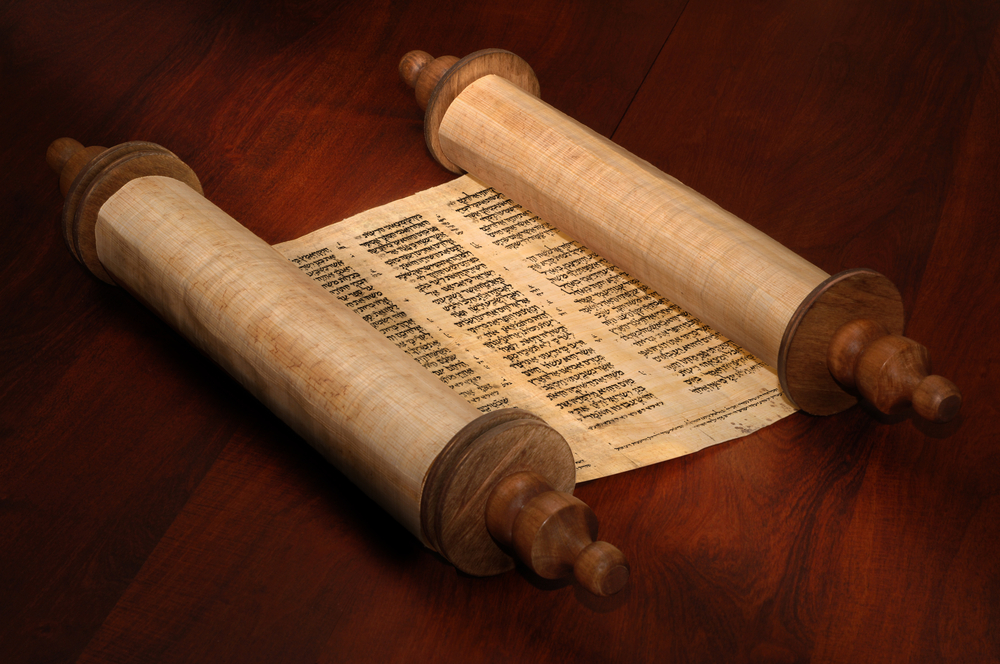
If you read through the Torah, you will find verses that seem morally repugnant to our modern sensibilities. For instance, the death penalty applies to conduct that seem to us like minor offenses. Israelites were allowed to keep slaves. The Mosaic Law is also clearly paternalistic in our modern view, subjecting women to second class citizenship.
This is just a start. Skeptics like to point out these things in criticism of the Bible. They claim that Scripture is full of immoral ideas.
Christians try to find explanations that soften the criticism, claiming that we need to understand the cultural context and what was actually meant. Skeptics claim Christians twist the plain meaning of the text to avoid obvious conclusions. So it goes.
Could it be that both skeptics and defenders of the biblical text are right? That is the position that is taken in the video by Inspiring Philosophy: The Imperfect Mosaic Law.
We have to admit that the Torah contains some instructions that are morally distasteful, if not repugnant, by modern standards. We could try to explain them away. We could claim that our modern morality is wrong. We could reject the Bible and concede to the skeptics that it was written by Ancient Near Eastern men, there is no God, and the Bible is unreliable as a moral code.
Most of these options assume that the Mosaic Law is/was meant to be a perfect and universal statement of God’s moral code. Perhaps, though the Torah was never meant to be a perfect, universal moral law. Perhaps it wasn’t meant to be applied to all people in all times.
It seems that believers and non-believers, alike, assume we must apply every word of the Bible to modern life, and it stands or falls on its instruction to us today. Believers hold on as skeptics try to pry away our faith from clenched fists that we hold to the Bible.
Maybe, however, it ain’t so. The video describes some subtle and some not-so-subtle clues that support the view that Ancient Near East morality contained in the Bible was never meant to be a timeless measure of the conduct for mankind. One such clue is the way Jesus viewed and applied the Law.
In Matthew 19, for instance, the Pharisees tried to trick Jesus with a question on divorce. They referenced the Law of Moses, which allowed men to divorce and send their wives away, and they asked Jesus who would be a man’s wife in heaven if he divorced and remarried many times. Jesus responded, to their chagrin, that Moses allowed men to divorce their wives only because of the hardness of their hearts, adding, “but from the beginning it was not so”. (Matt. 19:8)
Jesus seems to be saying, here, that God instructed the people in the Mosaic Law on divorce, not with a timeless moral truism, but with a temporary “law” intended to accommodate their existing, cultural, and social condition.
Jesus seems to be suggesting that this aspect of the Mosaic Law was a kind of “compromise” between God and Israel. God apparently softened and calibrated the provisions of the Law to accommodate the cultural norms, attitudes, and expectations of the people at the time.
Perhaps, the people were not open to what God intended from the beginning, so God revised the terms for them. Perhaps, the instruction on divorce was a “step in the right direction”, but only a step toward the actual ideal.
We don’t know exactly. We might be tempted to think that this was the only accommodation because this is the only time Jesus is recorded to have said anything like this. As it turns out, however, most of the Mosaic Law was provisional, and it was replaced by a New Covenant. Jesus shifted the grand paradigm completely!
I have often thought that the Bible demonstrates a kind of progression in the relationship between God and man. I don’t mean this in the sense of a formal doctrine. Whatever we might call it, Scripture is the narrative of a growing, unfolding revelation of God to people.
Scripture has an arc to it. From the creation of the world, to Adam and Eve, to Noah, Abraham, Moses, David, the first Temple, and the second Temple and forward to Jesus and beyond, Scripture has a progression. There is a “sweep” to Scripture that is, perhaps, just as (or more) important to recognize as any particular passages.
Thus, I believe the video is correct that the Mosaic Law is not meant as a legislative moral code to be applied to all people at all times. The Law was given to a particular people in a particular time, but it fits into the progression of revelation of God to man.
At different places and times, building on prior connections, the Bible is the narrative of God working with people to reveal Himself in ways that they can understand and in ways that they are able (or willing) to receive. He is always working with people to preserve that narrative for future generations who will stand on the shoulders of prior generations with the benefit of hindsight and cumulative revelation.
And this is key: God is doing these things while protecting the character of free agency that He gave to people He created in His image. His overarching purposes require that we be allowed to engage Him and participate in this progression on our own accord using the agency He gave us.
As I have often speculated, this is because God is love, and God desires a reciprocal, loving relationship with us. Love does not coerce. Love does not demand or impose itself uninvited. Love requires freedom both ways in the relationship.

Some of the passages that are most repulsive to us may be nothing more than the Ancient Near perspective of people through whom God was revealing Himself. These passages are colored by the limited understanding of the people at the time and the limits of God’s revelation to them bounded by that understanding.
The descriptions of God’s wrath, jealousy and harsh dealings, are the descriptions of people who lived in a harsh world filled with arbitrary and capricious gods. That’s how they saw the world.
God was distinguishing Himself to these people in the midst of the world as they knew it, and He could only take them so far in their understanding. They way they described what God was doing was true to their understanding, but it was also limited by it.
God engaged with these people in the context of covenant relationship. The relationship came first. The revelation that the God of the “heavens and the earth” desired a two-way relationship with them most have been mind-blowing.
One key to God’s character in this relationship is His faithfulness to the promises He makes. No matter how wicked, evil, and determined the people are to walk in their own ways, God never abandons them. Though he warns them and even metes out judgment on them, God is always ready and quick to receive them back if/when they turn back to Him. Always.
The way Jesus viewed the Mosaic Law is instructive and provides key information about the covenant relationship between God and man. We tend to read the Mosaic Law like a prescriptive code laying down universal rules for all time and all people, but that isn’t the way Jesus seemed to view it.
Continue reading “The Perfect Imperfection of the Mosaic Law and the New Covenant”


 Navigating by Faith