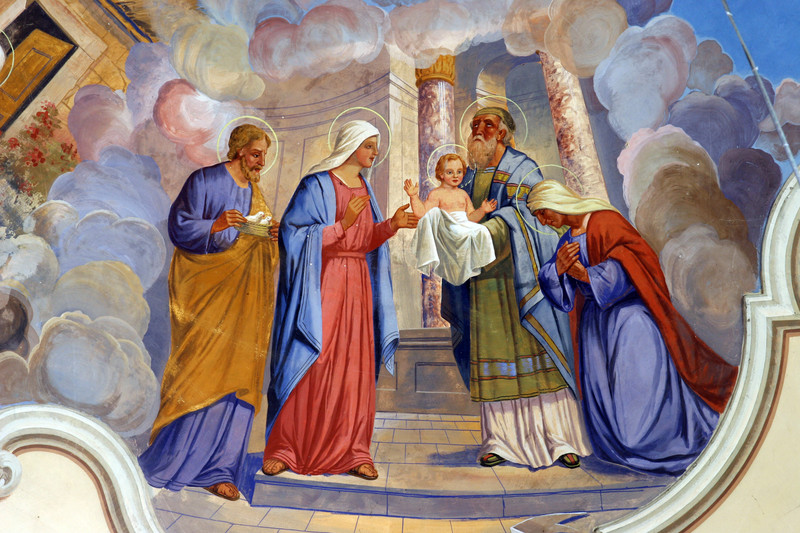
“Then Simeon blessed them and said to Mary, his mother: ‘This child is destined to cause the falling and rising of many in Israel, and to be a sign that will be spoken against, so that the thoughts of many hearts will be revealed.'” (Luke 2:34-35)
People tend to focus on the “Christmas story”, but this verse that follows the account of the birth of Jesus is significant, if not subtle, in its ramifications.
Simeon was a temple priest who entertained the rituals performed by Mary after Jesus was born. Luke says that it was revealed to Simeon by the Holy Spirit that Simeon would not die before he had seen the Messiah.
Devout Jews of the time were expecting a Messiah (“Christ” in Greek). Keep in mind that more than 300 years had passed since the last of the Old Testament prophets who foretold the Messiah. Simeon knew this baby was the One because the Holy Spirit had spoken to him!
Following an article I read recently, the author had a back and forth discussion with a reader about whether Jesus actually existed. The skeptic questioned the reliability of the Bible and did not believe that Jesus of Nazareth was an historical figure. Among other things, he questioned the lack of reference in First Century historical accounts sources external to the Bible of Jesus and the miracles that the Bible describes. The reader argued: if so many miraculous things really happened, wouldn’t everyone have heard about them and made mention of them in historical accounts?
Never mind that social media was late to arrive in First Century Galilee and CNN had not yet been picked up Jerusalem at that time. I wonder, though, even if social media and CNN existed, would you believe accounts of miracles if they were reported in India? Mexico? Montana? Would you have even give it a second thought if some fishermen, homeless people, or prostitutes claimed to be healed?
Of course, this question begs another question: Is the Bible an historical account? The “books” of the New Testament are written like historical accounts, especially the Gospels and the Book of Acts. The epistles (letters) also have historical significance.
Simeon is recorded as saying to Mary that the Christ child was “destined to cause the falling and rising of many in Israel”. Isn’t that what happened with Jesus, who only lived a short 30 some years? He caused quite a stir, and the stir even continues today, almost two millennia later.
Many continue to speak against Jesus today, just as Simeon said they would, which is an odd thing if Jesus was never an historical figure. The thoughts of many hearts are revealed if this Jesus really was God who came in the flesh to walk among us. He is the continental divide between those who are open to God and those who deny him.
But, what is the evidence that Jesus was an historical figure who claimed to be God in the flesh?
Continue reading “The Thoughts of Many Hearts Revealed”
 Navigating by Faith