
Why Doesn’t God Reveal Himself to Me?

Have you prayed, and God didn’t respond?


I have heard many people say that they would believe in God if God revealed Himself to them in clear, undeniable ways. Richard Dawkins, the New Atheist, said that God would have to write a direct message in the sky before he would believe (and then, he added, he would still assume that he was hallucinating or something else before believing it).

Young children tend to believe in God innately. This is true whether children are raised in religious homes or non-religious ones and in countries that are predominantly religious and in countries that are not. Even atheist sociologists have observed this phenomenon that some people have called “universal design intuition.” (See Universal Design Intuition & Darwin’s Blind Spot)

Since the Enlightenment, the general assumption in scientific and academic circles is that children outgrow naïve faith and civilizations do too as they advance in knowledge and sophistication. Thus, the modern assumption is that we outgrow faith in God as people and societies mature.

There is some truth to that assumption as we can see anecdotally (maybe in your own life or in the lives of people you know) and from the history of Western Civilization, with evidence of declining religious belief. Still, 81% of people in the United States in 2022 believed in God (or a higher power) (as reported in a Gallup poll), and the number increased to 82% in 2023 (according to a Pew Research poll).

We have all heard about the “Great Dechurching” – the 40 million Americans who used to go to church, but no longer do. We have also heard about “the rise of the nones“, the increase in the number of Americans who are atheist, agnostic or religiously unaffiliated, which increased precipitously from 16% in 2007 to 30% by 2022!

The nones include people of every age, but the highest percentage of nones are Gen Z and millennials. These age groups have largely grown up not going to church, yet, Bible sales surged in 2024 by 22% (after years of declining sales), and that surge is attributable to first time purchasers among Gen Z and Millennials. (See Bible boom: Why are people buying so many Bibles?; and US Bible Sales Jump 22% in 2024, Driven by First-Time Buyers and New Versions: Circana BookScan)

The hint of a spiritual renewal in the West isn’t limited to young Americans. Justin Brierley has reported on and written a book about the Surprising Rebirth of Belief in God in the UK. (See The Surprising Rebirth of Belief in God: Why New Atheism Grew Old and Secular Thinkers Are Considering Christianity Again) Agnositics and atheists, at least in the UK, are rethinking their positions on Christianity in noticeable numbers.

While Brierley’s thesis is largely based on anecdotal evidence, the volume of his anecdotal evidence is impressive. He has been hosting dialogues between atheists and Christians regularly since the mid-2000’s, and his data comes from a combination of atheists who have recently cozied up to the idea of God and religion and former atheists who unabashedly believe in God now.

My writing today is inspired by one such former atheist, a bio-chemist with a robust career in science, who became a believer in his middle age. Sy Garte wrote a book about his journey from atheism to faith, The Works of His Hands: A Scientist’s Journey from Atheism to Faith, in which he explains how a combination of science and his experience led him to believe.

The science opened his mind to the possibility of God. His study of religions, philosophy, and theology led him to an intellectual acknowledgement of the likelihood of God, but his experience and willingness to embrace it brought him in the door to faith in God.
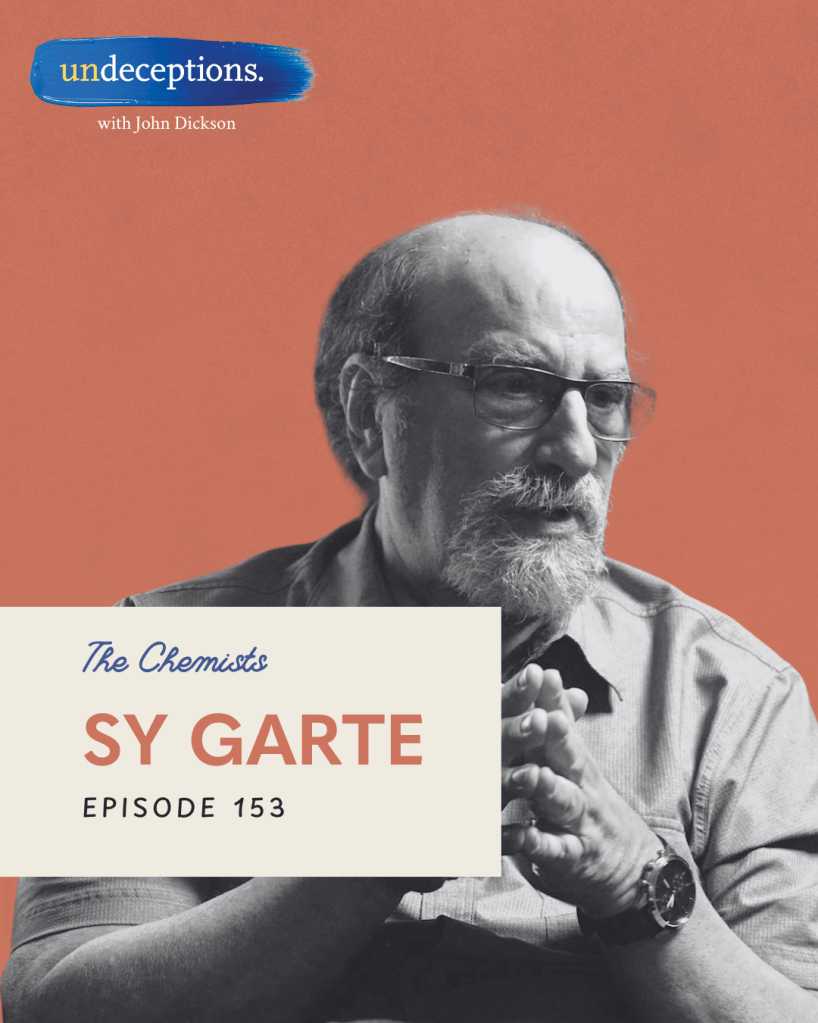

In a recent interview with John Dickson on the Undeceptions podcast, Sy Garte provides some advice to listeners who believe science holds all the answers to reality and truth by insisting that nothing in science contradicts the Bible.


If you read his whole story, he explains how science suggested the possibility of God to him, but he also emphasizes the importance of experience in belief. His acknowledgement of the role of experience, I think, is important, and it is underappreciated.

Skeptics and believers, alike, discount experience. A skeptic might chalk experience up to fantasy, a desire to believe, a disconnection with reality, or similar thinking. A believer might question the experiences of people who arrive at unorthodox beliefs based on their experiences.

Clearly, experience must be tempered by facts, science, and sound reasoning, but Sy Garte maintains that experience is good evidence, nevertheless, primarily for the one who has the experience. In doing so, he acknowledges the objection by the person who hasn’t had such an experience, and his response to the person who hasn’t had an experience with God is what I want to focus on today.

Continue reading “Why Doesn’t God Reveal Himself to Me?”
The Place for Experience in the Mix of Science, Faith and the Evidence for God

When asked what would make them believe, some atheists say a personal experience with God would do it.


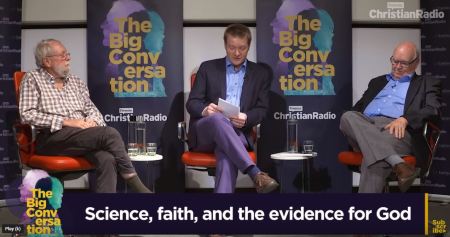
On the show and podcast, Unbelievable! On Christian Premiere Radio in the UK hosted by Justin Brierley, the host often asks people, atheists and Christians, what would make them believe (or not believe, as the case may be). Most people think of arguments or historical or scientific proofs, but not everyone.

In one particular episode Michael Ruse, a professor and philosopher of biology at Florida State Universality, participated in discussion with John Lennox, a professor of mathematics and philosophy at Oxford, on the subject of Science, Faith and the Evidence for God. When asked the question about what would make him believe, Michael Ruse surprisingly (for me at least) said that it would have to be a personal experience with God.

Michael Ruse is a Fellow of the Royal Society of Canada and the American Association for the Advancement of Science. Ruse is an evolutionary biologist who has debated against intelligent design proponents. He has been on the Advisory Council to the National Center for Scientific Education. He is a Bertrand Russell Society award winner for his dedication to science and reason.

Thus, my surprise to hear him provide such an “unscientific” answer to the question of what it would take for him to become a believer. I have since heard other atheists provide similar answers. Intelligent Christians, I think, underestimate the power of personal experience.

To be fair of Michael Ruse, though is a decided atheist, he has a healthy respect for theology. Maybe that is because he is a philosopher, and not just a scientist.

I say “just a scientist” because there is a school of thought among modern scientists that we don’t need philosophy anymore, that science is all we need. (People like Richard Dawkins and Neil deGrasse Tyson have expressed this view.)

But science, by definition, is limited to the study of the natural world, matter and energy (or “molecules in motion” as some like to say). Anyone who makes the claim that science is all we need has made an a priori determination (an initial presupposition) that molecules in motion are the sum of all reality. Neither theology, nor philosophy, fit into a world like that. And, where, then, does that leave mathematics and logic?

Michael Ruse, being an expert in philosophy takes great offense at the notion that philosophy has gone the way of God and is dead (alluding to Nietzsche’s great contention). It’s natural for a philosopher to take that position, I suppose, even an atheist philosopher. After all, he has devoted his life to philosophy!

But then, consider that he knows something of what he talks about. Just as scientists know a great deal more about science than me, a philosopher knows a great deal more about philosophy than, well… a scientist (who studies only molecules in motion). It isn’t hard to understand why such a person might begin to see the world as nothing but molecules in motion when that is the constant and continual focus of life long study, but the theologians and philosophers, even atheistic one, protest there is more.

Continue reading “The Place for Experience in the Mix of Science, Faith and the Evidence for God”

Can Personal Experience be Proof of God?

For the writers of the books of the Bible, God was not an idea adopted by the mind, but an experienced reality which gave significance to their lives


Dr. William Lane Craig is a Christian philosopher of the highest caliber.[i] He has multiple doctorate degrees and has taught at various colleges and universities. He is a prolific writer, and has debated most of the well known, outspoken t atheists, agnostics and skeptical thinkers of the world on philosophical, theological and other issues.

In the short clip below, which is a segment from a longer interview on the various arguments (proofs) for the existence of God, he discusses an additional basis for knowing that God. This basis, or claim for the existence of God, is personal experience.

This is not an argument for the existence of God based on logic, and it isn’t an objective, evidentiary proof. It is more like a personal proof or confirmation of the existence of God distinct from (not contrary to) reason.

A personal experience with God isn’t a substitute for reason, but neither is reason a substitute for the experience.

The main ways that Dr. Craig usually discusses the proof of the existence of God is logic, scientific evidence and philosophy, but he insists these aren’t the only proofs we have.

We might be apt in the western world to discount personal experience and to be suspicious of it, and for good reason. Charles Darwin was suspicious of his own intuition, being the product of evolution from lower life-forms.[ii] A good friend of his got lost in the morass of spiritualism, and that experience of seeing his friend chase down the rabbit holes of irrational, spiritualistic notions influenced Darwin to distrust his own intuitions.

Of course if Darwin was consistent, he shouldn’t have trusted his intellect any more than his intuition, as both human intuition and intellect are the product of evolution from lower life-forms. If human intuition is tainted by its development from lower life forms, so is the human intellect. It didn’t occur to Darwin, apparently. that his intellect suffers the same weakness according to his own reasoning.

As for personal experience, even though we have some warrant for being suspicious, we shouldn’t be completely dismissive. We shouldn’t trust our experience, alone, but how does it fit into the proof we have of God?

Continue reading “Can Personal Experience be Proof of God?”