Being Honest about Who and What

Photo by Amanda Leutenberg

Part one of two – let’s be honest about the who and what of our underlying presuppositions…

“[Christ] told us to be not only ‘as harmless as doves,’ but also ‘as wise as serpents.’ He wants a child’s heart, but a grown-up’s head. He wants us to be simple, single-minded, affectionate, and teachable, as good as children are; but He also wants every bit of intelligence we have to be alert at its job, and in first-class fighting trim.” C.S. Lewis ~ Mere Christianity

Many believe that people must check their intelligence at the door of faith in order to be a Christian. Certainly atheists and agnostics think so, but believers also act as if intelligence is something that must be discarded or even worse, not to be trusted.

A read through the Bible, however,  reveals that God is as concerned about a person’s mind as He is about a person’s heart. In fact, the mind and the heart are often mentioned together. (See Matthew 22:37; Mark 12:30 and Luke 10:27)

If we believe in God, and believe He created the heavens and the earth, then we can trust the intellect He gave us. In fact, if He gave it to us, does He not expect us to use it?

Continue reading “Being Honest about Who and What” →

Lighting Out for the Wild West


A number of significant personal “revelations” mark my way in life. Among them is one that occurred in college during a combined history/literature class. It was literally a turning point for me.

Among the books we read in that class were the Pioneers by James Fenimoore Cooper and Huckleberry Finn by Mark Twain. All the books we read explored the line between wilderness and civilization, the tension between man’s indomitable quest to conquer and civilize nature and his longing to be free of modern complexities and problems and return to nature.

Cooper wrote the Pioneers in 1823. It was fiction based on the “western frontier” of his time, with the setting in upstate New York in the finger Lakes area. The main character (the Leatherstocking, Natty Bumpo) was a grizzled old man who was more comfortable with the Indians on the other side of the lake than “his” people. His people were recklessly intent on taming the wilderness. He had more of a kinship with the Indians who respected nature and did not desire to tame it.

Cooper was among the earliest environmentalists. He was concerned about preserving the wilderness. In one of the most memorable segments of the book, he described the wanton abandon with which the pioneers heartily shot the slow Passenger Pigeons for sport, leaving destroying entire flocks at a time. The Passenger Pigeon has since gone extinct due to that kind of behavior.

Bumpo was not comfortable with his own crowd. He yearns to leave “civilization” and live in the wilderness. The book ends with him heading west to find untamed land.

Huckleberry Finn, of course, is the story of a young man cut out of a similar cloth. The time period is 1845, and the setting is much further west – along the Mississippi River. Just twenty something years after the Leatherstocking left upstate New York to find untamed country, Huckleberry Finn is struggling to conform with the “civilized” society of Hannibal, Missouri.

Huck had no more affection for the polite society of Hannibal, Missouri than the Leatherstocking had for his kind in Upstate New York. To Huck’s chagrin, the sliver of wilderness that he knows, the Mississippi River, is increasingly congested with paddleboats, commerce, and the constraints of civilized society. At the end of the book, Huck is last seen “lighting out for the west” just like Natty Bumpo, seeking untamed territory where Huck can live in peace the way he wants to live.

These books stirred a similar longing in me, but I realized that Huck’s westward trail would become a well-beaten path. The pioneers blazed the trail, but wagon trains and the Pony Express followed, then the railroads, then the transcontinental roads, then the highways, and then airports and jetliners. The sadness of having nowhere to run to hit my viscerally, and that visceral reaction led me to a turning point.

Continue reading “Lighting Out for the Wild West” →
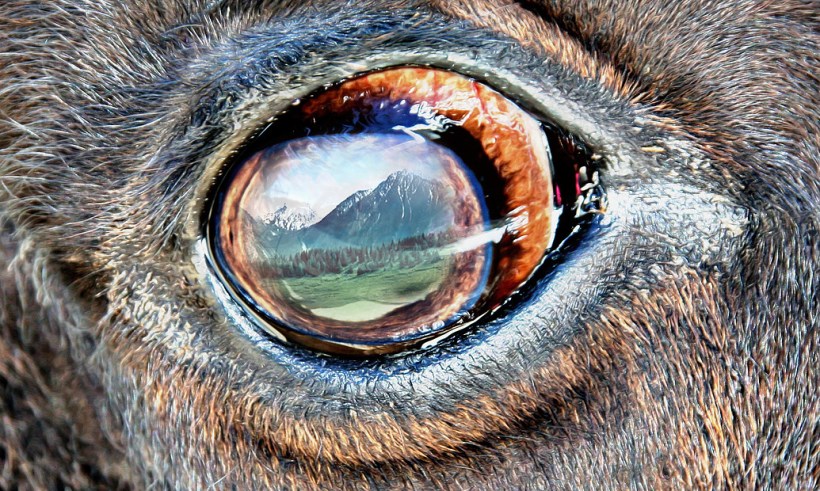
The Face of Evil

Man in the MirrorHe was 19 years old. He went to an ethnically diverse, upscale high school near Harvard. He was a popular kid, a good athlete, very bright, well-liked. He graduated high school early and was studying to be a doctor. He killed three people, critically wounded dozens and injured many dozens more … We want him to be a monster! But “he was a good kid“.

Listening to the reflections on Dzhokhar Tsarnaev from his classmates and others who knew him and looking at his graduation photo leaves me perplexed. The rage and anger that arises from my gut at the sight of the bombing victims somehow does not match the image that comes from the reflections of people who knew him. It does not fit neatly into my black and white compartments. I want to hate him, but I see a person who seemed like just “a good kid”.

Smart, popular, athletic, young … what happened!!!?

Josef Stalin, Adolph Hitler, Idi Amin, Jeffrey Dahmer, Jack the Ripper all conjure up images of pure evil. Despicable, villainous, ugly, blackened souls, with no redeeming value. The depth of their depravity seems cavernous. We loathe them. We spit on their graves. We cannot imagine what possessed them.
Continue reading “The Face of Evil” →

Perspective

Take a few moments and read this … and remember it.

Every shriveled old man or woman was once young and vibrant like you.

You and I will end up like this … if we are fortunate to live that long.

Life is short. It will come to an end.

Make the most of your days while you are young. Live a life well lived.

Trust the rest to God.

We go from dust to dust. It is what we do in the middle that matters.

Crabby Old Man


Why the Bible?

lightstock_169269_medium_user_7997290


College was a foundational time in my life. I was confident going into college that truth is knowable, understandable and discoverable. I was excited to get down to the business of discovering the truth. I had no idea where I would find this Truth, but it seemed apparent to me that Truth was something I could grasp. Continue reading “Why the Bible?” →