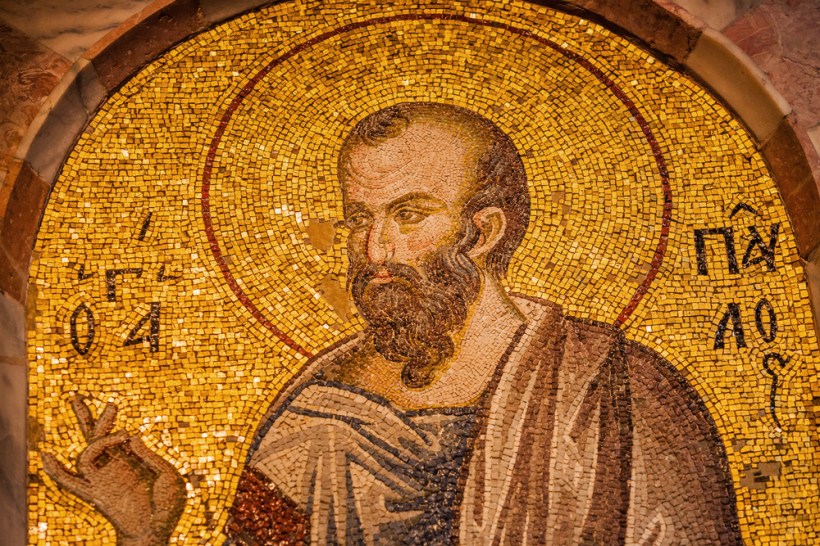
Another Look at God in Light of the Evil in the World (Part 1)

Love is a key component to understanding the problem of evil.


I introduced the problem of evil in a previous blog post, looking at God in light of the evil in the world. My writing is prompted by the discussion series being conducted by over 800 churches in the Chicago, explore God, taking on some of the big questions about faith.

I have tackled various aspects of the problem of pain before, but getting to a place of understanding is an ongoing process. I write as a way of working through issues to gain understanding. My understanding continues to grow and sometimes to change.

In the previous post, I suggested that we should approach the problem of evil in a similar fashion to the way we approach science,. Not that faith questions are susceptible of scientific inquiry, per se, but the answers aren’t always obvious. Sometimes they take considerable work on our part. We shouldn’t be lazy and give up simply because the work is hard.

As with science, we need to start with a premise. For the theist, the premise is that God exists. For the Christian, the God who exists is revealed in Scripture. He is a maximal being – maximally great, maximally good and maximally powerful. Of course, this is where the problem of evil arises for the Christian.

The problem of evil takes on different form, depending on the way each religion describes God. Not all religions describe God as a maximal, personal and volitional Being. For the Christian, therefore, the problem of evil leads to the question:

How can a good and all-powerful God allow evil, pain and suffering to exist in the world?

The skeptic would say: 1) either God isn’t all powerful, or 2) God isn’t good; or 3) God doesn’t exist at all (at least not as Christians conceive God).

I am not going to argue for the existence of God in this article. I am going to assume God exists as Scripture reveals Him. The proofs are satisfying to me, and I believe intellectually and experientially in the God of the Bible.

If God is God, then, how do we reconcile the issues posed in the problem of evil?

As with any complex problem, we need to hold to the premises we are given. Is there a way to do that? Can we harmonize these things? I think we can.

Continue reading “Another Look at God in Light of the Evil in the World (Part 1)”

The Plurality of One God


I have undertaken to explore the question, Is Jesus God?, by looking first at the claims Jesus made about himself. After all, if Jesus didn’t really claim he was God, we would have to wonder about others making that claim. The religious authorities, at least, understood what Jesus was saying, and they condemned him precisely because he was making claims of equivalence with God.

I also explored what people in the time of Jesus said about him. Some people claim that the early followers of Jesus didn’t really think he was God, that the God-claim arose generations later in the way of a legend. Unless the Gospels and letters collected in the New Testament were written generations later, clearly, his early followers, and even people opposed to him, believed that he was God or, at least, that he claimed to be God.

One puzzle that remains, though, is how the claims made by Jesus and his Jewish followers fit into an ancient Judaic theology built on the foundation of one true God. Jesus, himself, quoted the sacred text handed down from Moses: “You shall worship the Lord your God and serve him only.” (Luke 4:8, quoting Moses Deut. 6:13) So how do we square that statement with his evident claims that put him on a par with God?

There is no dearth of resources addressing the idea of the Trinity, but I turn to a former Muslim for help. Muslims have a robust view of God (Allah) as one. Allah is not a father and does not beget sons. He is single, undivided, and purely one God.

Nabeel Qureshi is my source for an explanation of the Trinity. Nabeel was a devout Muslim turned Christian after his college years, and he went on to become a Christian apologist.

Nabeel recalls that one of the most recited passages of the Qur’an is Surat-al-Ikhlaas, 112:2 – “God is not a Father, and He is not a Son.” This “doctrine above all doctrines” in Islam is known as Tawhid – God is absolutely one and cannot be father or son.

The question that troubled Nabeel when he was comparing the two religions was this: How can the Trinity be harmonious with a monotheistic doctrine?

Continue reading “The Plurality of One God”

Is Jesus God? Part 1

Is Jesus God? What did he actually say about himself? And what did the people closest to him say?


Over 800 churches in the Chicago area are working through a series of big questions together all at the same time. (See exploreGod) The big question two weeks ago, for instance, was: Why Does God Allow Pain and Suffering? I have addressed the problem of pain before. Not that I have addressed the issue once and for all. I certainly haven’t. Gaining knowledge and understanding is an ongoing process. In that vein, I tackle the question for this week: Is Jesus God?

Not that I (nor anyone) can prove Jesus is God. I don’t suggest that I can, and it isn’t my goal to offer that proof here. Rather, I intend to go through the exercise of following the claims that Jesus and others made about who Jesus was. After all, why would it even be a question whether Jesus is God if neither Jesus nor any of his close associates made that claim?

Before launching into a review of what Jesus and others said about his deity, we should note what he didn’t say. To be perfectly frank, Jesus didn’t not say, “I am God in the flesh” in those exact words or other words directly and expressly making such a claim.

At the same time, Jesus never said, “I am not God”. He never says, “Don’t worship me.”

Jesus is known for the questions he asked. Perhaps, the most significant question he asked is this: “Who do you say that I am?” This series of blog posts is an introduction to that question by looking, first, at the claims Jesus made about himself and then looking at what others said about him.

Continue reading “Is Jesus God? Part 1”

Is Jesus God? Part 3

What did the people closest to Jesus and those who were opposed to him think that Jesus was saying about himself?


Jesus said to his followers, in no uncertain terms, “You shall worship the Lord your God and serve him only.” (Luke 4:8, quoting Moses Deut. 6:13) Why, then, do Christians have this notion that Jesus was God?

That is the question being addressed in this blog series. The question was introduced in the first piece: Is Jesus God? Part 1. The question is being posed as part of a series of questions, that is being discussed among over 800 churches presently in the Chicago area. (See exploreGod) In the second blog post, Is Jesus God? Part 2, I covered the things Jesus said about himself.

In this third installment on that question, I will review what others said about Jesus in his time, both those who followed him and those who opposed him. The statement Jesus made about worshiping and serving only God is important to consider in light of the claims Jesus made about himself as well as the way other people reacted to Jesus.

Surely Jesus would not deign to suggest that he was God after making such a statement, right? How could his followers be confused about his deity? (If, indeed, there was any confusion.) What did others say about him? And how did they relate to him?

Continue reading “Is Jesus God? Part 3”

The Ebla Tablets Revisited

Ruins of the outer wall of Ebla and the “Damascus Gate”

One of the most popular articles on this blog is The Ebla Tablets Confirm Biblical Accounts. Though it was posted in 2015, it was still the most read article on the blog in 2016 and 2017 and was still third on the list in 2018.  Perhaps, that is why I feel prompted to revisit the subject today.

Digging a little bit deeper into the subject (pun intended), I found a 1979 Washington Post article that boasts no biblical claims. (Literally, it’s in the title.) The article asserts that, after initial enthusiasm that the tablets would reveal biblical treasures, “three years of intense study” disclosed no biblical claims. Dr. Robert Biggs, professor of Assyriology at the University of Chicago’s Oriental Institute, announced the verdict, “People who are looking to the Ebla tablets for proof of the authenticity of the Bible are going to be sorely disappointed.”

At the time of the article in 1979, 11,000 tablets had been discovered dating from 23 centuries before Christ in the ancient Sumerian city of Ebla in what is now northern Syria that was destroyed by fire around 2300 BC. Of course, only 48 tablets had been translated and published at the time of the article. While Professor Biggs was quick to render a verdict against the Bible, other scholars were not as quick to jump to judgment as noted by a Smithsonian expert who speculated at the same time that Ebla tablets may support the historicity of the Patriarchal narratives, “but we won’t know for decades.”

Fast forward to 2015, the number of tablets recovered from the ancient library in the ruins of Ebla had increased to 15,000, and the early verdict that they contain no “biblical claims” is much in doubt. (See Controversial Discovery: 15,000 Ancient Ebla Tablets Prove Old Testament To Be Accurate) The current number of tablets and portions of tablets may be closer to 17,000, and assessments are changing,

Continue reading “The Ebla Tablets Revisited”