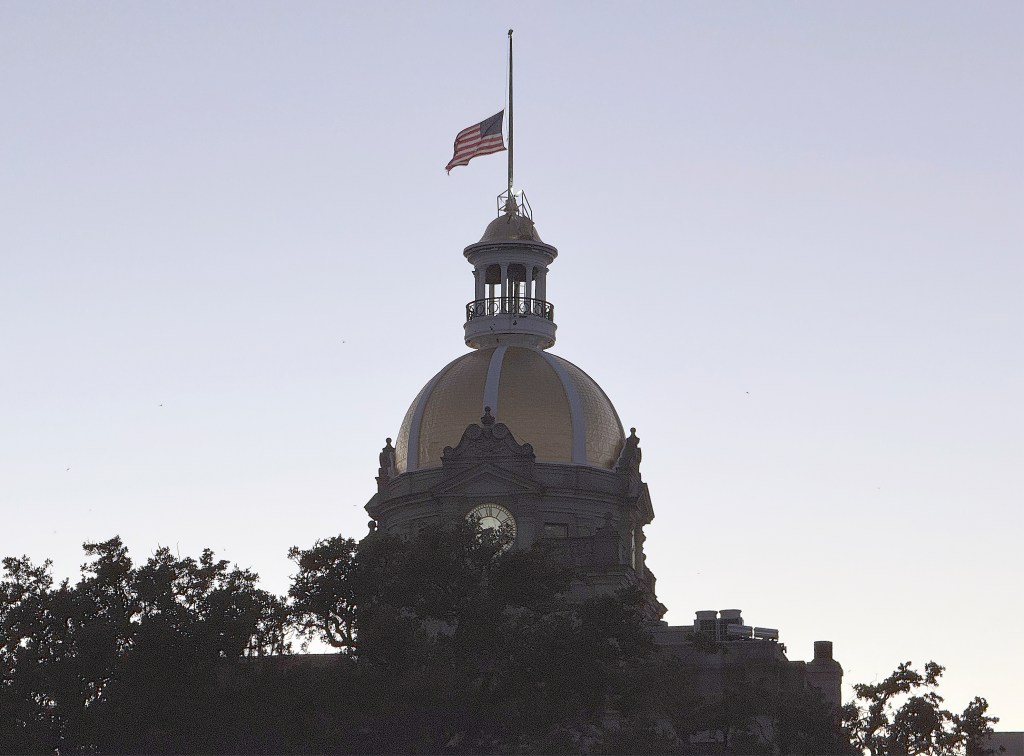
I hope you will stick with me on this one and give me some grace. I have let my thoughts on the brutal assassination of Charlie Kirk sit on the shelf these last three months to let the dust settle and the emotions wane.
I began writing on the topic when the awful news of his murder was still echoing loudly like shock waves in the air. I began writing the next day, after waking in the middle of the night with a question floating in my mind: Why did Charlie Kirk die?
Different people have different answers to that question, no doubt, but it seemed to be a question prompted by God to me. It challenged me to take that question back to God in prayer.
As I engaged God, the question changed slightly to this: For what did Charlie Kirk die? That question has hung in the air for me the last three months now, though the shock waves have settled into a kind of numbness. Many people have “moved on”, others are entrenched in the narratives they formed long ago, but I think the question still yearns for an answer that months of quiet contemplation might provide.
I didn’t know much about Charlie Kirk before his assassination. I saw him speak once at an outdoor gathering at Harvest Bible Chapel in Elgin, IL. This was before the fall from grace of James McDonald (who was the head pastor). It was also before the posthumous exposure of the secret sexual activities of the apologist, Ravi Zacharias.
Charlie Kirk was welcomed to the stage like a favorite son by McDonald. He spoke for about 10 minutes about his political activities, but I could not have told you what his organization was called before his death. Most memorably, he spoke about his relationship with Donald Trump and his political activities.
Though it seemed Charlie Kirk had roots in the local Christian community, politics was his main focus that day. I came to hear Ravi Zacharias in person because I admired Zacharias for his compassionate, common sense, and approachable defense of Christian faith. I was not there for a political rally, so Charlie Kirk’s political pitch seemed out of place to me.
It’s ironic, perhaps, that both McDonald and Zacharias have fallen from grace since then. McDonald turned out to be an overbearing, controlling, manipulating church leader who lacked accountability, like other megachurch leaders, recently, who have been undone by similar exposure. Zacharias turned out to be given to unrepentant sexual sin that came to light after his death.
I have to admit that I didn’t know much about McDonald, and I didn’t follow him. Therefore, I am only repeating what I have read. I am sure the truth is a mixture of good and bad, like Marc Driscoll and his Mars Hill empire. For whatever good they did, their legacy is a blight on the fruit of their ministries.
I did know Ravi Zacharias. At least, I thought I did. When his hidden sexual life became known, I was shocked and dismayed. I really resonated with his message and his approach and connected with his perspective. The exposure of his private sin was a hard truth for me to swallow. That he was such a fallen man with seemingly unrepentant sins has tarnished his public persona and destroyed his legacy.
In truth, we are all fallen. We all struggle with sin in varying degrees of resolution. Our success in that arena depends on our submission to God and willingness to be accountable to the people of God as we confess our sins and pray for each other. For Ravi, his hidden sin came to light only after his death, but it colors the way the world will always see him.
The rottenness that he allowed to fester by trying to hide it, by insulating himself from accountability, and by living a double life was the ruin of his ministry and legacy. This is not to deny all the good things he said and did. He was one of a kind. I wish more apologists had his grace, winsomeness, and compassion in dealing with people struggling with doubt and entrenched in materialistic thinking. But, it’s now messy, and his work has been discounted by that posthumous revelation of his private sins.
In truth, I think about my own sinful tendencies. I think about my own story. I think about my own legacy as a Christian. Will people remember me as man of faith who bore good fruit? Will God say, “Well done my good and faithful servant,” to me?
Did God say that to Ravi Zacharias? Did God say that to Charlie Kirk? What about Charlie Kirk’s legacy?
Charlie Kirk was very bold and vocal about his faith in Jesus. He left no doubt that he was committed to Christ. He was motivated by his faith to do what he did. When someone once asked him how he wanted to be remembered, he said wanted to be remembered for his faith in Jesus.
I imagine that James McDonald and Ravi Zacharias had similar desires to be remembered for their faith and faithfulness to the Gospel, but that isn’t their legacy. They allowed other things into their lives that obscure the message of the Gospel and their legacy in relation to it.
After three months, I am still wondering, “For what did Charlie Kirk die?” Did he die for Jesus? Was he a martyr for Christ? I think I am ready to try to answer that questions now as I see it.
In the long history of the Church, many people have been martyred for Christ. Many Christians have died for no reason other than the fact that they were Christian. Many Christians in the first several centuries of the church were forced to choose between renouncing Christ or facing immediate death. The early Christian martyrs chose death rather than renounce the Lord they loved.
Charlie Kirk was a Christian, and he died for what he believed at the hands of someone who disagreed with him. Does make him a Christian martyr?

Simply professing Jesus is not enough. Jesus said that many will say to him, “Lord, Lord! Did we not do wonders and cast out demons in your name?”
And, Jesus will say, “I never knew you!”
I know it may sound heretical that publicly taking about Jesus is not enough, but we have to take what Jesus said seriously, don’t we? Publicly expressing his faith in Jesus is not enough to settle the question.
I am not saying that Charlie Kirk was not saved by grace. I am not saying that Charlie Kirk is not enjoying the reward of his faith in heaven, but I am questioning whether we can consider Charlie Kirk a Christian martyr, as some are claiming.
I am in no position to judge Charlie Kirk’s relationship to God or eternal salvation (or anyone’s for that matter). I am only asking: What did Charlie Kirk actually die for? It’s an important question for us who are still living. How do we want to be remembered? What will the lasting fruit of our lives be?
The jury is still out on exactly why the killer shot Charlie Kirk. He made his first court appearance at the end of 2025, but he remains silent. The judge imposed a gag order, and he stopped talking soon after he was arrested.
We have some clues, though. His mother told the police that he “had become more political and left-wing, ‘more pro-gay and trans-rights oriented.’” According to his roommate, who is transitioning from biological male to female, the accused killer said, “‘I had enough of his hatred,’ .…. ‘Some hate can’t be negotiated out.’“
The “hatred” obviously relates to Charlie Kirk’s political rhetoric and specifically what Charlie’s Kirk said about transgender issues. Right before he was shot, a student mentioned the Donald Trump’s suggestion about revoking gun rights for transgender people following an incident with a transgender shooter. The student asked Charlie Kirk how many school shooters in the US were trans over the last 10 years.

As Charlie Kirk began to answer that question, he was shot. Does that men Charlie Kirk killed for his views on transgender issues?
Based on the clues we have, it seems obvious that his vocal views on transgender issues could have been a motivating factor.
At the moment Charlie Kirk was shot, he was talking about trans shooters, and he was talking about the Second Amendment (the right to bear arms). This is tragically ironic, of course. The irony is even greater for the fact that three children in Denver lost their lives on the same day Charlie Kirk died at the hands of people with guns.
Did Charlie Kirk die because of his stance on transgender issues? Or was it Second Amendment rights? Or was it for his faith in Jesus?
Based on the motivational clues we have, we might not be surprised to discover that the killer was listening in and chose that moment to pull the trigger. The cosmic coincidence is noteworthy, at the very least.
I watched Charlies Kirk videos for the first time after he died because I wanted to get a sense of who Charlie Kirk was. His chosen path was obviously a political one. He was motivated by his faith, but his activities were expressly political. He was bold in professing his faith, but he was known for his politics, and political activism.
He wasn’t bashful about his faith, but he was there for the politics. That was the whole point of Turning Point USA.
He traveled to colleges and universities, and he set up open air meetings, inviting (or daring) people to confront him. He didn’t back down or shy away from anyone or any topic. He was brutally honest about his contrary views, and he seemed to relish expressing them face to face with people who vehemently disagreed with him.
At the same time, Charlie Kirk was a likable guy. He was provocative and pointed sometimes, but he said what he said with a smile and friendly attitude. He didn’t get ruffled even when people were screaming at him He didn’t respond in kind when people were nasty and belittling, and he had an uncanny ability to keep his composure.
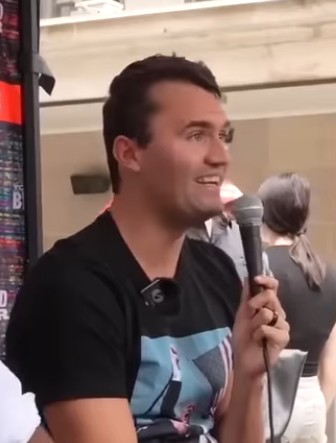
It wasn’t how he related to people that engendered hatred; it seemed to be what he said. He was pointedly, doggedly, unapologetically conservative, Republican, and supportive of Donald Trump. His quick wit led to some sharp and digging responses to what people said. I suppose the combination of charm and wit was like rubbing salt in wounds. He was able to get under the skin of his opposers, but they could not gain the same satisfaction.
I think it is easy for Christians to assume Charlie Kirk died for Jesus because he was vocal about his faith, but he was most vocal about his politics. That is what he was known for. That he might have been called a “conservative Christian” or even an “evangelical” says more about the way people labeled him politically than his faith.
For early Christian martyrs, the message was the Lordship of Jesus. Full stop. Renounce him or die. Full stop.
For Charlie Kirk, it isn’t that simple, and it is not that clear. He wasn’t talking about Jesus when he was shot. His faith was embedded in his politics, and his faith and politics were indistinguishable to most people I have talked to, but his politics is what people objected to.
That he was motivated by his faith is not really the issue. Some people are motivated by their faith to support LGBTQ rights. Others are motivated by their faith to be compassionate and to bridge the gap, even if they are not affirming. I am not here to comment on that, but I say this to make the point that his faith is ultimately incidental to the political position he advocated.
Can we say that Charlie Kirk died for Jesus because his faith informed his views on transgender issues? I don’t think so, because faith leads other people to other conclusions.
People can agree that pushing kids to transition, with or without parental consent, is questionably prudent at best. It might even be “criminal.” A growing number of people regret transitioning. They say they were pressured into it, and they have become vocal opponents of the recent trend to rush people with gender dysphoria into taking actions that cannot be undone.
Our society grapples with the best way to treat gender dysphoria, and Christians disagree on a biblical approach to transgender issues. The best way forward is far from clear, and we are far from being unified in the Church on gender issues. The same Bible and the same Christian faith leads people to different views.
This was once true of race and slavery. There are still people who call themselves Christian who do not believe that slavery was wrong. There are many disagreements among Christians about whether we should ignore or celebrate racial differences whether we should endorse affirmative action or oppose it, and what (if anything) we should do about the ongoing racial disparities that continue after hundreds of years of lawful discrimination.
Different views on these things exist among Christians who believe that Jesus is Lord and the savior of the world. Christians with traditional, orthodox beliefs are not unified in their political views. Bible-believing Christians can be found on both sides of the political aisle, especially among black voters and white voters, and have many, varied, and nuanced views on myriad political issues. We are united in Christ, but we are not necessarily united in our politics.
Thus, the positions Charlie Kirk took on transgender issues cannot be characterized as uniquely Christian. They are not even uniquely Republican.
Charlie Kirk was a proud Trump supporter, but many Republicans, like David French, Adam Kinzinger, and (most recently) Marjorie Taylor Greene, are not Trump supporters.
While Christians disagree about how Christians should think about transgender issues and politics, generally, Charlie Kirk’s views were partisan, Republican, and Trumpian. Charlie Kirk was opposed and (sadly) hated for these political views. The political views were the focus of his organization, Turning Point USA, and they were the primary message he preached on college campuses around the country.
The fact that he was a Christian, was motivated by his faith and wasn’t shy about it is not why people opposed him and reacted to him. They reacted to his political views and his opposition to other political views.
Some people have horrifically celebrated his death. Many other people who disagreed with Charlie Kirk mourn his death, as they should. Killing anyone should never be a solution for disagreement. Even people who disagree with Charlie Kirk agree on that. Even people opposed to Charlie Kirk acknowledge the tragedy that Charlie Kirk stood for open, non-violent dialogue. He should not have been killed for his politics or anything that he said.
We should recognize, also, that the people who disagreed with Charlie Kirk include Christians. He was a controversial figure who preached political positions that were rooted in his faith in Jesus. Other Christians, however, have political positions that are also rooted in their faith, and they differ from Charlie Kirk’s political positions.
I am not trying to stake a claim to one political view or another among Christians. I am also not saying that our political views should kept separate from our faith or that faith should be excluded from our politics. I am just expressing my opinion that we cannot say that Charlie Kirk died for Jesus. He didn’t die because he stood up for Jesus; he died because he stood up for a particular brand of conservative politics.
In my opinion, the Christians who say that Charlie Kirk died for his faith are correct, but only in the sense that his faith motivated his politics. That is where it gets murky.
The people who opposed Charlie Kirk opposed him for his positions on gender and transgender issues, gun rights and the 2nd Amendment, race and affirmative action, abortion rights, and support of Donald Trump. They didn’t oppose him because he thought Jesus was God, died for the sins of the world, and rose again. In short, they didn’t oppose him for his religious beliefs; they opposed him for his political views.
Christians once vehemently defended slavery with support they found in the Bible. Of course, the abolition movement was also led by Christians who found their inspiration and support in the Bible. This tells me that sincere Christians can disagree on significant and emotionally charged, political issues – and even sincere Christians can be wrong (as most Christians today would affirm on the issue of slavery).
Whether Charlie Kirk was “right” or “wrong” on racial issues today, though, isn’t the point I want to make. The only thing I want to ask is: What did Charlie Kirk die?
Did Charlie Kirk die for being a Christian? Or for something else?
In a world that conflates evangelical Christians with the “far right”, the MAGA movement, and the “Republican base,” Charlie Kirk was the young David to the old Goliath of the Democratic party, progressivism, “wokeness”, and Trump Derangement Syndrome (as if that were a real diagnosis). That’s who Charlie Kirk was to the Republican Party, which is made up of Christians and non-Christians alike, and that is who Charlie Kirk was to the world.
I didn’t align with Charlie Kirk on his political activities, but I do not question his sincerity. That isn’t the issue here. I believe Jesus died for me, and I believe Jesus died for Charlie Kirk. I also believe that Jesus died for all the sins of the world and all the sinners in the world. I think Charlie Kirk probably believed that too, though people might have a hard time understanding that.
By all accounts, Charlie Kirk was a nice guy. He was a good family man. He had a lovely wife whom he loved, and beautiful children. He was a straight shooter. He was engaging, even if people disagreed with him. I even admire his boldness and ability to engage who disagreed with him so profoundly.
Just because Charlie Kirk was a sincere Christian who professed faith publicly in Jesus Christ does not mean that Charlie Kirk was right in all the positions he took and all of the things that he said. It also doesn’t mean that he was a Christian martyr.
If all Charlie Kirk said was that Jesus was the son of man and the son of God, that he died to take away the sins of the world, and he rose from the dead, and he will come again to judge the living and the dead, we could say that Charlie Kirk was martyred for Jesus. While Charlie Kirk was certainly a person who expressed faith in Jesus, it’s far from clear to me that Charlie Kirk died for being a Christian. He took many positions on many things that fellow Christians disagree with.
As I listen to the people who opposed Charlie Kirk, they didn’t oppose him for his faith in Jesus. If we listen to people who are mad at him, it isn’t because he loved Jesus. They are mad at him because of the political positions he took and his outspoken support for the MAGA movement.
Many of the criticisms of Charlie Kirk were not fair. His sharp-tongued responses were sometimes accompanied with mitigating comments and context that was cut out on the editing floor. His political statements presented with a smile and charm looked cold and uncaring in print without the personal affectation. His genuine friendship with Donald Trump put him in the bullseye of anyone Donald Trump offended (and that is a long list).
Fair or not, when we ask the question, “What did Charlie Kirk die for?”, I don’t think Jesus is at the top of that list. He didn’t die for his loyalty to Jesus, he died for his bold and vocal support of a political worldview that was his life’s mission to advance. He died because of his political views, not for his love for Jesus, though he was undoubtedly motivated by it.
While the legacy of Charlie Kirk is not some hidden sin or a bullying, overbearing, and controlling pastorate that obscured the message of the Gospel, the legacy of Charlie Kirk is also a mixed bag. Most people think of his politics, not his faith. More troubling, perhaps, is that many people cannot distinguish between his politics and his faith; they assume they are one and the same; and they reject one with the other.
When the question is posed, then, “For what did Charlie Kirk die?” The answer is not altogether clear. I wish it was so simple. The message of his faith was obscured by the partisan form of politics that he championed.
I write this for myself and anyone who will listen – when we are done with our days, what will we be known for? Will it be our Christian witness? Will be our faith in Jesus? Or will witness and faith be obscured by the other things to which we devoted our time and attention? Where do our priorities lie?
~~~~~~~~~~~
I put this out there knowing that many will disagree with me. In that sense, maybe, I am adopting the guidance from Charlie Kirk’s playbook. I believe in the freedom speech, and the marketplace of ideas, and the right of every American to express opinions, regardless of their popularity. If you have an opinion that is different than mine, I invite you to express them here.

 Navigating by Faith