
Someone commented recently on Facebook that some of the harshest critics of Christians on social media are Christians. (Assuming that anyone who self-identifies as a Christian is a Christian.) This reminded me of what Jesus said to his disciples after Judas left the last supper to betray him.
When he was gone, Jesus said, “Now the Son of Man is glorified and God is glorified in him. If God is glorified in him, God will glorify the Son in himself, and will glorify him at once.
John 13:31-35
“My children, I will be with you only a little longer. You will look for me, and just as I told the Jews, so I tell you now: Where I am going, you cannot come.
“A new command I give you: Love one another. As I have loved you, so you must love one another. By this everyone will know that you are my disciples, if you love one another.”
“Now” the Son of Man is glorified, Jesus said. He was lifted up, but it wasn’t the kind of “glory” anyone expected. It was the glory of Jesus being obedient to the Father and accomplishing all that intended.
Jesus knew he was leaving, and (if we read between the lines), he knew the disciples left in front of him would struggle at first. What was the key instruction in this time? What was the one thing he gave them to hold onto?
“Love one another. As I have loved you, so you must love one another. By this everyone will know that you are my disciples, if you love one another.”
It’s a sad state of affairs that Christians today may be more well known for their fighting with each other than for their love for each other.
People will say that the doctrine is important and that Paul and the early church were also concerned about doctrine. This is true, of course.
It also occurs to me that the 1st century Christians lived in a world that was predominantly non-Christian. They were a very small minority. The disagreements among Christians likely went completely unnoticed by the world at large.
Christians are in the majority in the United States today, so negativity from Christians toward Christians in the United states is highly noticeable. With so many people who call themselves Christian, the fighting is going to get noticed.
A person might say further that love is tempered by truth. Love that does not recognize and confirm to truth is not love. Right? I cannot help but thinking, however, that such a statement sounds particularly like something a Pharisee may have said in the 1st century.
Isn’t it a shame that, with so many Christians in this country, we do not shine like that proverbial city on a hill? And, by shine, I mean with the love of God for each other (and for others – and even for our enemies).
Looking back at the first Christian leaders who had disagreements, I see that they spent time in prayer – together with each other. They worked to find common ground, and they agreed to disagree on peripheral things. They did not bicker publicly among themselves.
We see many examples of this in the Book of Acts and the epistles that make up the New Testament. Early Christians did not agree on everything, but they agreed on essentials, and they allowed room for disagreement.
Early Christians did take a strong stand against heresy, but we can’t just everything on which we disagree matters of heresy. Heretical doctrines in the 1st Century, like Gnosticism, have their 21st Century counterparts. We call certain clear departures from orthodox Christianity heretical, like the Jehovah Witnesses and Mormons, but the fighting my friend on Facebook was sad about is fighting among Christians who are somewhere in the range of Christian “orthodoxy”.
That is the rub.
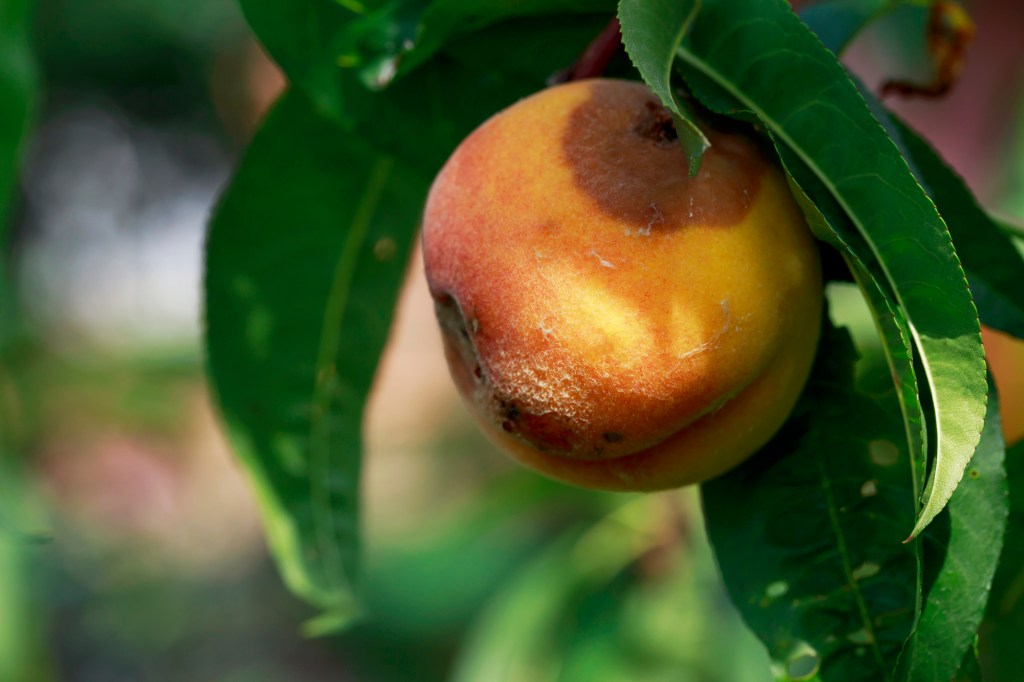
In looking at the passage in which Jesus said his followers would be known for their love for each other, I thought about another statement in which Jesus said people would “recognize them by their fruits”.
This statement, however, was made about false prophets.
“Beware of false prophets, who come to you in sheep’s clothing but inwardly are ravenous wolves. You will recognize them by their fruits. Are grapes gathered from thornbushes, or figs from thistles? So, every healthy tree bears good fruit, but the diseased tree bears bad fruit. A healthy tree cannot bear bad fruit, nor can a diseased tree bear good fruit. Every tree that does not bear good fruit is cut down and thrown into the fire. Thus you will recognize them by their fruits.”
Matthew 7:15-20
Love, of course, is a fruit of the Spirit.
But the fruit of the Spirit is love, joy, peace, forbearance, kindness, goodness, faithfulness, gentleness and self-control.
Galatians 5: 22-23
What are the fruits from a diseased tree? Lack of love for starters! Jesus called false prophets “inwardly … ravenous wolves”. They appear to be sheep, but they are inwardly ravenous. They appear to be authentic, but we know them by their fruit.
The Greek word that is translated “ravenous” is ἅρπαξ, αγος, ὁ (harpax), from the root noun, hárpaks (seizing; a sudden snatching), meaning rapacious, ravenous; a robber, an extortioner. They are aggressive, tricksters, deceivers, and manipulators. They have ulterior motives. they promote themselves while deceiving or strong-arming people to get their way.
We may not see their inward reality, but we can know them (at least eventually) by their fruit. We can recognize them by their behavior, which is not loving and is not in keeping with the fruits of the Spirit that are in harmony with love.

When we look at examples of love in scripture, we see self-sacrifice, consideration for others, humility, kindness, patience, long-suffering, lack of boasting, and so forth. These are all characteristics of conduct – how we act and treat other people.
Therefore, it seems to me that love has something to say about how we disagree with each other and how we treat those with whom we disagree. The fruit of a diseased tree is also known by its fruit, which is reflected in the way we treat people.
Jesus even told us that we should love our enemies, so it doesn’t matter that we might think another person is wrong – or even heretical. Our conduct should exemplify the fruits of the Spirit regardless of whether disagreements occur over heresy or peripheral matters.
When our actions do not exhibit love, they may be indicative of bad fruit and a diseased tree – and maybe even some false prophets in our midst. After all, Jesus said weeds would grow among the wheat, and he would sort them out at the end.
We all sin and fall short. No one is without sin. God is faithful and just to forgive us when we confess our sins to Him, so I am not writing in condemnation of anyone.
At the same time, we should take seriously the one thing Jesus said would be characteristic of His followers – that we love one another. And we should be wary and alert of the “inwardly ravenous wolves” of the false followers who may come in sheep’s clothing – characterized by a lack of love and other fruits of the Spirit.


 Navigating by Faith
Social media has amplified and twisted so much of our thinking – I think it is as much a ravenous wolf as any one individual.
The love Jesus spoke of can only be fomented in situations where real human interaction can occur.
Searching for people of good faith – who can disagree agreeably is the mission is the challenge of our time.
LikeLiked by 1 person