
Once again, I am reading the epic of Eden by Sandra Richter. She takes the orthodox, traditional position that Eden was perfect, man fell, bringing God’s creation down with him, and God is redeeming man with creation so that man will live forever in perfection, again, after redemption is complete. I am indebted to her and other scholars, and I greatly appreciated her book.
I wrote recently, on the question, Was the Garden of Eden Really Perfect? With due respect to Sandra Richter, I am leaning in the direction of no, the Garden of Eden wasn’t perfect. I explain my thinking in the article linked in this paragraph, and today I want to explore something that may be missing from the traditional narrative (at least as I understand it).
Today, I am posing some questions that occur to me as I continue to read through Sandra Richter’s fine book. Why did God place the tree of the knowledge of good and evil in the garden? Did God know men would eat from it? What is the point of the fall and the long road back to redemption?
I don’t claim to have all the answers, or at least not all the right answers. We may not know, and may never know, the answers in their nuanced details. I think that is ok, though we should strive to know as best as we can.
Maybe some things are not meant for us to know; or at least we are not meant to know that we know. We have a strong tendency to become proud and self-righteous and to start relying on our own understanding, rather than remaining humble before God and our fellow man.
Yet, I think God wants us to seek to understand. “It is the glory of God to conceal things, but the glory of kings is to search things out.” (Proverbs 25:2) Thus, my article today is an attempt at better understanding God’s redemption story and searching out these things.
Surely, God had purpose in placing that tree in the garden, right? God is sovereign and all-knowing, right? Thus, I think the questions I pose today are good for us to consider.
As I think about these things, it seems like an awful big risk for God to take in putting that forbidden tree in the garden. That tree was a real temptation for Adam and Eve to rebel. It was a real choice God gave them – a dangerous choice.
Indeed, that risk cost God’s crowning creation, the one creature made in God’s own image, its very life! We cannot possibly count all the people who have died since then. That risk also cost God’s creation and all of God’s creatures pain, suffering, and difficulty for many thousands of years.
Did God not see that coming?
It seems pretty clear to me that God did know. He not only knew the risk, but He must have known the risk was more than a mere potentiality. If God “stands outside” of time, if He can see the beginning from the end (Isaiah 46:10), if He is all-knowing, if He knows the words on our tongues before we speak them (Psalm 139:4), then He knew the choice Adam and Eve would make.
We have to assume God knew exactly how the history of man would unfold. Even so, God’s purpose for putting that tree in the garden must have been greater than all the suffering and all the pain and all the evil that was caused by Adam and Eve exercising that one terrible choice.
For that reason, I am coming to see that Eden was not perfect. It was not perfect because it contained a forbidden tree with fruit that would catapult Adam and Eve and all creation into a spiral of sin and death if they ate from it.
Because that tree posed a real choice to Adam and Eve that they were free to make, and because the exercise of that choice carried with it the direst of consequences. Eden was not “perfect”. It contained within it the seed of rebellion, sin and death, but this may just mean that God’s creation was not complete. Not yet.
Adam and Eve were innocent, but naïve, in the garden. They knew God, and the goodness of God. They did not know evil. They didn’t even know the difference between good and evil. That means they had nothing by which to compare good. Indeed, how could they have even defined what is good without knowing evil also?
They had no opportunity for doing anything bad, but for that one choice God gave them. In making that one choice, Adam and Eve knew, for the very first time, the difference between good and evil. They knew rebellion, sin, and death in making that choice, and that changed everything.
The question that begs asking is this: Why did God give Adam and Eve that choice if God knew they would exercise it?
If God is omniscient, He knew the choice Adam and Eve would make. I believe, therefore, it was part of His plan. Perhaps, God needed them to exercise that awful choice so He could complete (and perfect) His plan.
Perhaps, they could have chosen otherwise. After all, it wouldn’t have been a real choice if they could not have chosen otherwise, but God, who is the Alpha and Omega, however, must have known the choice they would make. Likewise, God must have been ready for them to make that choice. He certainly knew the risk, and He must have known that there was something to be gained out of that awful choice with its horrendous consequences. I believe this was and is central to God’s plan – or He wouldn’t have put that tree in the garden to begin with.
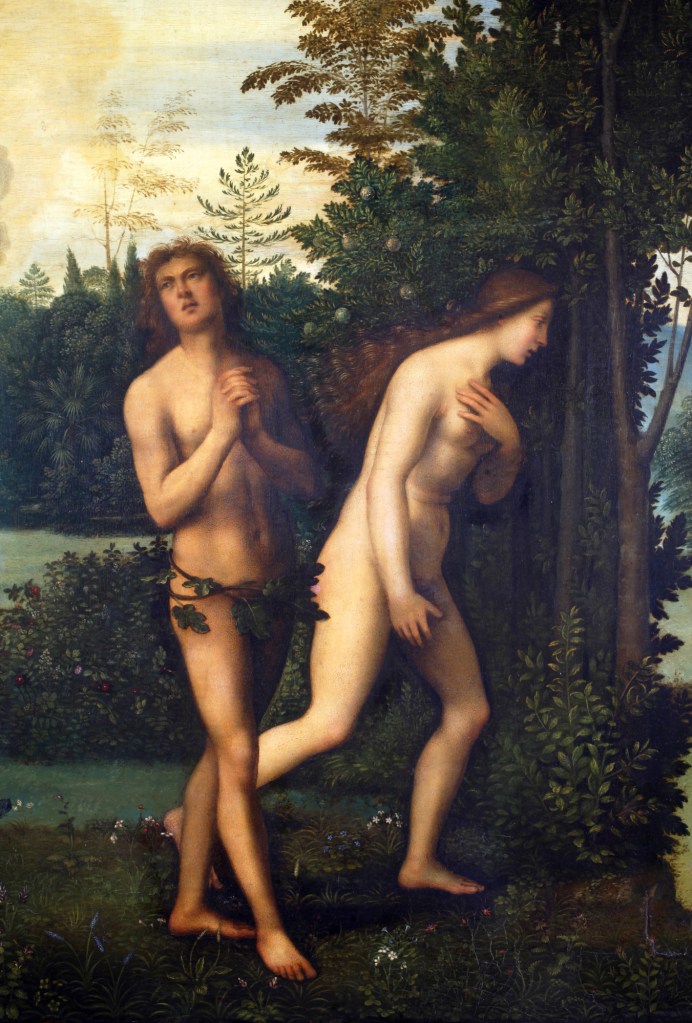
Having eaten of that fruit of the knowledge of good and evil, Adam and Eve were forever changed. They lost their innocence. They would forever know the consequences of their rebellion and the sin and death that resulted from it.
That experience and newfound knowledge also opened the door to something else, and this it what I think is the key to understanding why God allowed it. Only through the fall – and the exposure to sin and death – are we able truly to understand what is good and to choose the good for its own sake. Only after knowing evil are we truly able to reject evil, to reject rebellion, to submit to God willingly and knowingly, and to choose good over evil.
Ironically, Adam and Eve were tempted by the lure of knowing what God knows and becoming like God, as if that knowledge, itself, was the forbidden fruit. This was how the serpent tempted Eve: “For God knows that when you eat of it your eyes will be opened, and you will be like God, knowing good and evil.” (Gen. 3:5)
Ironically for Satan, I think this was God’s plan all along. He wanted Adam and Eve to know what God knows and to become like God in the knowledge of the difference between good and evil. Because, only then could Adam and Eve choose good/God. Adam and Eve needed to experience evil, sin, and death to be able to choose God and what is good.
Before that, they had no real choice. They knew one tree was forbidden, but they had no idea why. They knew nothing of evil and, therefore, were unable to choose good over evil. Now that mankind knows evil and all of its consequences, we are able to choose good, to choose God’s way, to choose trust and submission to God because we know the alternative.
I believe this was God’s plan all along, and the risk was worth the reward. The risk was an inevitability. In the eons of time, it was inevitable that Adam would choose to eat from that fruit at some point, but God was ready for it, and He had a plan.
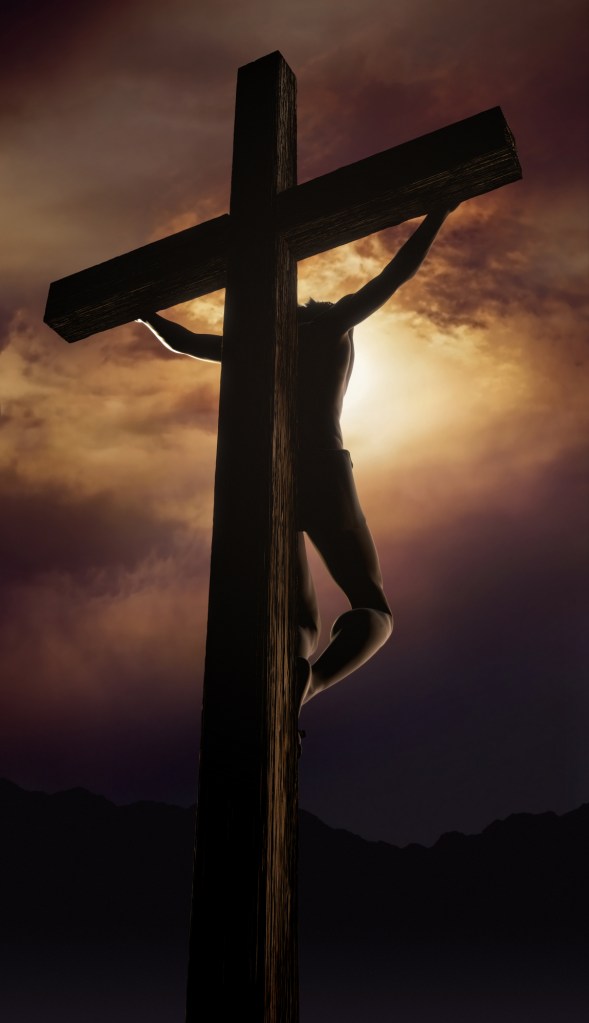
God knew, also, that He was going to empty himself of His glory to become a man. He knew He was going to insert Himself into the process of redeeming His own creation. From before the foundation of the earth, God was prepared to humble Himself in submission to His own plan, and to die at the hands of His own creation on a cross to complete the perfecting of His creation, redeeming mankind in the process, and all of creation with us.
Thus, the risk was not just for Adam and Eve, but for God also. God knew well the risk, better then any man, and He was willing to do what needed to to be done to accomplish His purpose.
The purpose is this: that man, the crowning glory of God’s creation, the only creature made in God’s own image, would become like God in every way – willingly. Knowing evil, all people are now in the position to choose good, to choose God’s way and submit to God, to take on God’s own character, to reflect God’s love back to him, because we want to. Because we know and trust that God loves us, and we desire to love Him back!
Romans 8 says that the creation groans as if in the pains of childbirth, awaiting the adoption of men as children of God. This adoption of men as God’s children will complete creation and bring all of God’s creation into right relationship with God, perfecting what God created.
“I consider that our present sufferings are not worth comparing with the glory that will be revealed in us. For the creation waits in eager expectation for the children of God to be revealed. For the creation was subjected to frustration, not by its own choice, but by the will of the one who subjected it, in hope that the creation itself will be liberated from its bondage to decay and brought into the freedom and glory of the children of God.
“We know that the whole creation has been groaning as in the pains of childbirth right up to the present time. Not only so, but we ourselves, who have the firstfruits of the Spirit, groan inwardly as we wait eagerly for our adoption to sonship, the redemption of our bodies.” (Romans 8:18-23)
The garden of Eden was not perfect, but it was a perfect plan to achieve God’s purposes of creating a being that would someday be elevated to eternal life in loving relationship with God of our own free choice – perfectly reflecting God’s love back to Him.


Romans 8.28…
All things…:)
LikeLike
I have struggled for sometime with trying to understand the story of Adam and Eve it seemed through the years of my life no one has ever explained in a way that made sense as to how a serpent could talk and why a human would listen to a snake. .Also Adam’s role seems insignificant. He was there with her. Maybe this story is a metaphor..Not to be taken literally. 🤔 Also I struggle with the Christian belief that the Father, son and holy spirit are the same.. The Bible clearly defines the distinct roles. The Father is the greater authority, the Son is in submission to the Father and the Holy Spirit, also under the submission of the Father, is a comforter or our spiritual conscience which directs us to all truths. I am a Christian and truly believe in the sovereignty of God and the diety of Christ but the word trinity nor triune God is found in any Bible that I have ever read. It’s these beliefs I struggle with and pray for clarity and better understanding. My prayers are that God understands my need to know him better. I believe one day the truth will became brighter and we will be better enlightened.
LikeLike
I think we are meant to struggle with these things and to wrestle with them. We are probably trouble when we think we know it all and have nothing more to learn, when we think we know everything exactly right, etc. I think I have better understanding now than I did previously, but I am constantly seeing new things and considering things I had not thought of before. I don’t think the critical truth in the Adam and Eve story is whether a snake really talked. The early church scholars believed the most important meaning and understanding of Genesis is metaphorical. As for the trinity, that is certainly a mystery. The term isn’t in the Bible, as you said, but it is a way of describing what we read about God the Father, Jesus, and the Holy Spirit. I think we often just need to hold things we don’t understand in tension. We can accept that God is manifested in different ways, and we can relate to God in different ways, without completely understanding how it works and without completely understanding how God can appear in different ways to us. I encourage you to keep seeking. Keep striving to know God. Don’t be afraid to take your questions to God and find a group of people you can discuss these things with who are not put off by your questions and struggles. One good source for reading the Bible with a group is the BEMA Podcast. It encourages asking questions and not thinking you need to have all the answers all the time. Thank you for leaving a comment.
LikeLike