
My inspiration this morning comes from “the woman at the well” and Galileo. They are separated by about 1500 years, but their stories resonate together for me this morning.
The theme is inspired by the questions: “How should we read Scripture?” and “How should we understand science and faith?” Those questions were relevant over 2000 years ago; they were relevant 500 years ago; and they are still relevant today.
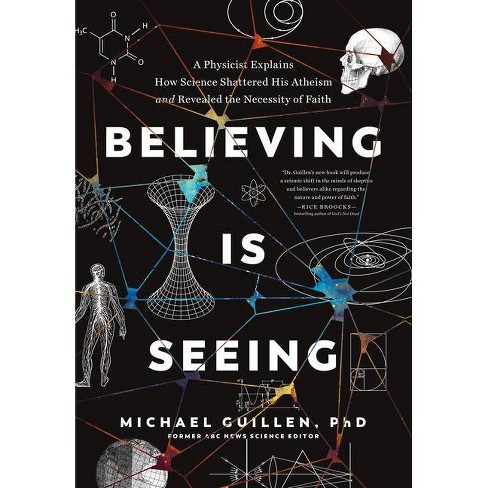
Michael Guillen, in his book, Believing is Seeing, reveals how logical and trans logical thinking are different tools, and each have a place in the intellectual toolbox. Logic is necessary to understand simple, “trivial” truths, but “profound” truths, he says, require trans logical thinking.
We err to apply logic to every problem. Simple matters are the province of logic, but complex matters require trans logic. As much as we might want to keep complex matters simple, we cannot gain insight into many complex matters without a willingness to go beyond the familiar confines of simple logic.
Guillen recognized the necessity to stretch beyond simple logic to more complex, trans logical thinking, among other things, in the realization that dark matter and dark energy make up 95% of the universe. In other words, 95% of the universe is invisible to us! (p. 9)
If we insist on limiting ourselves to things that we can see, touch, feel, smell, and hear, we must give up on 95% of the universe. If we want to explore outside the boundaries of what we can see, we need to adopt more robust, trans logical thinking.
Trans logical thinking is not anti logic, but it isn’t as linear as logic, and it may require holding things in tension that may seem contrary on their face. Classical physics and quantum physics are good examples of things we believe are both true, but which seem to be contradictory on their face.
If we are not willing to give up on 95% of reality, we must be willing to adapt. We must let go of our insistence that everything be reduced to what we can affirm with our senses and to what will fit into simple formulas and logical constraints. We need to think outside the box.
Guillen sees a parallel in the “stretching” that scientists must do to grapple with the unseen world at the edges of simple science and the revelation of the Bible of more “spiritual” things:
“’What no eye has seen,
1 Corinthians 2:9
what no ear has heard,
and what no human mind has conceived’ —
the things God has prepared for those who love him—
these are the things God has revealed to us by his Spirit.”
What the Spirit of God can reveal to us is somewhat similar to the stretching the scientist must do in his thinking to understand things like dark matter and dark energy, quarks, quantum entanglement and other mysteries of science that defy Aristotelian logic and conventional principals. For people who like to live with their feet planted solidly on the ground and with certainty anchoring their beliefs, the prospect of revelation by God’s Holy Spirit is like a black hole. We dare not venture too close for fear of being sucked into a black hole.
Yet, God not only invites us in; He insists that we venture close to understand Him.
“The Spirit searches all things, even the deep things of God. For who knows a person’s thoughts except their own spirit within them? In the same way no one knows the thoughts of God except the Spirit of God. What we have received is not the spirit of the world, but the Spirit who is from God, so that we may understand what God has freely given us. This is what we speak, not in words taught us by human wisdom but in words taught by the Spirit, explaining spiritual realities with Spirit-taught words.”
1 Corinthians 2:10-13
The difference between logic and trans logic in science and the study of the edges of the physical world have application to the metaphysical world in the encounter of the woman at the well with Jesus. I will lay out the similarities I see below.
The woman at the well was Samaritan, and the well was located in Samaria, a province located on route from Judea, the direction Jesus was traveling, to Galilee, where he was going. (John 4:3) The well where Jesus encountered the woman was known as Jacob’s well (John 4:6), and Jacob was a descendant of Abraham.

Samaria was squarely within the land God promised to Abraham and his descendants. The Samaritans and the Jews, therefore, were both descendants of Abraham.
Samaritans descended from the northern tribe of Israel and people who moved into the area during the exile. They were descendants of Hebrews who were not exiled to Babylon. They remained in the area and mixed with other indigenous people, and they believed they were the true adherents of their fathers’ religion.
The Hebrews returning from Babylon, however, thought they were the faithful adherents of their fathers’ religion, and they had nothing to do with the Samaritans. The Jews returned to rebuild the Temple and carry on their sacred religion. The Samaritans did not participate in this endeavor, as they had established their own practices after the Assyrians destroyed the Temple.
For centuries after returning to the land from which they were exiled to rebuild the Temple, the Jews refused even to associate with the Samaritans. The woman at the well recalled these things when Jesus asked her for a drink from the well:
“How is it that you, a Jew, ask for a drink from me, a Samaritan woman?” she asked him. For Jews do not associate with Samaritans. Jesus answered, “If you knew the gift of God, and who is saying to you, ‘Give me a drink,’ you would ask him, and he would give you living water.”
John 4:9-10
The tendency for people to associate with groups of people to the exclusion of other groups of people is as old as human community and as primitive as a playground clique. Like the simple conclusions we reach – however logically – we hold fast to the truths that are familiar to us, as if daring to consider more complex truths might somehow threaten what we know (or think we know).
And, it just might! The fear of going beyond our simplistic thinking, however, prevents us from grasping more profound truths.
The Jews made this kind of mistake with Jesus. In philosophical terms, John explains that the God who created the world came into world He created. (John 1:1-4) God became flesh (Jesus) (John 1:14) He lived among the Jews in the flesh, but they did not realize who He was:
“[God] was in the world, and the world was made through him, yet the world did not know him. He came to his own, and his own people did not receive him.”
John 1:10-11
God’s own people, the people who returned to the promised land and rebuilt the Temple of God, did not recognize Jesus, their Messiah. Jesus was “the visible image of the invisible God” (Col. 1:15 (NLT)) and “the radiance of God’s glory and the exact representation of his being” (Heb. 1:3 (NIV)), but the Jews failed to recognize Him.
God’s people insisted on their familiar, logical thinking. They “knew” that “nothing good comes from Nazareth.” (John 1:46) They “knew” that “no prophet comes from Nazareth.” (John 7:52) They knew that the Messiah would come from Bethlehem (John 7:41), and they assumed (wrongly) that Jesus did not live up to what they knew.
Their simple logic and their familiar truths betrayed them. Their fear or unwillingness to consider all the facts and to hold open the possibility of reality that transcended their familiar understanding left the Jews on the wrong side of their ignorance.
The Samaritans, also, were “God’s people”, but not according to the Jews. The woman at the well didn’t recognize Jesus as the Messiah, either – not right away anyway.

The woman engaged Jesus initially with skepticism, jumping to a quick and familiar conclusion: She wondered why Jesus asked her for water, because Jews don’t associate with Samaritans. (John 4:9)
Jesus responded to her trans logically (“If you knew the gift of God, and who is saying to you, ‘Give me a drink,’ you would ask him, and he would give you living water”). She ignored him and continued in the vein of her familiar logic:
“’Sir,’ said the woman, ‘you don’t even have a bucket, and the well is deep. So where do you get this ‘living water’? You aren’t greater than our father Jacob, are you? He gave us the well and drank from it himself, as did his sons and livestock.’”
John 4:11-12
The difference between the woman at the well and the Jews who dismissed Jesus, eventually calling for his crucifixion, is that she continued to engage him. She didn’t understand what he was getting at, but she didn’t dismiss him out of hand. She listened and considered what he said.
“Jesus said, ‘Everyone who drinks from this water will get thirsty again. But whoever drinks from the water that I will give him will never get thirsty again. In fact, the water I will give him will become a well of water springing up in him for eternal life.’ The woman said to him, ‘Sir, give me this water, so that I will not be thirsty or have to come here to draw water.’”
John 4:13-15 (CSB)
The woman obviously still did not understand what Jesus was saying, but she heard him out. Some might say that she had nothing to lose.
Indeed, the conversation shifted to the fact that she had been married multiple times and lived with a man who was not her husband. (John 4:16-18) She was a marginalized woman in a marginalized Samaritan community in a predominantly Jewish society that was subservient to its Roman benefactors.
She was at the bottom rung of her world, so she had more reason to be open to the offer Jesus made her than the Jews who enjoyed higher standing, comparatively. We also tend to cling to our simple, logical truths when they serve our purposes, and we are more willing to entertain other possibilities when our purposes are not served well in the truth that we experience.
Our interests often favor simple logic that supports the familiar world we know in opposition to the unfamiliar world that threatens our equilibrium, especially when we are comfortable in the status quo. The same thing happens with science as it happens with religion. The more comfortable we are with the simple and familiar logic, and the more it suits our purposes, the less likely are to care to stray from it.
Though the woman at the well was willing to entertain the offer Jesus made, she strained to let go of her simple, logical understanding:
“’Our fathers worshiped on this mountain, but you say that in Jerusalem is the place where people ought to worship.’”
John 4:20
This statement, in the form of a question, is where she was stuck in her logic. One danger of simple logic is the false dichotomy, “the excluded middle” – the possibility we fail to see. Jesus blew her simple, logical world open with this answer:
“‘Woman, believe me, the hour is coming when neither on this mountain nor in Jerusalem will you worship the Father…. [T]he hour is coming, and is now here, when the true worshipers will worship the Father in spirit and truth, for the Father is seeking such people to worship him. God is spirit, and those who worship him must worship in spirit and truth.’”
John 4:21, 23-24
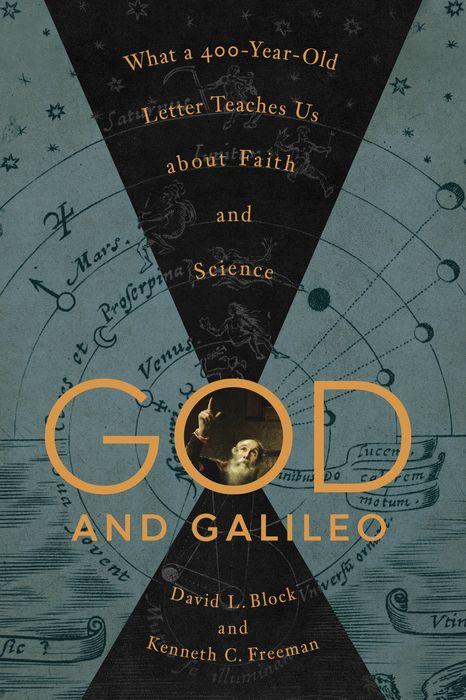
This is where Galileo come sin. I have begin reading God and Galileo: What a 400-Year Old Letter Teaches Us about Faith and Science, by David L. Block and Kenneth C. Freeman. Galileo’s world favored the Aristotelean model of the universe with with its simple logic of the earth at the center.
Aristotle’s view had been the accepted science since before the Church was born. Galileo favored the trans logical, Copernican model of the universe with the sun at the center, which differed from the Aristotelian view with the earth at the center.
The Church opposed the new model, perhaps because of Psalm 104:5 (ESV), which says God “set the earth on its foundation,” and perhaps because the new model opposed the conventional science. The Church had reconciled Scripture with the accepted science and was comfortable with it.
Like the woman at the well, the accepted science also viewed the universe through simple, Aristotelean logic. The Church reconciled “the science” with a literal (simple, logical) reading of Scripture.
The idea that Scripture must always be read literally favors simple logic over a trans logical interpretation of Scripture. Insisting on a literal interpretation of everything in the Bible is like focusing on the 5% of the universe we can see to the exclusion of considering the 95% of the universe we can’t see.
Faith, however, is “the assurance of things hoped for, the conviction of things not seen.” (Heb. 11:1) It is trusting in an understanding of the universe that we cannot necessarily see, touch, feel, weigh, or sense in a physical way. Faith is trusting these things even when they are unfamiliar to us.
The woman at the well struggled with her simple logic as Jesus tried to “lift” her eyes to a more trans logical view of her world. Jesus was not offering a different kind of physical water. He offered her “living water” – water not of this physical world, water not of the 5% of the world we can see, and not even of the 95% of material reality that we can’t see, but of a virtually unmeasurable, immaterial reality that transcends this world. Indeed,
“By faith we understand that the universe was created by the word of God, so that what is seen was not made out of things that are visible.”
Hebrews 11:3
Not only is the physical universe comprised 95% of “material” we can’t see; the physical universe is transcended by the reality of an immaterial God, who existed first. The material universe, of which we can only see 5%, came from an immaterial, unseen realm we can not see and have a hard time imagining!

“Spiritual” people often criticize scientists who operate in the confines of the space/time and matter continuum of the observable universe, some of whom believe reality consists of nothing else. Spiritual people, however, sometimes make a similar mistake of interpreting our Scripture too woodenly – with simple logic.
The physicist relies on the simple logic of the world of classical physics, but she knows (in these modern times) that she needs to stretch to put on a more trans logical mindset to tackle the world of quantum physics. She may not know how the two worlds co-exist together, but she is confident they do.
In similar fashion, we need to adopt a more trans logical set of spiritual glasses to see the spiritual world Jesus called the kingdom of God or the kingdom of heaven. It is a world in which we do not worship on this mountain or that mountain. It is a world in which we worship God and follow Jesus in spirit and in truth.
It is a world in which we seek to drink the Living Water from the well of Life, the fount of which is opened to us in Jesus. If the kingdom of God is anything like the material universe, we may only hope to “see” a small fraction of it and catch glimpses and shadows of the incomprehensively vast and immeasurable expense that lies beyond our human reach.
“What no eye has seen,
what no ear has heard,
and what no human mind has conceived”—
the things God has prepared for those who love him—
these are the things God has revealed to us by his Spirit.
1 Corinthians 2:9-10

 Navigating by Faith