My Christmas thoughts a year ago were focused on the women in the genealogy that Matthew included in the beginning of his Gospel. Tamar, Rahab and Ruth are all women whose stories foreshadow the ultimate redemption saga of God entered into our story as human being to redeem the world. The grand story of global redemption is what we celebrate at Christmastime, and these women are each instrumental in that global redemption story.
A total of five women are listed in the patriarchal lineage included at the beginning of Matthew’s Gospel. The oddity of including women in a patriarchal lineage bears some investigation. Indeed, we find the redemptive theme when we look into it, and, that theme continues with the next woman on the list, but with a twist.
The twist begins with the fact that the next woman isn’t even named. The genealogy in Matthew reads like this:
Boaz the father of Obed, whose mother was Ruth,
Obed the father of Jesse, and Jesse the father of King David.
David was the father of Solomon, whose mother had been Uriah’s wife[i]
Another oddity signals that something is different here. The stories of Tamar and Ruth were stories of kinsman-redeemers, women who sought the shelter and protection of the relatives of their deceased husbands, and, thereby, gave birth to sons who would carry on the line that would eventually lead to Jesus, the Christ (Messiah). The stories of the first three women, including Rahab, are also stories of trust in God that are met by God in His faithfulness.
The story of “Uriah’s wife” is another example of God’s faithfulness, but the human side of the story is one of unfaithfulness. Bathsheba is the mother who had been Uriah’s wife. She isn’t named, perhaps, for the scandalous reason that King David murdered her husband and took advantage of her.
The story of David and Bathsheba is one of the more well-known stories in the Old Testament. We have romanticized it as a tale of intrigue, seduction and love. Our modern world exalts the notion of love at all costs, societal and moral norms be damned, and being true to self above all others. That this story took place in the Bible and that Bathsheba is in the lineage of Jesus seems incongruous.
But, people are messy. All of us, really. We tend to judge examples of overt sinfulness, but the truth is that we are the same under the hood as those we judge by outward appearances. Our hearts are fundamentally selfish, prone to selfish pleasures and to following our own desires rather than God’s desires and plans for us.
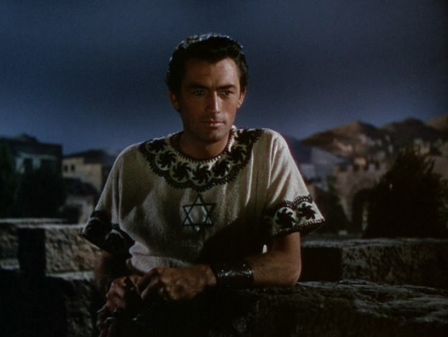
As the story goes, David should have been off fighting with his men, but he stayed back in Jerusalem. He was bored and restless, as he wandered the roof of his palace. It was then that he saw Bathsheba bathing.
She could have been more discreet, perhaps, but she was in her own home. Her husband, Uriah, was off fighting. It doesn’t strain the imagination to think that she might have been bored and lonely also.[ii] Perhaps, though, her bathing was much more innocent than that.
The encounter was scandalous. David, the king, exploited his position of advantage and Bathsheba’s circumstance when he called her to his palace. Bathsheba, perhaps, caught the king’s eye by design. Or maybe not. We don’t know those details.
the scandal of the situation was not lost on the greater community. Still, it may never have been exposed but for the fact that she became pregnant.
Uriah, her husband was gone when she would have conceived, and that was problematic. Plotting to cover up the affair, David called Uriah in from the field, assuming that Uriah would go home and lie with his wife. In this way, his unfaithfulness might be covered up; Uriah would think the child was his; and no one would ever know.
But Uriah was a faithful soldier.[iii] He felt he should not be taking a vacation while his brothers in arms were fighting. While David’s failure to be honorable and fight with his men led to his indiscretion, Uriah’s sense of honor and duty to his fellow soldiers exposed David’s unfaithfulness. Uriah would not steal the pleasure of lying with his wife while his brothers were in harms way.
When David’s invitation to Uriah didn’t work, David arranged for him to be sent to the front line. More pointedly, David sent instructions to the commander to have his men withdraw from around Uriah, leaving Uriah vulnerable, and he was killed in battle, just as David intended.[iv]
Modern cinema might emphasize the love story of David and Bathsheba, but that is the obsession of our own selfish desires. The Bible does not do that. Samuel, the prophet, exposes and humiliates David. Though David marries Bathsheba, and does not abandon her, God wasn’t happy.[v]
This isn’t David’s finest moment, to put it mildly. Bathsheba isn’t even named in the genealogy. he is referenced only as the mother of Solomon, Uriah’s wife. Till stings.
David, like us at times, was blind to his own sin. He tried to cover it up, but sin isn’t hidden from God, and it wasn’t hidden from the community either.
Nathan, the prophet, did God’s bidding by confronting David, but you don’t confront the king directly (and live). Instead, Nathan told a story to David in the third person about a rich man who took advantage of a poor man. David was incensed. His sense of justice was inflamed, and he vowed to set things right.[vi] It was then that Nathan told David, “You are the man in this story!”[vii]
David repented of his wrongdoing, but it was too late for Uriah and too late for David to escape the consequences of his actions. The prophet predicted, and it came to pass, that “the sword will never depart from your house”[viii]; “[o]ut of your own household I am going to bring calamity on you” and “I will take your wives and give them to one who is close to you”[ix]; and the child Bathsheba conceived died, though David fasted and prayed that God would spare him.[x].
But that isn’t the end of the story. God doesn’t leave us mired in the consequences of our own sin. None of us would survive.
Though God allowed David to pay a dear price for his unfaithfulness, we are told that God “took away” David’s sin.[xi] This, of course, is a foreshadowing of God’s ultimate plan for us, and that plan reaches its climax in the person of Jesus as God, Himself, entered our history to fulfill His ultimate promise by His own doing.
David and Bathsheba’s story foreshadows the ultimate redemption story that began to come to fruition when Jesus was born. We read that an angel who appeared to Joseph, a descendant of King David, to clue him into what God was doing with Mary, his bride to be. This angel explains God’s ultimate plan and how it will go down:
“Joseph son of David, do not be afraid to take Mary home as your wife, because what is conceived in her is from the Holy Spirit. She will give birth to a son, and you are to give him the name Jesus, because he will save his people from their sins.”[xii]
As Matthew looked back at this history to trace the lineage of Jesus, he recalled Bathsheba, who gave birth to Solomon, who would be the link from David to the Christ! Though conceived in scandalous sin, the seed of that adulterous affair led to the Messiah that we celebrate at this time of year.
So God works in our lives. So God works to redeem His own creation, having allowed His creation the awesome freedom to choose right or wrong, life or death, obedience to God or disobedience. God, being eternal, omniscient and omnipresent, knew from the beginning what the choice would be. He knew from the beginning that He would have to redeem us and freely volunteered Himself for that task, that we would also have the opportunity to choose Him freely for the love He demonstrated for us.
~~~~~~~~~~~~~~~~~~~~
[i] Matthew 1:5-6
[ii] 2 Samuel 11:1-4
[iii] 2 Samuel 11:5-13
[iv] 2 Samuel 11:14-25
[v] 2 Samuel 11:26-27
[vi] 2 Samuel 12:1-6
[vii] 2 Samuel 12:7
[viii] 2 Samuel 12:10
[ix] 2 Samuel 12:11
[x] 2 Samuel 12:15-23
[xi] 2 Samuel 12:13
[xii] Matthew 1:20-21

 Navigating by Faith
3 thoughts on “Christmas Thoughts: Uriah’s Wife and The Redemption Plan of God”