God Reminds Us Who He Is

Is it out of character for God to make unequivocal statements about Himself?

2015-09-21 Sunrise by Heather Wagner Russell
By Heather Russell

Isaiah declared that the Lord says, “I am the first and I am the last; apart from me there is no God…. Is there any God besides me?” (Is. 44:6, 8)

Is this arrogant for God to say? My son says so; he says, “I cannot respect a God like that.” He believes that statements like this in the Old Testament were written by men and do not accurately reflect the Creator of the Universe.

Certainly, if you or I made a similar statement, it would be the height of arrogance. Imagine how our siblings, parents or friends might respond if we made a statement like that?

No, actually, it would be delusional. Though we sometimes may act like the world begins and ends with us, we might be committed if we actually said something that like.

But, is it out of character for God to say something like that?

If there is a God, the world actually does begin and end with Him.

On the other hand, the “books” of the Bible were written by men, right?

Continue reading “God Reminds Us Who He Is”

An “Other” View of Christianity

it is more intellectually honest to acknowledge the different worldviews and social practices, including the resulting necessity that there is a choice to be made to determine which is more truthful than the others

© Can Stock Photo Inc. / Bialasiewicz

I began my college career with a World Religions class that exposed me to the major world religions. My professor boasted a Christian upbringing and background, but he was more of a universalist than a Christian in his theology and philosophy. The class focused more on the religions other than Christianity than Christianity, partly, I suppose, because most people sitting in a World Religion class in a small liberal arts college in Iowa already were acclimated to Christianity.

Western Civilization was another class I took. Western civilization, not surprisingly, dominates and colors most of the history of American thought since the United States is predominantly an extension of Greek, Roman and western European philosophy and ideology. My Jewish religion professor put that in context for me one day in a class on the Old Testament when he asserted that Judaism has roots in Eastern religion and civilization. (I was a thesis away from being a religion major.)

I will not repeat the context or expand on the details of that proposition. I have forgotten most of the details anyway. The take away I want to chew on with this piece is that we make assumptions about religion and the world based on how we have been acculturated and “indoctrinated” by our culture. Listening to the perspectives of “others” provides us valuable, different perpectives, even on the things with which we are familiar (like Christianity).

Continue reading “An “Other” View of Christianity”

10 years ago today

Source: 10 years ago today

We just don’t know what “Life” will throw at us. We can either trust God or not. Trusting our own tenuous grasp on “Life” is ultimately fruitless, but entrusting ourselves to God, no matter what it feels like, no matter what the circumstances, no matter what it looks like is a beautiful thing. God is with us in every moment if we will seek him. My good friend and sister in Christ makes this point beautifully through her own story.

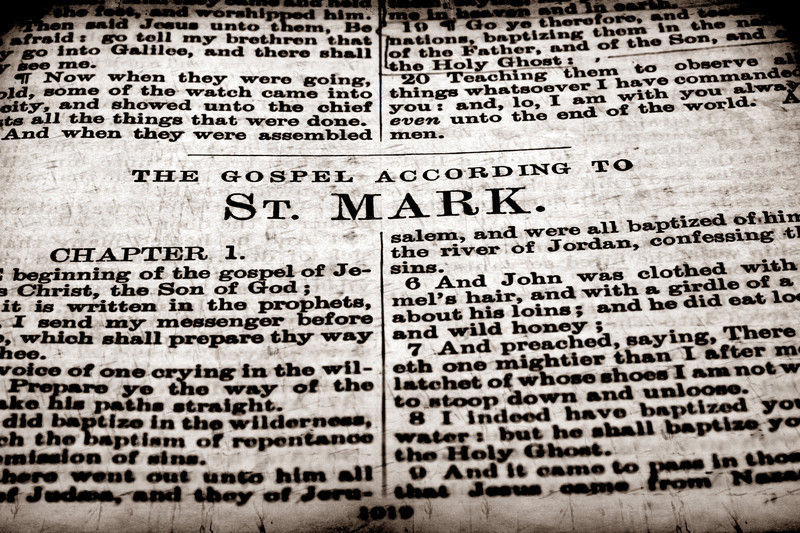
How the New Testament Canon Arose

How the Gospels and other documents that have come to comprise the New Testament became recognized as scripture and other documents did did not, is the subject of this piece.

© Can Stock Photo Inc. / janaka

In this piece, I largely follow a presentation given by Dr. Danial Wallace*, but I add in some additional information about the early church to round out the information. Dr. Wallace underscores the fact that the early church was particularly concerned about the authorship of the writings they relied upon. They only trusted the writings of the apostles and associates of the apostles. We see this concern reflected in the writings of the earliest church fathers.

The original gospels, however, were anonymous, notes Wallce; that is they did not have internal references to who wrote them. They were only given names to distinguish them from each other externally, and this tradition went all the way back as far as we can trace them. The fact that the early church was so concerned with authorship, but universally accepted and used the four canonical gospels, suggests that the authorship of the Gospels was never in doubt.

This point will become more important below. How the Gospels and other documents that have come to comprise the New Testament became recognized as scripture and other documents did not, is the subject of this piece.

Continue reading “How the New Testament Canon Arose”