
Many people say they “do not believe” the Bible. But, what does that mean? The Bible is an ancient document that has been around in virtually the same form for centuries. For instance, the Dead Sea Scrolls reveal that the Old Testament has changed very little since well before the tie of Jesus. Less than 1% of the substance of the Bible has changed since the time of Jesus.
Some people argue over which writings should be included or not included in the canon that we call the Bible. The writings that are included in the current iterations of the Bible have been established for at least 1600 years. They were largely settled by consensus for at least a couple hundred years before that,
The Bible is an historical record of people and places. Many of those people and places and some events have been cross referenced by other sources, including Babylonian, Assyrian, Hittite, Roman, and other sources. Archaeological finds have also verified many of the people and places in the Bible. People may argue whether every person and place referenced in the text is actual, accurate and factual, but few people seriously argue that it has no historical value.
The Bible is also a collection of stories, poems, songs, and sayings (wisdom literature). As literature, it is full of imagery, compelling stories and words of wisdom. It has great literary value.
The Bible is a collection of writings covering a span of about 1600 years by many authors focusing on particular people group in a particular geographical area of the Middle East during a particular time period in history. Some of the writings purport to be relatively contemporaneous accounts, and others seem more like historical accounts when they were written.
The writings that comprise the Bible have been collected and preserved as sacred text. Scribes were carefully trained to copy the manuscripts. Those scribes devoted their lives to the careful transcription of the text from generation to generation.
What is most likely meant when people say they “do not believe the Bible” is that they do not believe the Bible is the “Word of God”. People do not believe it is divinely inspired. People do not believe that the Bible is the revelation of God to people.
When people say the do not believe the Bible, they most likely mean they do not believe the Bible can be taken at face value. At face value, the writings of the Bible purport to a collection of God’s communications with a certain group of people, in a particular region of the world, over a particular time span in history.
Various people have various theories about the Bible. I have even recently heard people say that the Bible was put together by Roman dictators to “control the people” by giving them something to believe in. There is little to no scholarly support for that position by the way, but this theory and other theories abound.
Most scholars agree that the Bible has cultural, sociological, literary, and other value. Though people disagree over the degree to which the Bible has historical value, it does have some historical value as any ancient text does.
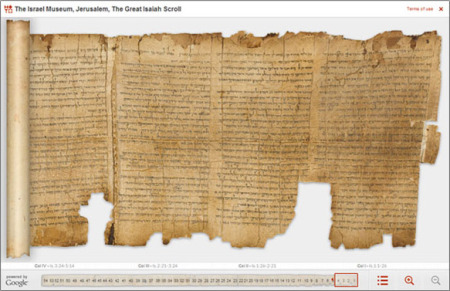
Significantly, the evidence suggests that the Old Testament writings pre-date the first Century. The Dead Sea Scrolls, which pre-date the First Century, include manuscripts from every book in the Old Testament except for Esther. Among the manuscripts found in the Qumran caves that we call the Dead Sea Scrolls, was a complete scroll of the Book of Isaiah dating to at least 200 BC that is virtually the same as the “book of Isaiah” we have preserved in modern Bibles.
It is fact that the Bible is by far the most well-preserved and well-attested ancient text in the history of humankind. We have more ancient manuscripts of the Bible, by a large volume, than any other ancient text. The volume of New Testament manuscripts is stunning compared to any other ancient text.
The great consensus of scholars believe that all the New Testament writings were generated by the end of the First Century. For the New Testament, alone, there are over 24,000 partial and complete manuscript copies. In addition, 86,000 quotations from those texts can be found in the writings of the early “church fathers”. Several thousand “lectionaries” (basically church service books) from throughout the centuries, including some dating to the first and second centuries, exist to verify and confirm what was written. (Manuscript Evidence of the New Testament)
Though many variations exist among the multitude manuscripts, the wealth of manuscripts allows us the ability to determine with a very high degree of confidence what the original text said. Daniel Wallace, who has spent career microfilming and preserving every extant copy of New Testament text, estimates the accuracy of our modern, New Testament at 99%+.
“No central tenet of Christianity hangs on any textually uncertain passage….”
Even the skeptic New Testament scholar, Bart Ehrman, concedes that the textual provisions for which we any doubt arises on the original, intended meaning does not affect any fundamental doctrine of Christianity. He concedes that “essential Christian beliefs are not affected by textual variants.” (See p. 252 of Misquoting Jesus, by Bart Ehrman)
Daniel Wallace describes the extensive manuscripts we have of the New Testament writings as an “embarrassment of riches” that historians could only dream of for any other ancient work. He observes that, even if we didn’t have one manuscript left of the New Testament writings, we could still piece together the entire New Testament from the writings of the early church fathers who quoted them.
All of this is really quite amazing. It is unprecedented in the world of ancient literature.
As a college student first studying world religions and English Literature, I studied the scriptures of the major world religions as an unbeliever. Yet, I knew early on that the Judeo-Christian scriptures were unlike the writings of other world religion. Written by about 66 authors over about 1500 years, the Old and New Testaments hold together in mind boggling complexity like the most finely woven of intricate tapestries.
I found the cohesive integrity uncanny, even before I believed in the substance of it.
Jesus in the Gospel accounts quotes extensively from the Old Testament writings and affirms them as scripture – the very “word of God”. (See How Did Jesus View the Old Testament?) Jesus not only affirmed the Old Testament writings, he claimed to be the fulfillment of them.
The claims of and about Jesus are written as historical record, including the claim the he rose from the dead. Whether we believe it or not, the writers clearly believed what they were writing.
Paul identifies over 500 people who claimed to have seen Jesus alive after he was crucified on the cross in his first letter to the Corinthians, most of whom were still alive, he said (1 Cor. 15:6), when he wrote the letter. Scholarly consensus dates that letter in the 50’s AD.
That would be about as long ago as the the events of 9/11 compared to our present time. Think about how that one event is etched into our memories. An encounter with Jesus after he was crucified would have had similar impact on those who witnessed it.
The fact that the accounts of the death and resurrection of Jesus were evidenced and recorded in writing so close to the time of would have happened carries historical weight. The resurrection claim isn’t legend that developed later, but a factual assertion made very soon after the event of his death.
Take the extraordinary claims away, and focus only on the “minimal facts” that even skeptical and atheist scholars concede, and we can build a credible case for the resurrection. No other religion is grounded in claims with as much historical provenance as Christianity.

 Navigating by Faith
Appreciatte your blog post
LikeLiked by 1 person
Thank you
LikeLike