Did Nature Cause Itself?

 (c) Can Stock Photo


I haven’t heard anyone say specifically that nature caused itself, in so many words,(other than the Hawking axiom about the laws of gravity causing the universe), but that is the question begged by any assertion that God doesn’t exist. Anyone who maintains that nature and natural causes are the beginning and the end of all reality is begging that question: did nature cause itself?

Perhaps the greatest obstacle to the assertion that nothing supernatural exists is the Big Bang. The Big Bang is accepted science. The evidence is very compelling, though it wasn’t received well when it was first postulated. The thought that the universe was not eternal and had a beginning was thought to be “repugnant” and to “betray the very foundations of science”.[1]

This is because a beginning to the universe suggests that the universe had a Beginner. The initial reluctance to accept the Big Bang has long ago changed, however, as the evidence has accumulated. Stephen Hawking proved it mathematically, but struggled with the implications of it the rest of his life. Continue reading “Did Nature Cause Itself?”

What If Time Is An Illusion?

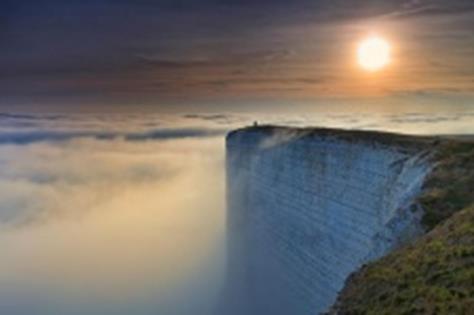
When we “look back” it may seem as if time was a dream.

Photo by Beth Drenbel
Photo by Beth Drendel

What if time is an illusion?

A self-described atheist threw out this proposition offhandedly in a conversation I had with him recently. I think it makes sense to respect the people we dialogue with, including atheists, so I chewed on that proposition a bit.

As often is the case, I woke up this morning thinking about things that I had been thinking about the night before. In my reflection, it dawned on me that, perhaps, he was right: time is an illusion. It actually makes some sense, but maybe not like he imagined. Let me explain.

Continue reading “What If Time Is An Illusion?”

Putting Our Toe in the Water of the Universe

NASA’s Voyager I probe left our solar system this past week, thirty-six (36) years after lifting off from the earth in 1977. I was still in high school then. In that time, it has traveled 11.5 billion miles and is just now pulling away from the influence of our sun. (See Fox News and voyager.jpl.nasa.gov) There are 200 billion stars in our galaxy, the Milky Way, but we have only begun to look for and research other solar systems. We do not have any idea how many solar systems exist in our galaxy. We confirmed the first planets outside our solar system for the first time in the mid-1990’s; and then we only detected them by the “gentle tugs” caused by those planets as they orbit their stars. (See Nasa’s spaceplace.nasa.gov)

Today, scientists have discovered more than 500 solar systems in the Milky Way. They estimate there might be tens of billions of solar systems, maybe even 100 billion more than our solar system!

Astronomers estimate there are at least one hundred billion galaxies in the observable universe! Imagine one hundred billion galaxies, each with 100 billion solar systems! And that is all we can see! According to physics.org, a grain of sand held up to the sky would cover 10,000 galaxies (not solar systems, but galaxies – like our Milky Way).

We live in a vast universe. More vast than most of realize or think about on a regular basis, other than the NASA scientists and quantum physicists among us. The Voyager I probe is going where no man-made object has gone before, but we are only now putting our toe in the water of the universe.