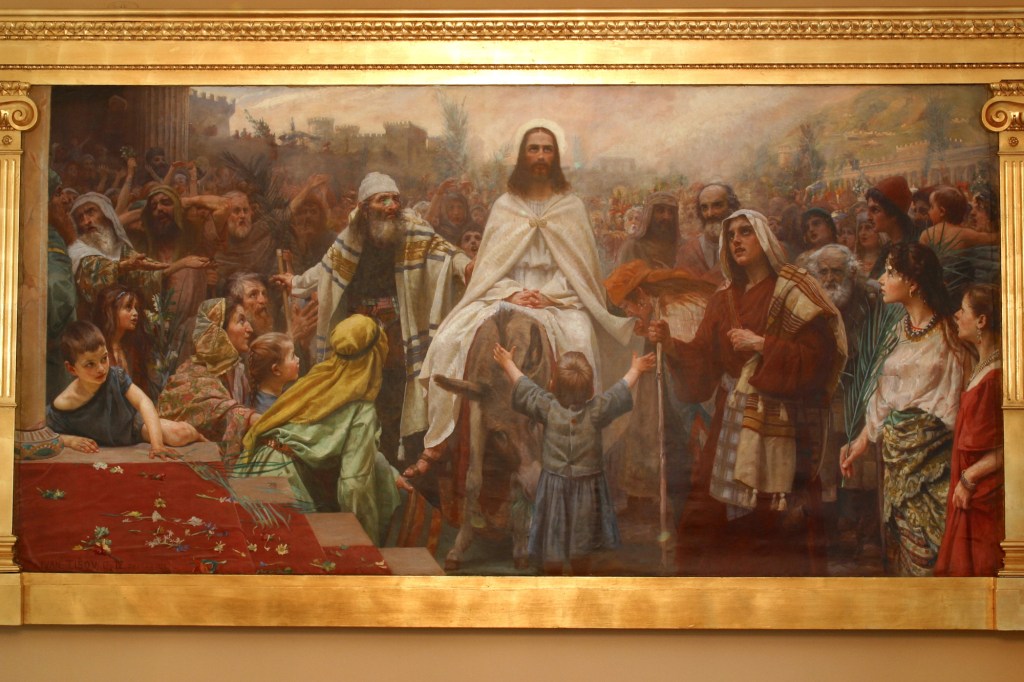
Episode 124 – Statement of Triumph – from the BEMA Podcast, with Marty Solomon and Brent Billings, inspires my writing today. It was the subject of discussion for the Saturday morning Bible study I have attended off and on with an exceptional group of men for several years.
The subject was Matthew 21:1-11. The chapter heading in the NIV translation (which would not have appeared in the original text, because there were no chapter headings in the original text) is “Jesus Comes to Jerusalem as King.”
This is usually how we read it: a “triumphal” entry. We celebrate Jesus entering Jerusalem as a king. It was triumphal, but not perhaps in the way we tend to think about it. Certainly, not in the way the fledgling followers of Jesus perceived it when they witnessed it.
Marty Solomon sets the stage in the podcast. He emphasizes that Jesus rode into Jerusalem on a donkey. It was during the week of Passover, an unusually tense time in this region of the Roman world. The uneasy tension existed at that time in that region because it was home to the only group of people in the Roman Empire who refused to worship the Emperor.
The Jewish people were stubbornly true to their God. Even so, Rome allowed the Jews to have their own ruler, Herod the Great. Herod was powerful in his own right, but he was happy to rule alongside the Romans, and the Romans accommodated him to maintain stability in the region.
Even so, this small piece of real estate was problematic for Rome. It sat at the crossroads of the earth. The Hebrew people long inhabited it, but they were a headache for Rome because of their entrenched religious traditions and unabated worship of their God.
When Herod the Great died, three of his sons took over different areas of the land Herod ruled as a vassal of the Romans. Herod Philip ruled the north (Caesarea Philippi). Herod Antipas ruled the middle region, and Herod Archelaus ruled in the south (Judea).
Archelaus only lasted two years, so Rome brought in its own ruler, Pontius Pilate (the Roman Bulldog), to maintain Rome’s control over the region. Pilate didn’t live in the sacred City, Jerusalem. Pilate lived in Caesarea Maritime (Caesarea, By the Sea), a city built by Herod to honor Caesar.
The week of Passover would have been a particularly tense time in Jerusalem because Jews from all over gathered there to celebrate the feast that remembered their great deliverance and triumph over the superpower of an earlier time, Egypt. The last thing Rome wanted was for this celebration to become a rally for rebel Jews fueled up with wine and the legend of their former deliverance.
If there was any holiday that might make the Romans nervous in Judea, it was Passover. Zealots were always stirring up trouble, and Passover would be an opportune time for a Jewish revolt against the Roman rule of this territory that the Jews long held out as their own. After all, the Jews still believed this land was to be theirs again based on their understanding of prophecies about a military coup to be led by a messiah (savior) in the line of their once great King, David.
Every year at this time Pontius Pilate would head south from Caesarea down the coastal road to Joppa. He would head east from Joppa to make his way into Jerusalem. Pilate would enter Jerusalem from the west. He traveled with great pomp and a show of force, with an army of soldiers, trumpeters, heralds, banners, and pronouncements. Pilate would lead the way on a white stallion symbolizing Roman conquest and rule.
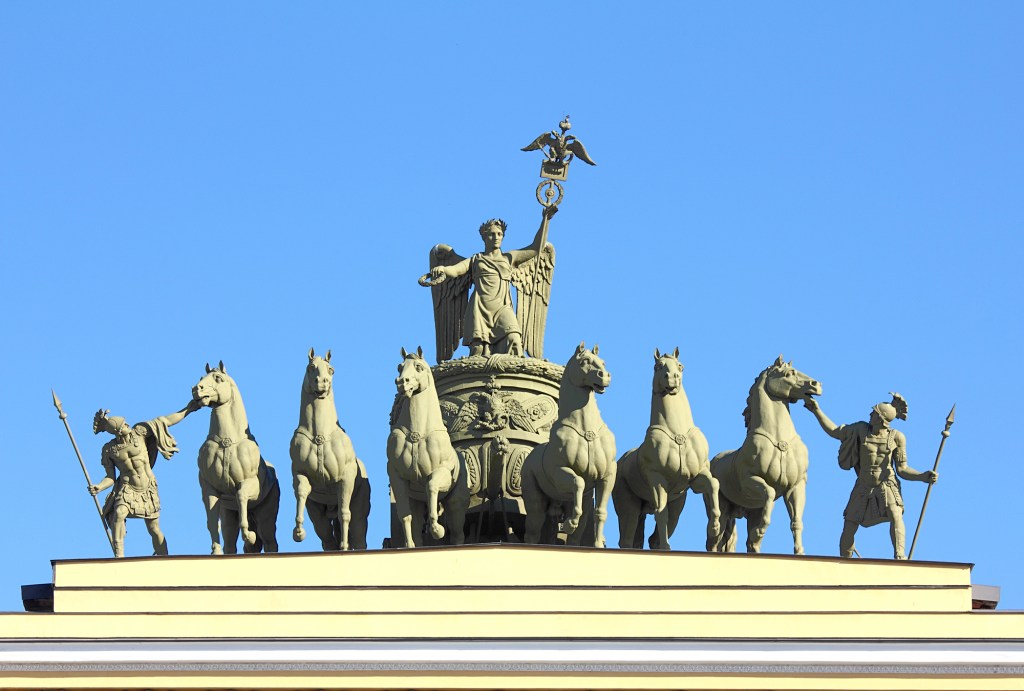
This show of power, of course, was intentional.The article, In Through the Back Door, September 24, 2022, by Terry Gau describes these yearly processions made by Pilate into Jerusalem at the beginning of Passover week. John Dominic Crossen and Marcus Borg, memorializes the historical context in their book, Last Week, setting the stage for the final chapter of Jesus’ ministry on earth. The procession is described this way:
“Traditionally, Pilate paraded into Jerusalem on the first day of Passover Week, entering the west gate – the front gate – with legions of chariots, horses, and foot soldiers, dressed for battle and armed with swords and spears. Rome’s authority would not be questioned. The majesty with which Pilate enters the front door of the city was meant to inspire awe and fear, respect and obedience.”
Marty Solomon imagines it this way:
“You could have heard him coming from miles away. The message he wanted to send to the Jews was clear. ‘Don’t even think about it! Keep everything under control, or Rome will crush you!’”
BEMA Podcast, Episode 124
Pilate would stay in Herod’s palace in Jerusalem for the week until the festivities ended. Then he would go back to Caesarea. He wasn’t there to celebrate, though. He was there to ensure things didn’t get out of control and to keep the peace.
During one Passover week under the rule of Pontius Pilate in Judea another procession took place. It may have even happened on the same day at the same time that Pilate was entering the City from the west. This procession took place on the east side of Jerusalem where Jesus, riding on a lowly, young donkey with a small, rag tag bunch of unarmed disciples entered through the east gate – the back door to Jerusalem.
“This parade was just as carefully staged as Pilate’s entry into Jerusalem. It was a counter-procession, a different vision of what a Kingdom should be, a subversive action against the powers that ruled Jerusalem. Jesus’ humble, yet triumphal, entry into Jerusalem stood in contrast to the magnificence and brutality on display at the opposite end of the city. Jesus brings peace, while Pilate brings a sword.”
In Through the Back Door
This was the backdrop for episode 124 of the BEMA Podcast and of our discussion. I sit writing at a temporary table with one chair left in my house that is all but cleaned out and being readied for sale. My future is uncertain as I recount one of the most pivotal times in human history and the dealings of God with man and its meaning for us, today.
Continue reading “A Tale of Two Processions, Two Kingdoms, and the Triumph of God”

 Navigating by Faith