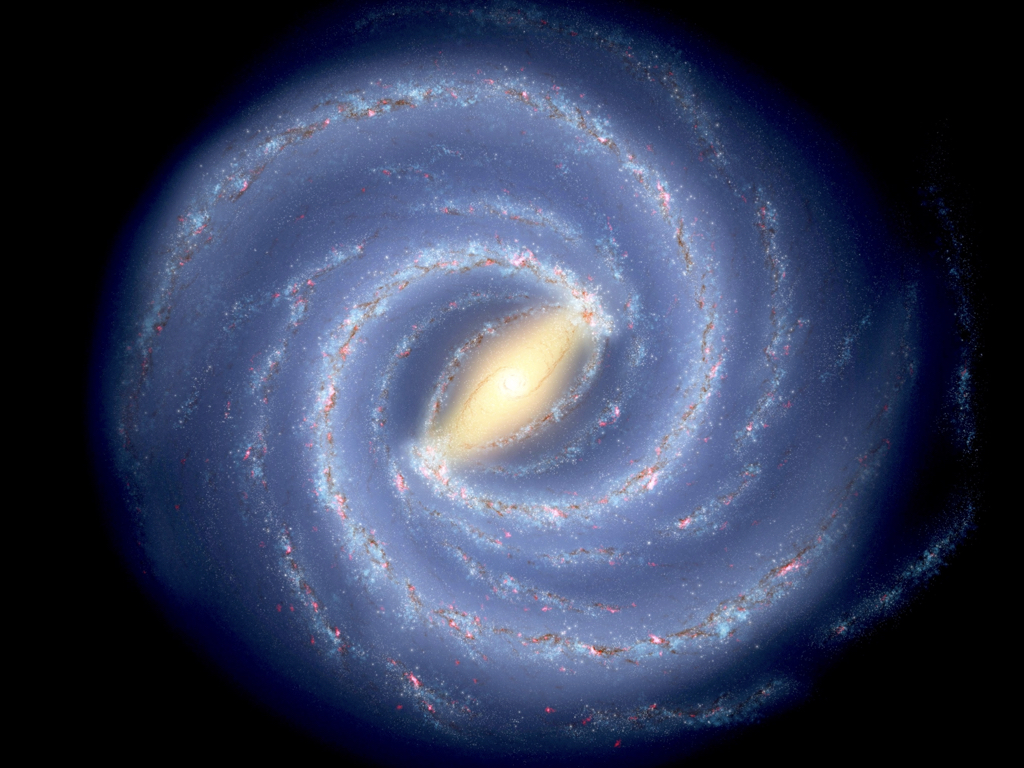
The Problem of the Intelligibility of the Universe

The Milky Way

The most incomprehensible thing about the universe is that it is comprehensible.” Albert Einstein

I am intrigued by the stories of peoples’ journeys, especially of their thought journeys. Some are more intriguing than others. The story of Pat Flynn fits squarely into the more intriguing category. (See the Side B Stories Podcast – Episode 78 – Science, Philosophy, and Reality – Pat Flynn’s Story)

Patrick Flynn has an educational background in philosophy. He embraced naturalism at an early age, but he encountered philosophical problems with naturalism when he read people like HL Menken and Frederick Nietzsche. These problems led him to seek answers that might provide a more coherent view of reality.

I am not going to try to summarize his whole story. You can listen to him describe his thought journey at the link in the first paragraph. I just want to focus on one aspect of his journey from atheism to theism.

Flynn’s journey took him from atheism to theism through the medium of philosophy. This process was intellectual for him, and not experiential. He became convinced of theism, first, before he even told his spouse, because he knew she was not particularly fond of religion.

He didn’t dive into Christianity after he became convinced of theism. He explored Eastern religions, first, perhaps because he had a good friend who was Indian. When the Eastern religions didn’t solve the philosophical problems posed by naturalism, he reluctantly began to explore Christianity.

One of the big issues Flynn had with atheism was the lack of explanation for the fact the universe is intelligible. Digging further, Patrick Flynn found that the fundamental, core commitments of science fit much better with theism than with atheism.

Continue reading “The Problem of the Intelligibility of the Universe”

Reasoning to the Best Explanation for Life

Whether the universe, which has the appearance of design, was actually designed is the question that is begged by modern science.

I recently read the book, Darwin’s Doubt, by Stephen C. Meyer, a Cambridge University Ph.D. in the Philosophy of Science. The book uses Darwin’s acknowledgment that the Cambrian Explosion posed a potential problem to the evolutionary paradigm as a springboard to explore that “problem” in detail. Thus, the title of the book is aptly named “Darwin’s Doubt”.

I have summarized the first ten chapters of the book in a different Blog, Perspective, starting with a summary of the first four chapters of the book. Read my blog if you want a summary description of the detail that Meyer explores without buying the book, though I strongly suggest buying the book if your are interested.

In this blog, I want to explore the basis for Intelligent Design, which is ultimately the theory that Meyer espouses. For Meyer, the key bases for Intelligent Design are 1) the argument from biological or genetic information and 2) the argument from physics or cosmology. Both arguments can be summed up in the statement that we live in a world so finely-tuned for life that it could not have happened by chance or unguided “natural law”.

If you are reading this, you may have encountered these fine-tuning arguments before. Biological fine-tuning focuses on the complex biological machines that exist for which, as the argument goes, prior information is necessary. Any discussion of that complexity begs the question: where did that information necessary to build the protein parts out of which the complex structures are made come from in the first place?

The evidence in physics and cosmology is the “fine tuning” that we observe in the constants and initial conditions of the universe and the “fine tuning” of the conditions necessary to make life on planet earth possible, fit for habitability and fit for scientific discovery. He calls this last observation (a planet fit for human scientific discovery) the “Privileged Planet Hypothesis”.

Meyer focuses, in particular, on the question: What cause is capable of generating that information? To answer that question, he takes instruction from Darwin. Meyer argues that we can use the same scientific method Darwin used to infer that the cause had to be conscious mind or intelligence. I will try to summarize what I think he means below.

Continue reading “Reasoning to the Best Explanation for Life”