Christmas Thoughts

The incongruity of joyful festivities during a time of loss, sorrow and loneliness can make this time of year especially difficult for many people.

kevingdrendel's avatarNavigating by Faith


This time of year is a joyful, festive time of year filled with family time, days off from work, presents given and received and celebration. At least, that is how this time of year is billed to be; and I often it is, for most of us, for the most part, a joyful time of year. But, life does not live up to the billing or expectations.

I checked Facebook this morning when I awoke. A high school classmate reports that his wife, mother of his daughters, went to “be with the angels” last night. A friend I met in college said goodbye to his mother yesterday, and she is no longer with us today. An acquaintance I know through wrestling described a colleague, only a few months past 50, who passed yesterday. Another high school friend asked for prayers for his daughter, going on two weeks in the hospital…

View original post 425 more words

Called to the Purpose for which Christ Died

. We may be tempted to assume that we are just biding our time here as God prepares rooms for us in heaven – an escape from the present futility of the world


If we are truly in Christ, we know the love the Father has for us. “For his Spirit joins with our spirit to affirm that we are God’s children.” Romans 8:16 Often, however, our sense of God’s greater purpose can get lost in the immediacy of our lives in this world.

As heirs of the Father in Christ, together with Christ, we await God’s glory. We may be tempted to assume that we are just biding our time here as God prepares rooms for us in heaven – an escape from the present futility of the world – but there is a catch:

“if we are to share his glory, we must also share his suffering.”

Romans 8:17

God emptied Himself of His glory to come to us in human form, and he entered into our suffering. This was God’s purpose from before the foundation of the earth. God became human in Christ as part of the fulfillment of that purpose.

Likewise, Jesus calls us to take up our crosses and to follow him, just as He followed the Father in the fulfillment of God’s ultimate purpose.

This notion of entering into Christ’s suffering, and even rejoicing in suffering, was central to the message Paul preached. Suffering was also the familiar experience of early Christ followers.

As with Abraham, those early Christian knew they were not at home on this earth. They were waiting for a “city with foundations, whose architect and builder is God“. Suffering in this life reminds us that we are not home yet. Our home lies beyond.

More importantly, God has a purpose, and His purpose includes us. Just as Abraham lived out his life in seeking to fulfill the purpose for which and to which God called him – by which he was going to be a blessing to all the nations of the earth – we are called to this greater purpose of God.

Most Christians in the western world know practically nothing about suffering for Christ. “Cancel culture” and political disagreements, are not the same as what Christ suffered or even what many Christians in other parts of the world suffer.

Not that we should wish suffering upon ourselves. The reality is, though, that we don’t really have a good personal and intimate sense of what it means to suffer, and to embrace suffering, as Paul and the early Christians experienced it. For that reason, perhaps, these words Paul spoke are not as poignant for us as they should be:

“Yet what we suffer now is nothing compared to the glory he will reveal to us later.”

Romans 8:18

In the United States, we are tempted to fight back against the insults of the world, to assert our political, social, cultural, and even (sometimes) our physical power – to gain advantage. We do this “for the Church”, we say. We say, “We do it for God”, to put God back in schools, to save the family, to reclaim this nation for Christ, etc.

But is that really God’s greater purpose?

Continue reading “Called to the Purpose for which Christ Died”

Is God an Ancient Elitist?

God and His message are hidden to so many people, but it isn’t a mystery. It is “hidden” in clear sight!


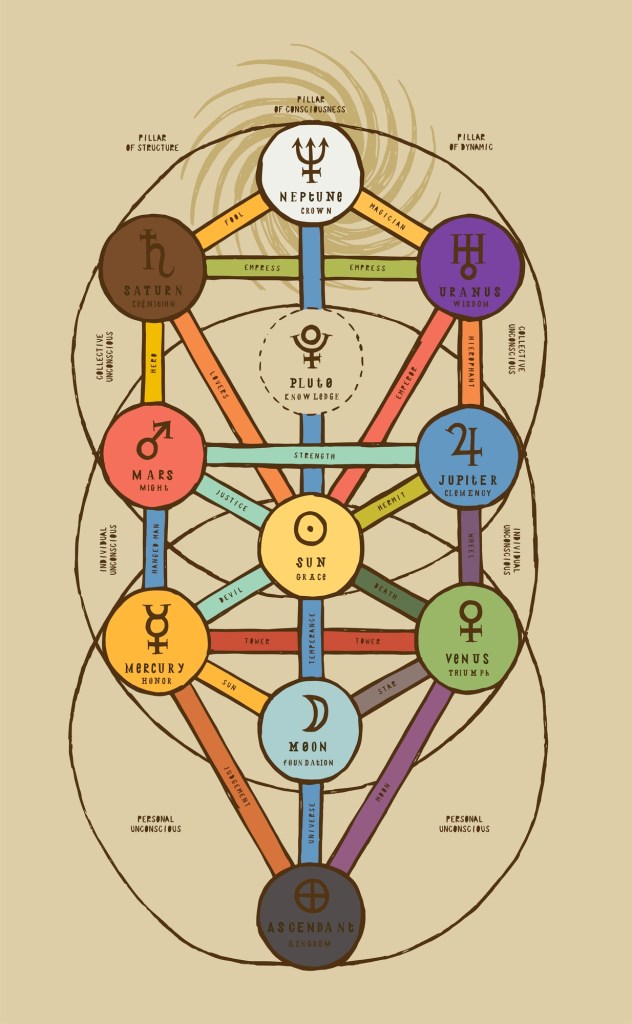
Some people seem to think God is an elitist. Some people believe that God can only be understood by people who crack God’s code and discover access to His secrets. Another, label for this kind of thinking about God is the occult, though we sometimes put a more acceptable sheen on this kind of thinking.

This kind of thinking even creeps into churches and personal views on God. Christians sometimes give into temptations to divine the future or hidden truth in numerology, astrology, tarot cards, palm reading, tea leaves, etc.

Other people find in the “hiddenness” of God reason to doubt His existence. They argue that God shouldn’t play hide and seek with the world, that God should be obvious to all, and the fact that He isn’t obvious to all people means that God doesn’t exist.

I don’t find truth in either proposition. At the very least, neither proposition describes the God of the Bible. I have addressed the hiddenness of God several times in my writing, I don’t recall addressing the occult, much. Today this view on spiritual reality that I am describing here as the elitist view of God comes by way of inspiration from Dr. Michael Guillen.

My inspiration for this post comes specifically from a podcast episode titled, Numerology, Gematria & Kabbalah, in which Dr, Guillen spent most of his time talking about the cult of Pythagoras, numerology, gematria and Kabbalah in a thoughtful, objective way. Did you know that Pythagoras worshipped numbers? Especially the number 10?

You probably have heard of claims that the Bible is full of hidden wisdom and truth that can be uncovered with the right application of a numerical code. You will learn some interesting things if you go to the link and listen to whole podcast episode.

Michael Guillen has a personal history with numbers. At UCLA, he earned a B.S. in physics and mathematics. He went on to Cornell University, where he earned an M.S. in experimental physics and obtained a Ph.D. in physics, mathematics and astronomy. Guillen’s own “affection” for numbers gives him unique perspective on mathematics and the love of numbers.

If anyone with religious inclinations might be tempted to worship numbers, Dr. Guillen would be a likely candidate. He even wrote a book titled Five Equations that Changed the World: The Power and Poetry of Mathematics.

One might doubt that a legitimate scientist would be so ignorant as to be religious at all, but history is full of scientists and great thinkers with particular religious leanings. Pythagoras, who headed up a cult that worshiped numbers, is an example. Not all religious leanings are the same, though.

As a young seeker and avid learner in college, I encountered religious thought for the first time in a World Religion class. Though my professor described all religions as roads to the top of the same mountain, I saw a difference in one religion and one religious text.

If you listen to Dr. Guillen tell his own story, which he does at various times in his podcast episodes, he saw the same thing. One religion and one religious leader stands out, and one aspect of that difference can be understood with the observation that Guillen makes: God is not an elitist.

We are tempted as human beings to think that truth is something that only the smartest and most clever people are able to figure out. Perhaps, this is why we are fascinated with books like The Da Vinci Code. The less religious among us might say that only those people with privilege, means, and a good education are able to know and understand truth; the rest of us are doomed to ignorance.


My thoughts today are on the former group of people. Guillen challenges the claims of people who believe that the Hebrew Scriptures contain a hidden, numerical code that can be deciphered with the right “key”. Guillen asserts that the truth of the God revealed in the Bible and Jesus, who claimed to be God in the flesh, are not hidden behind a code in the text that needs to be deciphered, and I agree with him.

Continue reading “Is God an Ancient Elitist?”

A Preface to the Problem of the Origin of Life

The problem of the origin of life is an Achilles heel, not for science, but for the materialist

Particles of DNA strands flying through space to Earth.
Concept of the origin of life. Elements of this image furnished by NASA.

Michael Guillen, who obtained degrees in physics and mathematics from Cornell University, where he studied under Carl Sagan and Fred Hoyle, and who taught physics at Harvard University, has a podcast in which he addresses the problem of the origin of life (among many other things). (See Science + God with Dr. G. Episode #44)

Guillen was an atheist into his late 20’s or early 30’s. Then he became a theist, and then a Christian. He has always been a “science guy”, however.

You can find the explanation of how he gravitated from atheism to Christianity in earlier episodes of the podcast. I am not going to address it here. I want to address the origin of life problem using this particular episode as a backdrop because I think he explains the problem well.

Before I do that, I want to preface the origin of life problem and put it in some context. The unspoken and unexamined assumptions we make can cloud our understanding, so I want to seek a little clarity first.

Continue reading “A Preface to the Problem of the Origin of Life”

What Are the Minimum Beliefs Necessary to Be Saved?

I think we may be edging dangerously in the wrong direction to think that we can quantify what is necessary for salvation, whether it is right conduct or even right beliefs. Salvation doesn’t depend on us; it depends wholly on God and His grace.


The following question was posed in a group on Facebook recently:

I’ve been wandering what is the minimum requirement for salvation or for one to be called a Christian. Paul says if you confess with your mouth that Jesus is lord and believe in your heart that God raised him from the dead, you will be saved. Jesus says not everyone who calls him Lord will be saved though. Correct me if I’m wrong but it seems that some correct beliefs are necessary but which beliefs are necessary for salvation?

Facebook isn’t always the best place for real conversation or soul searching questions, but I often feel compelled to provide as genuine an answer as I can muster. Especially, if I feel that the question is posted with sincerity.

As I took a moment to consider this question and wrestled with an answer, it seemed to me that he was asking, “What is “mere Christianity”, as my favorite author might have phrased it. I was tempted to launch right into a summary of my version of the essentials of Christian belief.

I considered for a moment what the minimum might be, but another strain of thought seemed to beckon me. Perhaps, the Holy Spirit? I yielded to it.

I was reminded of the rich young ruler, who asked Jesus the question, “Good Teacher, what shall I do so that I may inherit eternal life?” (Mk. 10:17) Jesus began his response by observing that no one is good but God alone. Then Jesus began to reference the commandments. Jesus has not finished the thought when the young man cut in and said, “Teacher, I have kept all these things from my youth.” (Mk. 10:20)

We are left with the impression that, perhaps, the young man was proud of his piety and was looking for affirmation of his self-image. Perhaps, the young man was just naively enthusiastic about being good and holy. Neither attitude is one that really resonates in our modern, American world.

One thing that does resonate now, and likely resonated then, is the desire to quantify and measure what we must do to achieve the ends that we desire. This is a logical approach to life. Know what you are aiming for and take steps to achieve your goals.

This is a good way to live. I am not suggesting we should not set goals and take measured steps to meet those goals, but this is not how our relationship with God works.

The rich young ruler seemed to think he had kept all the commandments since he was a child. Thus, we might assume that he was looking not for a real answer to the question, but for affirmation that he had done what was required to inherit eternal life.

Perhaps, though, he sensed it was wasn’t enough. Perhaps, the question was more genuine than we give him credit for.

Either way, Jesus dispelled any notion that a person can be good enough, when he pointed out, “No one is good except God alone.” (Mk. 10:18) Jesus is clear, and later Paul, that a person cannot earn his or her way to heaven. That’s not how it works.


“For it is by grace you have been saved, through faith—and this is not from yourselves, it is the gift of God— not by works, so that no one can boast.”

Ephesians 2:8-9


Interestingly, Jesus didn’t argue with the young ruler about whether he had actually kept all the commandments. He glossed over it to ask to get to a more poignant point: Jesus said, “One thing you lack: go and sell all you possess and give to the poor, and you will have treasure in heaven; and come, follow Me.” (Mk. 10:21)

This is so like Jesus! He could have flatly told the young man, “Your are lying, or fooling yourself, to say that you have kept all the commandments!” But, Jesus didn’t do that. Mark says that Jesus “showed love to him”. Jesus didn’t burst the bubble of the young’s man’s self image, but he still got the point across: you lack what you need.

Likewise, he didn’t preach in the Sermon on the Mount against committing adultery, murder, etc. Rather, he said, “You have heard it said, “Don’t murder… don’t commit adultery…, etc. I tell you that the man who is angry with his brother…, and the man who lusts in his heart…, etc. has already committed those sins in his heart.” (Math. 5:21-30)

The point isn’t how good (or bad) we are. We lack what we need to have eternal life regardless of our piety. It doesn’t matter how good we are. We still lack what we need to have eternal life without God giving us what we need.

The theme is that nothing we can do on our own is sufficient to earn salvation. It can’t be earned, and it isn’t quantifiable.

This makes sense in light of the statement Jesus made to Nicodemus: that a person must be born again. (John 3:1-3) We are not made of the right “stuff” in our natural selves to have eternal life. We need a dramatic change to occur – to be born again – to have the right “stuff”.

Thus, Paul says, “I declare to you, brothers and sisters, that flesh and blood cannot inherit the kingdom of God, nor does the perishable inherit the imperishable….  For the perishable must clothe itself with the imperishable, and the mortal with immortality.” (1 Corinthians 15:50, 53)

This is something we cannot do on our own anymore than we can cause our own birth. We are flesh and blood. We do not possess the imperishable “stuff” that is necessary to have eternal life. Only God has the “stuff” we need for that.

Thus, John says, “He came to that which was his own, but his own did not receive him. Yet to all who did receive him, to those who believed in his name, he gave the right to become children of God—children born not of natural descent, nor of human decision or a husband’s will, but born of God.” (John 1:11-12)

We cannot earn it. We cannot inherit it physically through our parents. We cannot decide to have it or decide to award it to someone else. We can only receive it from God – being “born” as God’s children.

With all of that said, let’s go back to the question. The question invokes Paul’s statement that declaring that Jesus is Lord with our mouths and believing in our hearts that God raised from the dead is how we will be saved. (Romans 10:9-10)

The question juxtaposes Paul’s statement with the statement from Jesus, “Not everyone who keeps saying to me, ‘Lord, Lord,’ will get into the kingdom from heaven, but only the person who keeps doing the will of my Father in heaven.” (Matt. 7:21) The two statements seem to contradict one another.

Implicit in the question, “what are the minimum beliefs necessary to be saved”, is the notion that not just any belief is sufficient: the beliefs need to be the right beliefs. The question begs for a formula of belief that is necessary to gain salvation (eternal life).

Continue reading “What Are the Minimum Beliefs Necessary to Be Saved?”