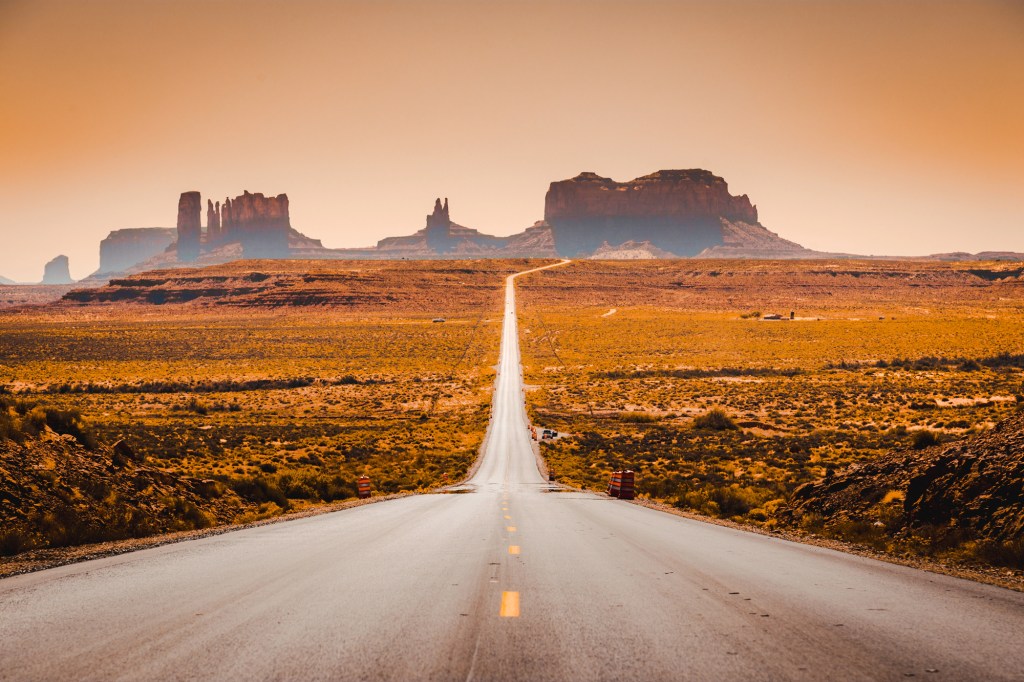
A number of significant personal “revelations” mark my way in life. Among them is one that occurred in college during a combined history/literature class. It was literally a turning point for me.
Among the books we read in that class were the Pioneers by James Fenimoore Cooper and Huckleberry Finn by Mark Twain. All the books we read explored the line between wilderness and civilization, the tension between man’s indomitable quest to conquer and civilize nature and his longing to be free of modern complexities and problems and return to nature.
Cooper wrote the Pioneers in 1823. It was fiction based on the “western frontier” of his time, with the setting in upstate New York in the finger Lakes area. The main character (the Leatherstocking, Natty Bumpo) was a grizzled old man who was more comfortable with the Indians on the other side of the lake than “his” people. His people were recklessly intent on taming the wilderness. He had more of a kinship with the Indians who respected nature and did not desire to tame it.
Cooper was among the earliest environmentalists. He was concerned about preserving the wilderness. In one of the most memorable segments of the book, he described the wanton abandon with which the pioneers heartily shot the slow Passenger Pigeons for sport, leaving destroying entire flocks at a time. The Passenger Pigeon has since gone extinct due to that kind of behavior.
Bumpo was not comfortable with his own crowd. He yearns to leave “civilization” and live in the wilderness. The book ends with him heading west to find untamed land.
Huckleberry Finn, of course, is the story of a young man cut out of a similar cloth. The time period is 1845, and the setting is much further west – along the Mississippi River. Just twenty something years after the Leatherstocking left upstate New York to find untamed country, Huckleberry Finn is struggling to conform with the “civilized” society of Hannibal, Missouri.
Huck had no more affection for the polite society of Hannibal, Missouri than the Leatherstocking had for his kind in Upstate New York. To Huck’s chagrin, the sliver of wilderness that he knows, the Mississippi River, is increasingly congested with paddleboats, commerce, and the constraints of civilized society. At the end of the book, Huck is last seen “lighting out for the west” just like Natty Bumpo, seeking untamed territory where Huck can live in peace the way he wants to live.
These books stirred a similar longing in me, but I realized that Huck’s westward trail would become a well-beaten path. The pioneers blazed the trail, but wagon trains and the Pony Express followed, then the railroads, then the transcontinental roads, then the highways, and then airports and jetliners. The sadness of having nowhere to run to hit my viscerally, and that visceral reaction led me to a turning point.
One of the early books that captured my imagination, My Side of the Mountain, is about a grade school boy who escapes his parents and the travails of civilized, pre-adolescent life find home in a hollowed out tree in the wilderness of the Catskills for an entire summer. He tamed a falcon and in a boy’s Utopia like a young Henry David Thoreau. He would have very much liked Huck and the Leatherstocking.
My Side of the Mountain clearly still played in my psyche in college. I often thought of the peace and serenity of living in the woods on a mountain far from civilized society. It was my call of the wild.
Regardless of the idealized downplaying of the hardships that would naturally accompany such a life, I identified with Natty Bumpo and Huck Finn. I even spent an entire summer in the north woods (Wisconsin) by myself between my sophomore and junior years in college years. I largely lived and worked alone, spending a lot time in the woods and waters. It was rejuvenating.
As this Senior class wore on and my future responsibilities beyond college loomed, the obvious stared me in the face. Civilization was hot on the heels of Natty Bumpo. Huck Finn’s wilderness (just 20 years later) was confined between muddy shores. The paddleboats powered by steam engines drove him from further west, but where could he go to escape the civilization that was crowding him in.
When he set his sights on the west, the writing was on the wall. We already know the rest of the story. The areas of untamed wilderness have shrunk, and even those wilderness oases are not untouched by civilization.
Few places have not been tamed by man, and the places humanity has carved out for protection are at the mercy of its human protectors. At some moment in that class, the realization of the inevitability of the creep of man on every wilderness yet to be conquered hit me.
In midst of that real angst that I felt, I made a conscious decision. I realized I could not run. I realized that I needed to turn toward society instead of away from it. It was a poignant realization and a real determination that I made.
There was no outward change, but I turned 180 degrees that day. I imagine I would have eventually relented and given in to the inevitability of that reality, but I made my choice to turn and face it (rather than to let just catch up on me). After that moment, “escaping to the wilderness” was no longer an option. I put is behind me. It may not seem like much to anyone else, but it is one of those markers on my journey in life, a defining experience.

 Navigating by Faith
In some ways, I think the little boy’s tree hollow and Huck’s Mississippi wilderness to which they escaped are the childhood abandon to enjoyment of the moment, endless summer days and freedom from the worries, pressures and stress of responsibilities that drag us out of childhood into adulthood, sometimes kicking and screaming. There is a purity to the way a child approaches life that is lost in the process somewhere in the transition. I still long for that.
LikeLike