In Episode 20 of the Christian Atheist Podcast (Ethics (Part 3): the Origin on Ought), John Wise focuses on a primary difference between human beings and animals. Though humans beings are animals, human beings are qualitatively different than other animals in rational capacity, and the rational capacity of humans allows humans to exercise agency over the natural world. This unique human capacity to exercise rationality through agency is the focus of my thoughts today.
Human beings exercise their agency and rational capacity to change and redirect the laws of nature. Other animals can do this in very primitive ways, but the human capacity to manipulate nature through human agency, rationality, and ingenuity is light years beyond what other animals can do.
Of course, humans cannot do things that defy the laws of nature. Rather, human beings use their understanding of those natural laws to manipulate them.
Wise observes that the human ability to manipulate the laws of nature includes the ability to separate cause from effect to acheive a desired result. For instance, human beings have learned to breed various types of plants and animals to achieve results imagined by humans which would never likely have occurred in the natural world left to random, natural processes.
Human beings can exercise their rationality to imagine different effects and to manipulate causes to achieve those desired effects. In this sense, human imagine the effects they desire to achieve, and they manipulate the causes in the natural world to achieve natural effects by design that the natural world would not obtain randomly.
The world seems to act randomly, unless agency acts upon the world. The examples of agency acting on the world to achieve results that would not obtain without such agency are legion. All of human endeavor is replete with examples of agency imagined and initiated by humans to obtain designed effects that we desire.
Human beings are able to produce effects that would never have occurred in the natural world but for human agency manipulating the natural processes. In other words, human input redirects the natural processes to produce results that would not have occurred if the natural processes were left alone.
Our ability to separate cause from effect to achieve desired ends that would not occur in the natural world by manipulating those causes to achieve the effects we desire is an example of supranatural agency in the world. In other words, we are in and of the natural world, and we use our knowledge of the natural world to manipulate natural causes to create natural effects.
We do not suspend the laws of nature or violate the laws of nature to accomplish our desires ends. We use the laws of nature to achieve our desired ends – albeit, ends that would not have occurred but for our intervention.

Ocean liners and skyscrapers are things that do not occur through the laws of nature, but for human agency. Even so, human agency des not suspend or violate the laws of nature to create them. Human agency uses the laws of nature to create them.
These observations are a model for understanding God. The fact that laws of nature act in very rational ways that are predictable and dependable suggests design. The way the laws of nature act suggest an intelligent agency that set them in motion just so. We would call that intelligent agent God.
If God created the laws of nature, He would certainly know how to manipulate natural causes to achieve His desired effects. God would have much greater capacity than us to manipulate natural causes to achieve desired effects. Exponentially so!
Many skeptics, like David Hume, reject the idea of miracles because they assume that miracles violate natural laws. The foundational premise of Hume’s logic, though, is false. The God that created the natural laws would not need to suspend or violate those laws to obtain desired effects. God could manipulate natural causes to achieve His desired effects without the need to “suspend” or “violate” natural laws just as we do.
God’s knowledge of those natural laws and the possible effects that can be achieved through the manipulation of them is certainly greater than ours. Exponentially greater.
Many people have called phenomena they didn’t understand miracles, but subsequent discoveries about the way the natural world works have provided explanations to us of natural laws and how they work that we didn’t previously understand. Once we understand the laws at work on those phenomena, we no longer call them miracles.
A primitive intelligent being might think that human beings are violating natural laws to fly airplanes, for instance. We know this is not true, but a more primitive being may not understand the principles of natural laws being manipulated to achieve the end of flying a heavy chunk of metal through the air.
Just as we manipulate natural causes to create effects that do not occur naturally, God may do the same. Thus, what we call miracles may be nothing more than the manipulation of natural causes by God to achieve effects that would not ordinarily occur in nature without the involvement of an agent.
Just because the primitive being does not know the principles being manipulated does not mean that a violation of natural laws has occurred. In this same way, a human being, who is certainly a more primitive intelligent being than God, may not be able to know or understand the principles of natural laws being manipulated by God to achieve a result that we call a miracle.
We call occurrences miracles that we cannot explain based our understanding of natural laws. But our measure of understanding is constantly changing. For this reason, modern people often say they no longer believe in miracles (and, by extension, God). Experience shows that many things we didn’t previously understand we now understand, and they assume, then, that we will find explanations in the natural laws to explain all the things we do not presently understand.
I note that this belief is not necessarily warranted, nor can we prove it. People who make this assertion do it on the basis of faith in the human ability to know and understand the world.
Further, our mere understanding of the way natural laws work, does not negate the need for intelligent agency to achieve desired ends. It isn’t enough for us to think something up; we must exercise our agency to act on the laws of nature to achieve our desired ends. Our understanding doesn’t create anything.
Imagine Aristotle seeing a pilot entering into a Boeing 737 and taking off into the air. Aristotle did not know enough about the law of gravity or aerodynamic lift to generate a good explanation based on the natural laws that were understood at the time. He may have called it a miracle because it defied explanation to him based on the level of knowledge he had.
The more often Aristotle might have seen a Boeing 737 takeoff, the less likely he might have considered it a miracle, even if the phenomenon still defied natural explanation to him. In fact, we still don’t really understand aerodynamic lift. (See No One Can Explain Why Planes Stay in the Air, by Ed Regis, Scientific American, February 1, 2020)
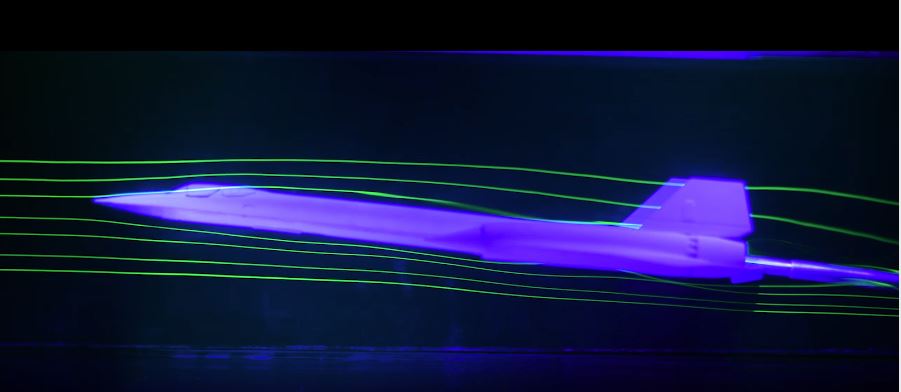
It is such a common phenomenon today, however, that we take it for granted even though we don’t completely understand it. Understanding that such a thing as aerodynamic lift occurs allows us to manipulate it, even if we don’t fully understand it.
Even if we think we fully understand natural laws, we probably don’t. One big example is the Big Bang. We know what happened from the “point” of the Big Bang, but we know virtually nothing before that “point”. We also have no idea how life formed.
Even if we did know exactly how the first living cell or organism developed. Our ability to trace the process and understand it does not tell us how or why it developed in the first place.
More precisely to the point, our understanding doesn’t create anything (without exercising our agency to act on that understanding), and it doesn’t eliminate the need for agency in our world to achieve desirous (beneficial) ends.
In fact, our experience suggests just the opposite. Our experience tells us that fire happens only randomly and often destructively in nature. We have learned to create fire and use it beneficially by exercising our agency in light of our understanding of the causes of fire. Agency is required to manipulate the natural causes for beneficial effects.
Our own experience affirms this. If I leave may backyard to nature, nothing is likely to grow there that is particularly beneficial. I might find a wild strawberry plant or wild raspberry vine with very small fruit on it. If I am lucky. The vast majority of it will be weeds and undesirable plants.
If I plant a garden with seeds cultivated by human ingenuity over many years of gathering seeds from the right kind of plants and developing new, heartier and more fruitful plants, I can turn my backyard into a cornucopia of beneficial plants that will feed my family and my neighbors’ families. This kind of benefit requires my agency.
I have to plant it, water it, weed it, and maintain it with much care and intentionality. If I stop maintaining it, my garden will relatively quickly return to a tangle of undesirable plants that will choke out and eventually replace my desirable plants.
It requires my agency to develop a garden and to maintain it. Nature, left to its own devices, will not do that. This is our common experience.
If you like archaeology, as I do, you become aware that time and nature destroys all the improvements generated by human agency and endeavor over time. Whole cities are reduced to rubble over time, and rubble becomes overgrown with windblown sediments, scrub brush and weeds such that we do not even recognize that a city once existed there, but for some remnants we can find by digging up the site.
We have made much about evolution since Charles Darwin first championed it as a theory. Evolution (the gradual improvement of life forms over time (by whatever means it occurs)) runs counter to our common experience. The formation of life from nonlife (the complex from the simple) (by whatever means it occurred)) runs counter to our common experience.
Does that mean that evolution is not fact or that life did not arise from nonlife? Not necessarily, but our common experience does suggest that this did not happen by natural forces acting according to their laws. Our common experience demonstrates that complex, beneficial effects arising from natural causes occur through agency and intentionality.
Human endeavor obviously did not create evolution or the formation of life from nonlife. Most scientists concede the appearance of design in the mind-bendingly complex interaction of amino acids, DNA, epigenetic materials, mechanical processes and other features of a living cell. If evidence of design appears in the world that was not achieved through human agency, that fact leaves us with the suggestion that some other intelligent agency is at work in the world.
Have you ever contemplated the fine-tuning of the universe such that it is able to generate carbon-based life and the fine-tuning of all the parameters necessary to allow the planet Earth to generate complex life that led to sustained civilization?
This fine-tuning of the universe suggests an agency and intentionality required to established those parameters.
Our experience (that beneficial effects require agency, and the more beneficial the effect, the more agency is indicate) points to the possibility of a super intelligence (God) at work in the creation of the universe and the development and maintenance of the properties of the universe to create and sustain life – and especially complex life that leads to civilization – which is itself a product of agency.
A super intelligence is an agency that is transcendent. We might call it supernatural (meaning that it’s source is not found in the natural world), but it acts on the natural world, as we do, to set the parameters favorable to life, the development of complex life, and to allow that life to develop civilization. We create because we live in a world that is designed to respond to us. None of this needs to be miraculous, in the sense that it may never be understood, but it requires agency and intentionality.
Miracles have come to be known as phenomena that cannot be explained by natural law. As can be seen by the airplane example, perhaps, phenomena that we cannot replicate we also tend to call miracles. If we can replicate something, even if we don’t understand it, we don’t call it a miracle. Thus, the world of “miracles” shrinks as we gain knowledge, understanding, and the ability to replicate phenomenon.
This is the so-called God of the gaps hypothesis: that things we did not understand at one point in human history, like lightning, thunder, and volcanoes, we have learned to understand through our study of natural laws. Once we learn what causes lightning, thunder and volcanoes, we stop crediting those things to gods, and we no longer think of them as miraculous..
Interestingly, we seem to think that our ability to understand the natural laws behind a phenomenon or our ability to replicate them is sufficient to dismiss the idea of God. Some people have faith that we will come to understand all the gaps in our present knowledge and that our eventual understanding, somehow, means that God does not exist.
Skeptics take this further to say that our knowledge and understanding of how things work has eliminated the necessity for any god, even the necessity of one Creator God who conceived and set in motion the natural laws that we study.
But how does our understanding do that? What is it about our understanding and knowledge that accomplishes this?
Just because we might learn to understand natural laws tomorrow that we do not understand today, does not eliminate the possibility of a God who created the natural laws. Our knowledge and understanding does not eliminate the existence of God.
Just because we don’t presently understand the relationship between those causes and effects also doesn’t mean that they are not “natural”. On the other hand, we might say that all acts taken by an agent (human or divine) that manipulates causes to create effects that would not occur in the ordinary course of nature are miraculous – meaning that they were achieved through independent inputs that manipulate the natural causes.
In fact, it is precisely the human agency of manipulating causes to achieve desired effects (like the production of airplanes that can take advantage of aerodynamic lift (whatever that is)) that helps us to understand that things we call miracles may be products of divine agency manipulating causes to achieve effects we do not understand.
These things do not have to be violations of natural laws for us to call them miracles. In the parlance of the modern skeptic, miracles are just causes and effects that we do not presently understand. The miraculous part is simply the gap in our knowledge. We call it a miracle because we can’t understand it. That gap, however, even it is filled with some knowledge and understanding, doesn’t eliminate the potential of a divine agency manipulating natural causes to achieve desired effects.

It occurs to me, also, that God may have a point in manipulating causes to achieve certain effects that cannot be explained by human beings as a way of getting our attention. We call them miracles, but God might call them attention-getters. They grab our attention precisely because we cannot explain them based on what we know.
The Gospels, Book of Acts, and Epistles that comprise the New Testament make this point. The signs (miracles) were intended to catch our attention and confirm God’s word to the people who heard it.
Those things may not be miracles in the way that we have come to define them (violations of natural law). We may dismiss them as being unlikely to have happened also based on our knowledge and understanding, but who is to say that we might not discover the particular combination of causes that explains those effects?
The things that were once marveled at as miracles and are now scoffed at as impossibilities may one day be explainable on the basis of a more complete understanding of the natural laws and how they work – especially if an agency is manipulating them (not violating them) for a desired end. The only difference is that the agency manipulating the natural causes is super natural (an agent that transcends the natural world) rather than supra natural (an agent acting within the natural world).
People recognize a “miracle” precisely because it is something they cannot understand. The occurrence of a miracle is an attention-grabber precisely because it doesn’t make sense to us based on what we know. It is an aberration from common occurrences that we take for granted.
Skeptics assume gullibility by people in the 1st century to believe that a virgin could give birth to a child and that a person could rise from the dead. People in the 1st century, however, recognized these things as miracles precisely because virgins do not give birth to children and people do not rise from the dead. They were no different than us in that respect.
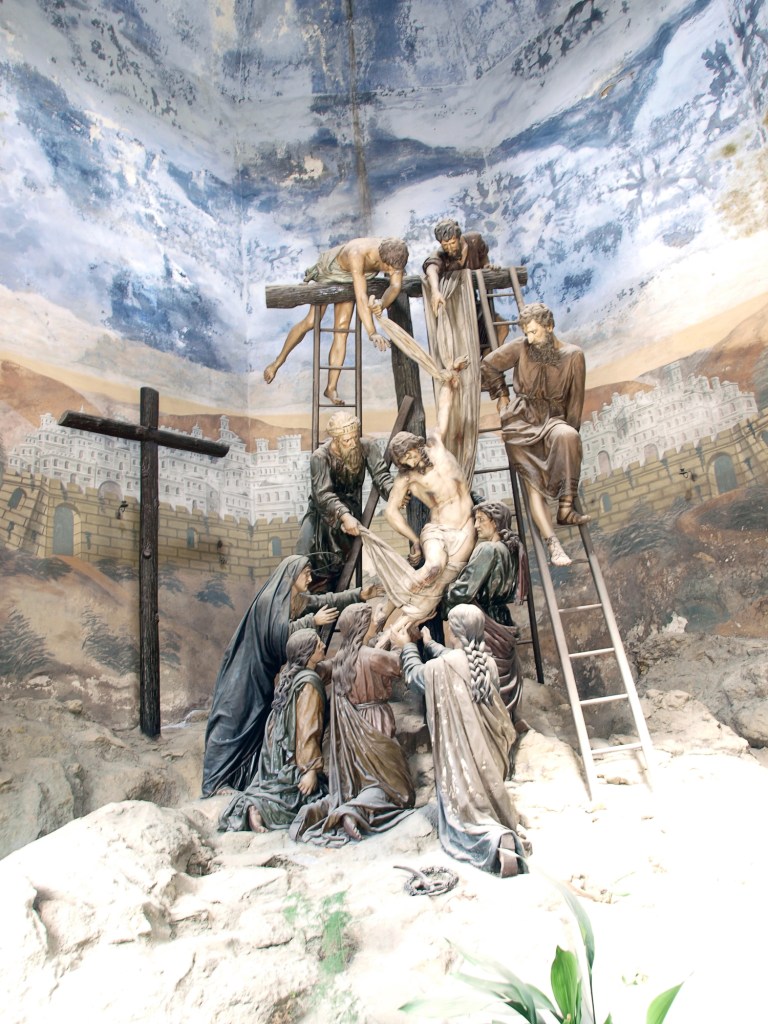
It isn’t a matter of gullibility. They took notice precisely because these things do not normally happen. They don’t have to be violations of the laws of nature to be unexplainable. The lack of explicability is what catches our attention. To dismiss them as “miracles” misses the point.
Dismissing “miracles” and the existence of God on the basis of faith that we will come to discover explanations is, frankly, irrational. What about an explanation for thunder, for instance explains God away? Would an explanation about aerodynamic lift explain away the agency of people who designed a Boeing 737?
Because modern humans have the agency to manipulate causes like aerodynamic lift to create effects like flying buttresses of metal that ancient people might have called a miracle, we have the basis to intuit that a more intelligent being than us may be exercising agency in the universe to manipulate causes that create effects we do not understand.
We can call them miracles, or magic, or a manipulation of natural laws we do not yet understand. It doesn’t matter. The common denominator is the agency that manipulates the natural causes.
By our knowledge of Newtonian mechanics, and specifically the law of motion and conservation of momentum, we can understand the movement of billiard balls on a billiard table. Neither those laws themselves, nor our understanding of those laws, however, cause the billiard balls to move in the first place. A person with a cue stick, good aim, and the agency to decide to strike the cue ball is required to get the billiard balls moving!

All the understanding and knowledge in the world wouldn’t get those billiard balls moving without the agency of the person with the cue stick. We don’t eliminate the necessity of that agency by simply understanding the laws of motion and conservation of movement. In the same way, we don’t explain away God by filling in gaps in our understanding of the laws of nature.
I have taken a long way around to explain why our understanding of the way the world works doesn’t eliminate God from the reality of the world. As John Lennox says, God is not just a God of the gaps (a placeholder until we can understand a phenomenon); God is God of everything, including everything we understand and all that we don’t (the gaps).
The gaps are defined by our understanding (or the lack thereof). Our understanding (or lack thereof) neither create nor eliminate the necessity of God. God is not dependent on our understanding, and our understanding has no effect on the existence or nonexistence of God.
~~~~~~~~~~~~~~
Postscript:
“The naturalist often erroneously presupposes that theists disregard the laws of nature and believe in a ‘“’Magician God,’”’ which habitually interjects into our physical world and countermands the physical processes and laws of physics. Such is not the case for the Judeo-Christian worldview. As Polkinghorne says, ‘…God acts in the world, but He is not a show-off conjurer who violates the same laws of nature that He made.’
“A watchmaker may design and fabricate a watch and set the alarm to go off at a given time every day. From the point of view of the components in the watch, all is set and in order. But, the watchmaker may decide to alter the time of the alarm. This in no way contradicts the laws that govern the watch. It simply shows that someone outside the watch has the ability to input his will into the system, through the design that he had originally created.
“The laws of Nature are in fact the laws instituted by God, and He does not break His laws. All His actions are in fact in harmony with the laws that He has instituted. When an event seems to us a miracle, it is not because He went counter to the universe that He established, but because He knows of other existing laws, which we have yet to uncover to accomplish this action. The supernatural is the natural that we have not yet discovered and therefore do not understand.”
Henry Patino- “Machine Or Man,” 2005.

 Navigating by Faith