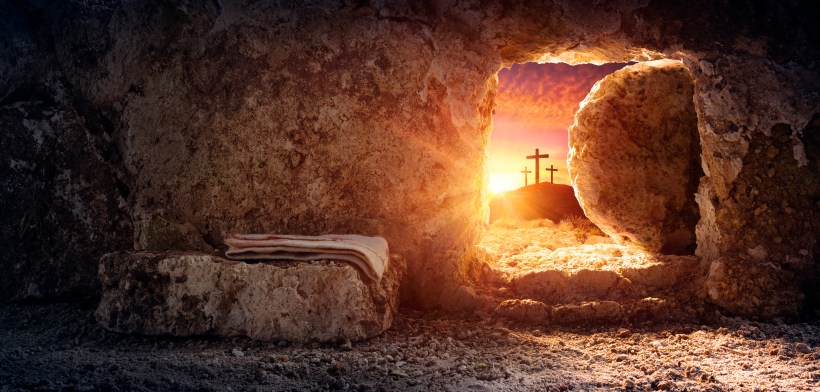
Some people say that we have absolutely no evidence for the resurrection (and no evidence that God exists in the first place). Nothing could be further from the truth. We have evidence. The issue isn’t a lack of evidence; the issue is how we approach the evidence and weigh it it.
A person who approaches “supernatural” phenomenon with purely materialistic assumptions will weigh the evidence differently than one who is open to nonmaterialistic possibilities. Jesus, though, lived in time and space in history. Many people in the first century who saw him die claim to have seen Jesus and interacted with him in the flesh after he died, and those people were willing to die for what they saw.
That is evidence. Full stop. People may be skeptical of it. People may assume Jesus couldn’t have risen from the dead, despite what people think they saw, because miracles don’t happen. But, now I am talking about how people approach and weigh the evidence.
People confuse proof, as in a mathematical proof, and proof, as in an offer of evidence that tends to support a proposition. Fallible, finite human beings deal almost exclusively in the latter realm of evidence, even in science, because we don’t know what we don’t know.
Mathematical proofs are an achievable goal in mathematics (though sometimes not even then). Such proof is impossible outside of mathematics.
Science does not provide us that kind of certainty, either. Science changes all the time on the basis of new evidence, and things we thought we knew in the past are constantly being adjusted, or even discarded, on the basis of additional evidence.
Finite beings such as ourselves are limited in our knowledge, our access to knowledge, and our understanding of how the knowledge we have fits together. We have to be humble as we cautiously put our confidence in the things we think we know because we are limited in our ability to know and understand our world, and we will always lack absolute proof for most, if not all, things.
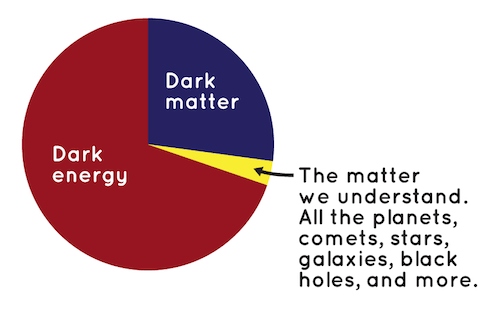
The extent of our limitations can even be quantified. For instance, 95% of the physical universe is invisible to us! The vast, unseen reaches of the universe are comprised of things like dark matter and dark energy that we cannot see and know little about, except for what we can infer about them. We aren’t sure what these things are, but we know they exist by the affects we see on the matter we see and know.
According to scientific consensus, the universe is about about 13.7 billions years old, and the earth is about 4.543 billion years old (give or take about 50 millions years), and homo sapiens appeared only 300,000 years ago (and maybe even only190,000 years ago). Assuming those calculations to be true, human-like beings have existed for only 0.0066% of the time the earth has existed and only 0.002% of the time the universe has existed. (If my math is correct.)
If we view the existence of the earth (not even the universe) on a 24-hour scale from the beginning to the present time, life began at 5:00 AM, the first vertebrates appeared at 8:00 AM, and human beings appeared just a fraction of a second before midnight.
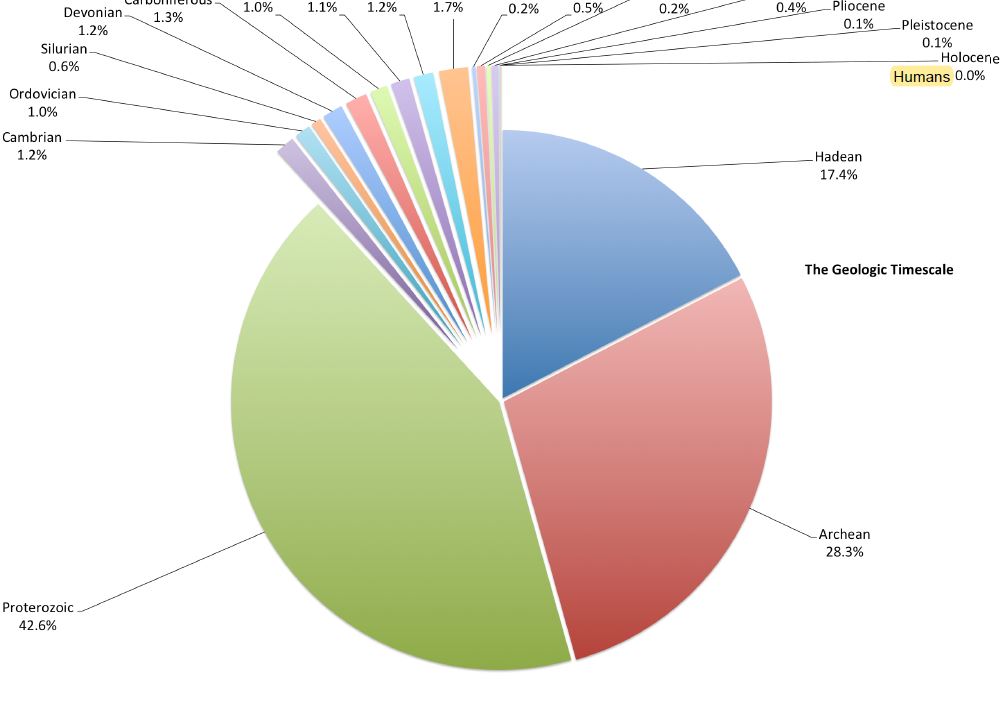
Homo sapiens have only developed knowledge and the ability to communicate and preserve a record of it for about 5,500 years. We have been developing and recording our knowledge for only 0.00022% of the time the earth has existed, which is only 0.00007% of the time the universe has existed.

During that relatively short, 5500-year time period we have developed the capability to see only about five percent (5%) of the universe, though we have actually examined very little of it – and then only at very great distances. We hnave only explored more than five percent (5%) of the oceans on this earth – a very small planet orbiting a very small sun in a very small solar system in the inconceivably large expanse of what we we call the universe.
The body of our scientific knowledge has grown tremendously, even exponentially, especially in the last 200 years, but we have only just begun to know and understand the universe we live in. If humans live another 5,500 years, we will not have explored all of the universe, and we will not know all that there is to know.
Our world is grand and almost inconceivably complex. The DNA of a single human cell contains so much information that if it were represented in printed words, simply listing the first letter of each base would require over 1.5 million pages of text! Imagine how much information exists in the universe and how much we don’t know.
We will likely never know all there is to know about the expanse of the universe and everything in it, large and small, in all the years mankind is on the earth. Thus, we are in no position to write off the possibility of God creating the universe and Jesus rising from the dead.
The title to this piece is (admittedly) a bit misleading, so I need to provide the following disclaimer. Some people will read the title and assume that I am attempting to prove the resurrection. I am not doing that. I am offering only the beginning of proof (as in offering evidence) in this article, but it is evidence. You can weigh it how you will.
We should at least be open to consider what evidence there is for the existence of God and not write off the possibility that God exists. If God exists and made the universe out of nothing, which is what the Bible claims in Genesis 1, John 1, and Hebrews 11, then He could certainly raise Jesus from the dead.
How arrogant it would be for us to determine for ourselves (categorically) that there is no God, that He did not create the universe, and that Jesus did not raise from the dead. We don’t know what we don’t know, and we don’t understand perfectly what we think we know.
With that said, I want to provide some minimal facts that provide some evidence that tends to support the resurrection. These things are not proof; they are an offer of proof. We cannot achieve definitive proof, but there is evidence for the credibility of the claims made that Jesus rose from dead.

Before jumping in, I want to recall the theological consensus in the 1980s when I was in college studying religions. “Higher criticism” from the 19th Century had created generations of skeptical theologians who dissected scripture like a corpse. Their skepticism drove their conclusions, including the conclusion that the gospels were written in the 2nd century by people as many as three generations removed from the life of Jesus.
The scholarly consensus was that the resurrection of Jesus developed as legends develop. That consensus postulated that the people who lived at the time Jesus lived and died did not make the claim that Jesus rose from the dead. That consensus assumed that the Gospel accounts and other New Testament writings were written and embellished the story later generations with the claim that Jesus rose from the dead.
Gary Habermas, a New Testament scholar, grew up academically in the same environment I did. The only options seemed to be bare-naked (blind) faith or skepticism.

Habermas wrestled with his own doubt. He was academically honest. In trying to determine for himself whether the resurrection claim carried any weight, he decided to use nothing but the basic factual assertions that scholarly consensus gave him to see how they added up.
Habermas wrestled with his own doubt. He was academically honest. In trying to determine for himself whether the resurrection claim carried any weight, he decided to use nothing but the basic factual assertions that scholarly consensus gave him to see how they added up.
These are the minimal facts that he could find based on that consensus: Jesus lived in the beginning of the 1st century; he had a following; he died on a cross; and people believed that he appeared to them risen from the dead. Most scholars, even skeptical ones, accept these points.
Habermas looked for what reliable historical data the New Testament writings could give him. He used only the epistles that were commonly accepted as authentic writings of Paul, formerly Saul of Tarsus. These writings included 1 Corinthians and Galatians. Habermas determined to use only the barest information that could be scraped from the Bible using modern measures for reliability.
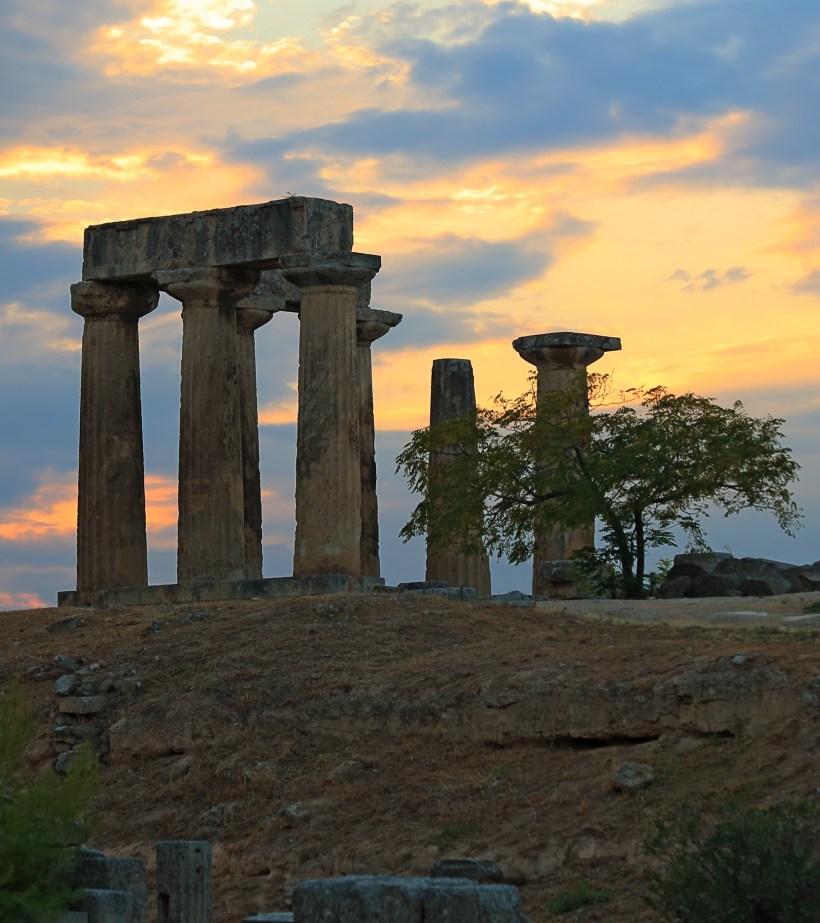
As Habermas read these letters and studied them for any facts he could hold onto, he saw something. First, he saw that the writer of Acts identified Gallio as proconsul of Achaia when Paul was there: Gallio presided over Paul’s trial in Corinth. (See Acts 18:12-17) We know from extrabiblical sources (the “Delphi Inscription“) that Gallio, the brother of Seneca, was proconsul of Achaia in 51 and 52 AD, so we have confidence that Paul was in Corinth in that time frame.
The first letter Paul wrote to Corinth that we have was written after he visited there, and Paul reminded the Corinthian church in that letter of the “message” he shared with them that was of “first importance”. (1 Corinthians 15:1-3) The message Paul shared is that Jesus died and rose again and that and he appeared to a list of specific people, including 500 people at one time, most of whom were still living at the time Paul wrote the letter, and Jesus appeared to Paul, himself. (1 Cor. 15:3-8)
These minimal facts establish 1) when Paul was in Corinth and conveyed a particular message to the Corinthians and 2) what that message was. The message was that Jesus rose from the dead, and he appeared to many people after he was dead.
These statements made by Paul recorded in the Bible do not prove that Jesus rose from the dead or that he appeared to anyone. We have a record, therefore, of Paul claiming that many people witnessed and believed that they saw Jesus alive after his crucifixion and believed that he rose from the dead. He counted himself in that group of people, and he presumably believed it himself.
We, therefore, have a record of what Paul said and when he said it. The corroboration from extra-biblical sources of key facts gives us confidence of the timing of these things.
We should also note that Paul was not initially a follower of Jesus. In fact, he was hostile to Jesus. He was a Pharisee, a Jewish scholar and leader. Paul was particularly avid in trying to silence the followers of Jesus who claimed that he rose from the dead, likely because of the threat these claims posed to Paul’s own power and position.
According to Paul’s story that is shared by Paul in his letters and in the writings of Luke, a traveling companion, an experience Paul had on a trip to Damascus influenced him to change his mind. He changed his position on Jesus one hundred eighty degrees, and he become a passionate believer.
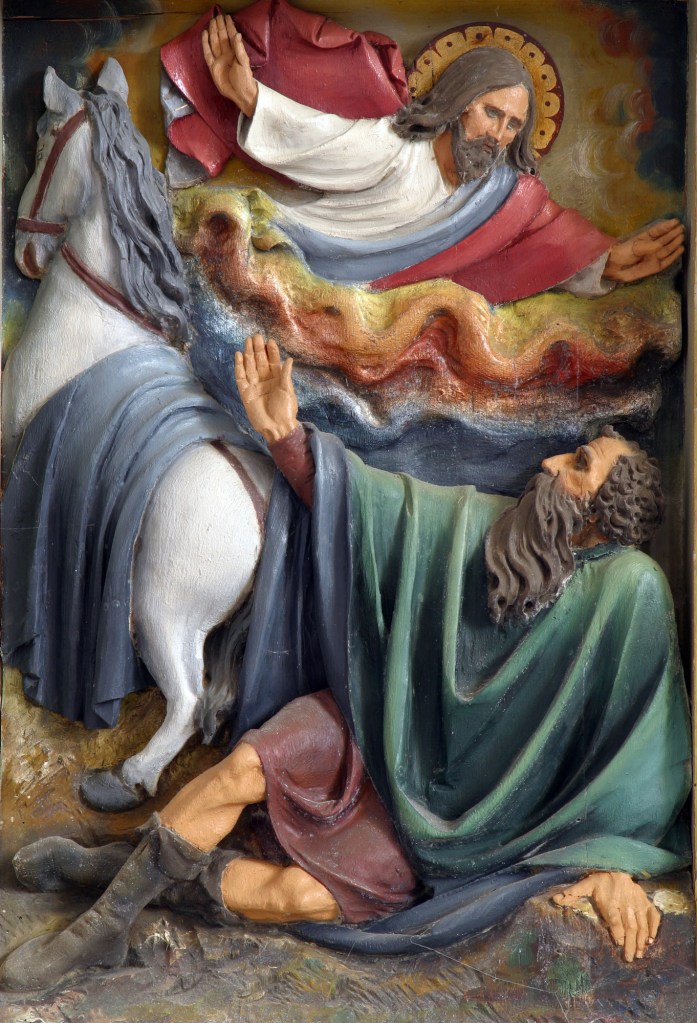
That experience, according to Paul, was an encounter with the risen Jesus, himself. Paul’s accounts of his dramatic conversion and encounter with the risen Jesus are recorded in various places in Paul’s letters and in the Book of Acts (written by Luke, who recorded the story as told by Paul).
Paul provides another summary of his story in a letter he wrote to the Galatians. (Galatians 1:11-24) Paul claims again that he received the “revelation” directly from Jesus, and he adds that did not consult with anyone. He remained in Damascus, went into Arabia, and later returned to Damascus after his conversion.
Three years later, Paul says he traveled to Jerusalem to meet the Apostle, Peter, and spent fifteen days with Peter. He also met James, the brother of Jesus, but he met no one else.
Then, Paul says he went back to Jerusalem fourteen years later to share with them the gospel (good news) that he was preaching and confirm with them that he was still relaying the correct message. (Gal. 2:1-8) They agreed with the message Paul was sharing.
What was the message? We have to go back to 1 Corinthians 15:1-8 to find a description of that message Paul was sharing:
“Christ died for our sins according to the Scriptures, that he was buried, that he was raised on the third day according to the Scriptures, and that he appeared Cephas (Peter), and then to the Twelve. After that, he appeared to more than five hundred of the brothers and sisters at the same time, most of whom are still living, though some have fallen asleep. Then he appeared to James, then to all the apostles, and last of all he appeared to me also….”
What do these things “prove”? Nothing in a mathematical sense, but they are hardly nothing in the ordinary (or legal) sense. This is firsthand testimony penned by the person who makes the assertions of fact. it isn’t hearsay. These are assertions of facts made by a person with firsthand knowledge of the assertions.
As with any such testimony, it isn’t the whole story. We need to consider whatever other testimony and factual evidence is available. We have to weigh the credibility of the witness and look for corroborating evidence (or the lack thereof) and for contrary evidence.
We naturally need to consider whether Paul might have been mistaken or whether he was embellishing or lying about these things.
The significance of these “minimal facts” however rises from the timeline. Because of our knowledge from outside sources of the time frame in which Gallio was proconsul of Achaia (51/52 AD), we can pinpoint when Paul shared his message.
We know from Paul’s writings that his “message” was the same message the Apostles shared. We also know what the message was: that Jesus rose from the dead and appeared in person to many people.
Paul “received” this message not long after the death of Jesus, which scholars confidently date between 30-33 AD. Three years after Paul’s encounter with Jesus, he met with Peter, and 14 years later Paul confirmed that he was still sharing the same message as Peter and the other apostles in Jerusalem.
We don’t know precisely when Paul encountered Jesus, but seventeen years from 30-33 AD is 47-50 AD, and Paul had already been sharing that message for quite some by the time he came to Corinth in 51-52 AD. Thus, we can have good confidence that the message of the resurrection and appearance of Jesus goes back very early.
This analysis has completely changed the scholarly consensus that prevailed 40 years ago when I was in college. Most scholars no longer believe the resurrection of Jesus was developed two or three generations after Jesus died. They concede that early Christians made those claims virtually from the beginning.
This analysis does not prove the resurrection. This analysis does goes to the credibility of the claims. The claims that Jesus rose from the dead developed very early, and they were made by the people who were directly involved with Jesus – both followers and one-time skeptics (like Paul and James, the brother of Jesus).
This, of course, is only a piece of the puzzle. (Pun intended) It is only the beginning of all the evidence we have. None of it absolutely proves the resurrection, but finite beings can’t achieve absolute truth for most things, and we have to settle for enough evidence to be confident.
Skeptics no longer date the the idea that Jesus rose from the dead to the 2nd century. Even skeptical scholars, Like Bart Erhman, accept that the message of the resurrection began early, during the generation of the people who would have known Jesus while he was alive.
Another factor in the evidence that Jesus actually rose from the dead is the reaction of those people who knew him. Rather than abandon their belief in him, they became more passionate and bold.
According to the Book of Acts, which contains facts we con corroborate from outside sources, such as the dating of the Gallio as the pro consul of Corinth, Steven, a young deacon among the early followers of Christ, was stoned to death in the presence of Paul when Paul was persecuting Christians. Steven died for the message that Jesus rose from the dead very soon after Jesus was crucified.
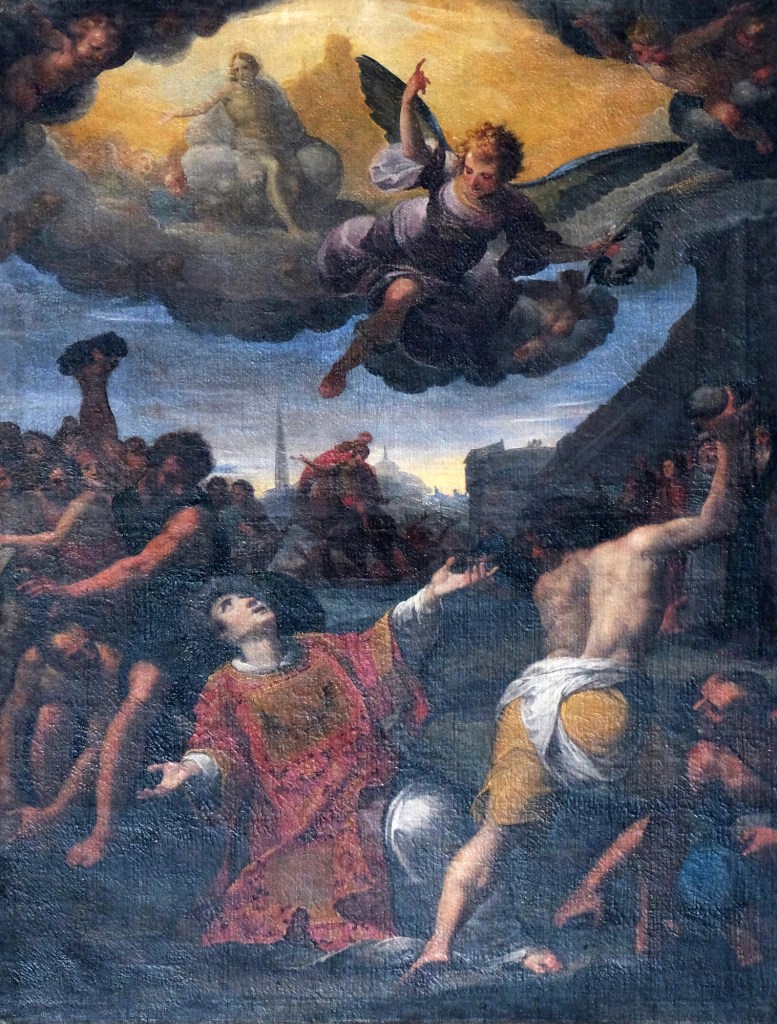
Paul witnessed the stoning and approved of it, but he converted shortly thereafter. What happened to Paul? What changed him from persecutor of Christians to become a persecuted Christian himself?
What happened to cause a person like Steven to die for the message of the resurrection? Why would Paul convert to a belief that people were dying for?
What happened to cause James, the brother of Jesus, to go from skeptic to believer? The death of James for this message is also recorded in outside sources. The Bible identifies him as a skeptic early on, and then it identifies him as a leader in the Jerusalem church without direct explanation (except for Paul’s statement that Jesus appeared to James in person after his crucifixion).
None of this is proof. Certainly, not in the way we prove a mathematical formula, but these things are evidence, and all the pieces of evidence factor into the analysis, including many other things I will not cover here.
We understand that dark matter and dark energy exist, though we can’t see them, and we don’t even know what they are. We can’t “prove” they exist. But, we reason by implication, because we see the effects on the things we can see, that they exist. I have no doubt, as well, that we will discover more about dark matter and dark energy than we know today.
The resurrection is not like “physical” matter and energy, but we also see the affects of the claims that the man, Jesus, died and rose from the dead in the 1st Century. We might chalk it up to a compelling, but fanciful, story. That position, though, seems to be a stretch to explain why the people who would have made up that story (if it is only a story) were willing to die for it.
I am not going to prove the resurrection. No apologist will. Evidence does exist, however, that is consistent with the proposition, not the least of which is the effects we see attendant with that claim. Not just on the people who knew Jesus, but innumerable people since that time who have claimed to have had an encounter with the living Jesus and the change that encounter made in their lives.
Because we don’t know what we don’t know, we should not foreclose possibilities for which we have some positive evidence. If Jesus really did rise from the dead as his early followers maintained, I cannot imagine an occurrence with greater relevance or import to us. We owe it to ourselves to keep an open mind.

 Navigating by Faith